
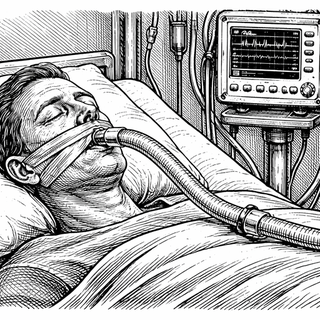
At the surface of the mouth, lips, and other mucous membranes, cells are constantly negotiating with the world around them. They trade moisture, absorb friction, and survive on a thin margin of blood flow. Add an ICU device pressing in for hours or days, and that tidy little ecosystem starts to fail cell by cell, like a startup server stack under a traffic spike nobody load-tested for. The injury may look small from the outside. Under the hood, it is tissue stress, impaired perfusion, and mechanical force quietly turning into damage.
That is why this new systematic review and meta-analysis on mucous membrane pressure injuries in adult ICU patients grabbed my attention. Not because it describes a flashy new machine or miracle drug, but because it identifies a painful, expensive, and surprisingly common problem sitting right in the middle of critical care workflows. Those are often the best product opportunities: not glamorous, very real, and costly enough that hospitals would absolutely like them to stop happening.
The Big Number That Should Wake People Up
The review included 32 studies covering 22,111 adult ICU patients. Its pooled incidence estimate was 28%, and pooled prevalence was 13%.
Those are not niche numbers. If you work in healthcare operations, device design, nursing quality, wound care, or ICU informatics, that should read less like an academic footnote and more like a blinking dashboard alert.
Incidence tells us how often new cases are developing. Prevalence tells us how many patients are living with the problem at a given point. Put together, these figures suggest mucous membrane pressure injuries are both emerging regularly and persisting enough to matter. That is exactly the sort of pattern that creates downstream cost, documentation burden, patient suffering, and quality-improvement headaches.
And yet these injuries are often underrecognized. That is the uncomfortable part. We are not talking about a rare zebra diagnosis. We are talking about a complication that can hide in plain sight because it occurs in places that are harder to inspect, harder to classify, and easy to overlook when the ICU is already a symphony of alarms, lines, sedation, and urgent priorities.
Why ICU Patients Are So Vulnerable
The paper makes clear that these injuries are tightly linked to medical devices and the physiology of critical illness. That combination is brutal.
A patient in the ICU may be intubated, sedated, turned prone, supported with vasopressors, and nutritionally fragile all at once. Every one of those conditions makes tissue more vulnerable or increases the chance that a device will sit against delicate mucosal surfaces long enough to cause harm.
The review identified 16 associated factors. Twelve were risk factors:
- Longer duration of endotracheal intubation
- Higher APACHE II score
- Vasopressor use
- Hypoalbuminemia
- Use of bite blocks
- Prone position ventilation
- Diabetes
- Elevated hematocrit
- Tracheal fixation devices
- Increased oral sputum colony counts
- Advanced age
- Sedative use
It also identified four protective factors:
- Higher serum albumin
- Longer duration of nutritional therapy
- Increased platelet count
- Elevated hemoglobin
None of this is especially mysterious biologically. Fragile tissue plus pressure plus impaired perfusion plus prolonged device contact is a bad recipe. But what is valuable here is that the paper organizes the mess into something operationally useful. It gives clinicians and innovators a clearer map of where risk clusters.
This Is Not Just a Nursing Problem
One of the easiest mistakes in healthcare is to label something like this as "a bedside issue" and move on. That is far too small a frame.
This is a device-design problem. A fixation-system problem. A nutrition problem. A monitoring problem. A workflow problem. A risk-stratification problem. A data-standardization problem. In startup terms, it is annoyingly cross-functional, which usually means nobody owns it cleanly and everyone pays for it anyway.
If risk rises with intubation duration, bite blocks, fixation devices, prone ventilation, and sedation, then there is room for products that do at least four things better:
- Reduce focal pressure from airway-related devices.
- Flag high-risk patients early using ICU data already in the chart.
- Standardize assessment so injuries are spotted sooner.
- Integrate prevention into ordinary care instead of relying on heroic vigilance.
That last point matters. Healthcare loves to say "raise awareness," which is useful right up until the fourth shift change. Awareness is not a system. Good products turn awareness into default behavior.
The Commercial Angle Is Real
From a business perspective, mucous membrane pressure injury prevention has the ingredients investors and operators usually want to see, even if the branding team might need stronger coffee.
There is a defined patient population: adult ICU patients.
There are identifiable risk markers: severity scores, device exposure, nutrition markers, positioning, vasopressor use.
There are modifiable elements: device choice, fixation methods, assessment frequency, oral care, pressure redistribution, nutritional support.
And there is a measurable outcome: fewer injuries.
That means several potential product categories start to emerge. Think smarter endotracheal tube securement, softer contact interfaces, sensor-enabled device positioning, AI-driven risk prompts in the EHR, or ICU quality dashboards that tie device days to mucosal injury surveillance. None of these ideas are science fiction. They are the kind of practical tools that hospitals actually buy when they reduce complications and make frontline work easier.
Not every billion-dollar opportunity arrives wearing a sleek consumer interface. Some arrive disguised as a bite block and a documentation gap.
Why Standardization Could Be the Unlock
The paper also emphasizes the need for standardized diagnostic criteria and multicenter prospective studies. That might sound dry, but commercially it is a big deal.
If a complication is inconsistently defined, it is hard to measure. If it is hard to measure, it is hard to build a product around. If it is hard to build around, innovation stalls because nobody can prove ROI cleanly.
Standardization is what turns "we think this is happening" into "we can benchmark it, predict it, and prevent it." It is the boring scaffolding that lets better tools get reimbursed, adopted, and studied properly. Not glamorous, no. But neither is accounting, and somehow every company still wants that done correctly.
For founders, this suggests an opening. The winning solution may not be just a physical device. It may be a device-plus-software package, or a clinical workflow layer, or a surveillance platform that helps hospitals define the problem consistently before solving it at scale.
What Makes This Study Worth Watching
I like papers that do more than confirm an intuition. This one quantifies burden, organizes risk, and points toward action. It also reminds us that critical care complications are often multifactorial, which means single-variable thinking will miss the mark.
The real opportunity here is not just preventing one type of injury. It is building ICU systems that get better at seeing subtle harm early, especially when devices are involved. Mucous membranes do not send calendar invites when they are about to break down. So we need care systems that are less reactive and more anticipatory.
If follow-up studies sharpen the diagnostic standards and validate the modifiable risk factors prospectively, this area could support better prevention bundles, smarter bedside tools, and cleaner quality metrics. That is good for patients, good for clinicians, and very likely good for any company disciplined enough to solve a specific problem instead of pitching "AI for hospitals" into the void.
Research like this does not hand you a product on a silver platter. It does something more useful. It tells you where the friction is, where the harm is, and where the market has been oddly comfortable looking away.
This blog post discusses research findings and should not be taken as medical advice. If you have concerns about pressure injuries or complications related to critical care, please consult a healthcare provider. Research discussed here represents ongoing scientific investigation and clinical validation is still in progress.
All images used in this post are decorative illustrations only and do not represent or reflect the accuracy, reality, or correctness of the referenced research.
Primary Source: Incidence, prevalence, and risk factors of mucous membrane pressure injuries in adult intensive care unit patients: A systematic review and meta-analysis. PubMed record 42019366. Available at: https://pubmed.ncbi.nlm.nih.gov/42019366/