
Let's be real - wound dressings kind of suck. Here's why. Most of them sit on your wound like an overpriced napkin, doing exactly two things: absorbing fluid and... that's it. Maybe keeping lint out. Meanwhile, the bacteria colonizing your wound are throwing a block party, MRSA is bringing the keg, and your wound dressing is just there, passively watching like a mall cop on his lunch break. If your wound gets infected, congratulations, you now get to add systemic antibiotics to the mix, along with all their delightful side effects, rising resistance concerns, and the nagging feeling that we should have better options by now. A group of researchers apparently felt the same frustration and decided to do something about it - by cramming nanoscale copper oxide and zinc oxide into a chitosan fabric and creating a dressing that doesn't just cover wounds but actively picks fights with bacteria.
Shrimp Shells, Copper, and Zinc Walk Into a Lab
The base material here is chitosan, a biopolymer derived from chitin - the stuff in crustacean exoskeletons. If you've ever wondered what happens to all those shrimp shells from your cocktail platter, well, some of them end up in biomedical research. Chitosan already has a decent resume: it's biocompatible, biodegradable, and has mild inherent antimicrobial activity. But "mild" doesn't cut it when you're dealing with drug-resistant pathogens colonizing a wound.
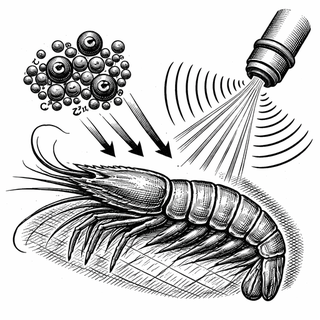
So the team, publishing their findings recently in a study indexed on PubMed (PMID: 42035851), took chitosan non-woven fabric and loaded it with nanoparticles of copper oxide (CuO), zinc oxide (ZnO), or both, using ultrasonic impregnation. Think of it as power-washing nanoparticles into fabric fibers, except the power washing is ultrasound and the fabric is made from shellfish. Materials science is a wild ride.
The Antibacterial Lineup
Here's where it gets genuinely interesting. The composite dressings were tested against a rogues' gallery of clinically relevant bacteria: Staphylococcus aureus, methicillin-resistant S. aureus (MRSA), Pseudomonas aeruginosa, and Klebsiella pneumoniae. These aren't obscure lab curiosities - they're the pathogens that keep wound care specialists up at night and infectious disease doctors employed.
The results? The dressings showed notable antibacterial activity against all four of these organisms, with some formulations outperforming antibiotic controls. Let that sink in for a moment: a wound dressing made of crab-shell polymer and metal nanoparticles outperformed antibiotics against certain bacteria. The combined CuO + ZnO version generally performed better than either metal oxide alone, suggesting a synergistic effect. Copper and zinc, working together better than they do separately - the buddy-cop movie that wound care didn't know it needed.
One caveat worth mentioning: the dressings didn't show significant inhibition against E. coli. So if your wound is colonized exclusively by E. coli (which, for a skin wound, would be an unusual scenario anyway), this particular dressing might not be your first choice. But against the Gram-positive heavy hitters and the problematic Gram-negatives that actually dominate wound infections? Solid performance.
More Than Just Killing Bugs
An antibacterial dressing that doesn't also support healing is only solving half the problem. It's like hiring a bouncer who throws out the troublemakers but then sets fire to the bar. Fortunately, these dressings proved to be more thoughtful than that.
The researchers tested the composite dressings in a goat full-thickness skin defect model - a fairly rigorous in vivo test, since goat skin shares some structural similarities with human skin and full-thickness wounds are about as challenging as it gets. The dressings promoted epithelial regeneration and collagen deposition, two hallmarks of healthy wound healing. They also upregulated expression of TGF-beta1, VEGF, and PDGFB - a trio of growth factors that are essentially the project managers of wound repair. TGF-beta1 coordinates the inflammatory-to-proliferative phase transition, VEGF drives new blood vessel formation to the injury site, and PDGFB recruits the cells that actually rebuild tissue.
The dressings also shortened in vitro clotting time, which means they could potentially help with hemostasis right from the start of wound management. Stop the bleeding, kill the bacteria, and promote healing - that's a triple threat.
The Engineering Details (for the Nerds Among Us)
The characterization data is reassuringly thorough. The nanoparticles distributed uniformly across the fiber surfaces, with loading capacity showing a positive dose-dependent relationship - meaning you can predictably tune how much metal oxide the dressing carries. The dressings maintained structural stability in phosphate-buffered saline (simulating wound fluid), showed excellent swelling capacity (absorbing exudate), and had good tensile strength (so they won't fall apart when you actually try to use them).
An interesting design feature: the dressings degraded rapidly in 0.1% acetic acid. This isn't a flaw - it's intentional. It means the dressing can be removed or broken down in a controlled way when needed. The ion release profiles were described as "safe and stable," which is the material science equivalent of "this won't poison you." Biocompatibility testing with goat endometrial epithelial cells at 500 micrograms per milliliter confirmed the dressings play nicely with living tissue.
Why This Matters Beyond the Lab
The global wound care market is enormous, and chronic wounds - diabetic ulcers, surgical site infections, burns - represent a staggering clinical and economic burden. Antibiotic resistance is making traditional approaches less reliable every year. A dressing that provides intrinsic antimicrobial activity through metal nanoparticles sidesteps some of the resistance concerns associated with conventional antibiotics, since the mechanisms by which CuO and ZnO kill bacteria (primarily through reactive oxygen species generation and membrane disruption) are harder for bacteria to develop resistance against.
Of course, this is still relatively early-stage work. The goat model is promising but isn't a human clinical trial. Questions about long-term safety, optimal dosing, manufacturing scalability, and regulatory pathways all remain. But as a proof of concept? A wound dressing made from sustainable biopolymers and earth-abundant metals that simultaneously fights drug-resistant bacteria and accelerates healing is exactly the kind of practical, elegant solution that wound care has been waiting for.
The shrimp shells are finally earning their keep.
This blog post discusses research findings and should not be taken as medical advice. If you have concerns about wound infections or wound management, please consult a healthcare provider. Research discussed here represents ongoing scientific investigation and clinical validation is still in progress.
All images used in this post are decorative illustrations only and do not represent or reflect the accuracy, reality, or correctness of the referenced research.
Primary Source: Synergistic antibacterial and pro-healing chitosan-nano-CuO/ZnO composite dressing for wound management. PubMed. 2025. PMID: 42035851