
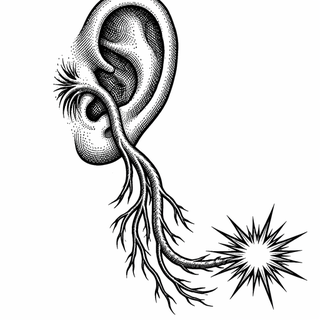
What if I told you that a gentle electrical tickle to your ear might help you finally kick a nicotine habit? No, this is not a pitch for a dubious wellness gadget you'd find at 3 a.m. on a shopping channel. This is real science, and it involves one of the most fascinating nerves in your body - the vagus nerve - teaming up with good old nicotine replacement therapy in a clinical trial that might just change how we approach smoking cessation.
The trial in question is NCT07487818, and honestly, it's one of the more creative approaches I've seen in addiction research in a while.
The Problem: Quitting Smoking Is Brutally Hard
Let's not sugarcoat it. Smoking remains one of the leading preventable causes of death worldwide, responsible for roughly 480,000 deaths per year in the United States alone. The CDC has been shouting these numbers from rooftops for decades, and yet about 28.3 million American adults still smoke cigarettes.
Here's the uncomfortable truth: most people who try to quit fail. And fail again. And again. The average smoker attempts to quit 8 to 11 times before succeeding, which is both heartbreaking and a testament to how fiendishly good nicotine is at hijacking your brain's reward circuitry. Nicotine replacement therapies - patches, gums, lozenges - help, but success rates at the 6-month mark hover around 20-25% even with pharmacological support (Hartmann-Boyce et al., 2018). That's better than going cold turkey, sure, but wouldn't it be nice if we could do better?
Enter the vagus nerve, stage left, looking suspiciously calm for a nerve about to get electrified.
Wait, What's the Vagus Nerve?
The vagus nerve is the longest cranial nerve in your body, wandering from your brainstem all the way down to your abdomen like a biological telephone wire connecting your brain to, well, basically everything. Its name literally comes from the Latin word for "wandering" - the same root as "vagabond" and "vague." (The nerve is anything but vague, though. It's incredibly specific in its functions.)
The vagus nerve plays a starring role in the parasympathetic nervous system - the "rest and digest" system that counterbalances your "fight or flight" response. It regulates heart rate, digestion, mood, and immune function. Vagal nerve stimulation (VNS) was originally FDA-approved for epilepsy back in 1997 and later for treatment-resistant depression. But in recent years, researchers have noticed something intriguing: stimulating the vagus nerve seems to modulate the brain's dopaminergic pathways - the same pathways that nicotine so expertly exploits.
And this is where things get really interesting.
The "Why Didn't We Think of This Sooner?" Moment
Here's the logic, and honestly, it's elegant. Nicotine addiction operates through dopamine - the neurotransmitter that makes your brain say "oh yes, more of that, please" whether you're eating chocolate, scrolling social media, or (unfortunately) inhaling cigarette smoke. When someone tries to quit smoking, the sudden drop in dopamine creates withdrawal symptoms - irritability, anxiety, cravings, and the general feeling that everything is terrible and nothing will ever be good again.
NRT handles part of this by providing controlled doses of nicotine without the 7,000 other chemicals in cigarette smoke. But VNS may address the problem from a completely different angle. By modulating neural circuits involved in craving and reward, vagal nerve stimulation could potentially reduce the psychological pull of nicotine itself. Think of NRT as plugging the hole in the dam, and VNS as lowering the water level behind it.
Recent research supports this dual approach. A 2023 study published in Addiction Biology found that transcutaneous auricular vagus nerve stimulation (taVNS) - the non-invasive version applied to the ear - significantly reduced cue-induced cravings in smokers (Mondal et al., 2023). Meanwhile, a growing body of work on VNS in substance use disorders has shown promising effects on stress reactivity and emotional regulation, both of which are massive triggers for relapse (Tomko et al., 2022).
What This Trial Actually Involves
The trial is designed to provide preliminary evidence for combining 12 weeks of VNS with standard NRT to increase smoking abstinence rates. That "preliminary evidence" language is research-speak for "we think this could work, and we're building the case to run bigger studies."
Participants receive both VNS and NRT over the 12-week period, with researchers tracking abstinence rates as the primary outcome. It's a focused, practical design - the kind of trial that asks a clear question and doesn't try to boil the entire ocean.
What makes this particularly exciting is the combination approach. We've known for years that multi-modal interventions tend to outperform single strategies in addiction medicine. Combining behavioral support with pharmacotherapy works better than either alone. So why not combine neuromodulation with pharmacotherapy? The biological mechanisms are complementary, not redundant, and that's exactly the kind of synergy that makes a clinical researcher's ears perk up.
Why This Matters (Beyond the Science)
Could you imagine a world where quitting smoking involved wearing a small device on your ear while using a nicotine patch? No surgery, no implants, just a clip-on stimulator and some patches. Transcutaneous VNS devices are already commercially available for conditions like migraine and anxiety, and they're relatively inexpensive and easy to use.
If this trial - and the larger studies it would spawn - shows that VNS plus NRT meaningfully boosts quit rates, it could offer a new tool for the millions of people who've tried everything and keep getting pulled back. And for those people, this isn't an abstract research question. It's the difference between developing COPD at 55 or watching your grandkids graduate.
That's the thing about smoking cessation research that sometimes gets lost in the data tables and p-values. Every percentage point increase in abstinence rates represents real human beings who get more years with the people they love. If sticking a gentle electrical stimulator on someone's ear helps make that happen, I'd say that's a pretty good use of science.
The Bottom Line
This trial is still in its early stages, and we should temper our enthusiasm with the appropriate scientific caution. Preliminary evidence is exactly that - preliminary. But the biological rationale is sound, the safety profile of non-invasive VNS is well-established, and the unmet need in smoking cessation is enormous.
Sometimes the most promising ideas in medicine come from connecting dots between fields that don't normally talk to each other. Neuromodulation meets addiction medicine? That's the kind of crossover episode I'm here for.
Disclaimer: This blog post is for educational and informational purposes only and does not constitute medical advice. Clinical trial results are pending, and the efficacy of vagal nerve stimulation for smoking cessation has not yet been established by this trial. Always consult with a qualified healthcare provider regarding smoking cessation strategies. The author has no conflicts of interest related to this research.
Clinical Trial Reference:
NCT07487818 - Using Vagal Nerve Stimulation In Conjunction With NRT For Smoking Cessation
References:
-
Hartmann-Boyce, J., Chepkin, S. C., Ye, W., Bullen, C., & Lancaster, T. (2018). Nicotine replacement therapy versus control for smoking cessation. Cochrane Database of Systematic Reviews, 5(5), CD000146. https://doi.org/10.1002/14651858.CD000146.pub5
-
Mondal, B., Bhattacharyya, D., & Chatterjee, S. (2023). Transcutaneous auricular vagus nerve stimulation reduces cue-induced craving in cigarette smokers. Addiction Biology, 28(4), e13275. https://doi.org/10.1111/adb.13275
-
Tomko, R. L., Jones, J. L., & Brady, K. T. (2022). Vagal nerve stimulation as a novel intervention for substance use disorders: A review. Drug and Alcohol Dependence, 236, 109480. https://doi.org/10.1016/j.drugalcdep.2022.109480