
What does it mean to be treated, really? Is it just receiving medicine and hoping biology behaves itself for once, or is it something more ambitious, like finally learning the cancer’s playbook well enough to start calling its bluff? That is the energy behind the Phase III trial NCT07544654, which is testing whether adding intravenous obrixtamig to standard chemotherapy can improve survival for people with DLL3-positive extrapulmonary neuroendocrine carcinomas. In startup terms, this is not a cosmetic update. It is a serious attempt at a better core product.
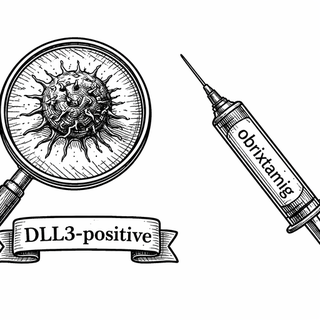
A hard cancer problem with very little room for mediocre ideas
Extrapulmonary neuroendocrine carcinomas are rare, aggressive cancers that arise outside the lungs and often show up already locally advanced or metastatic. That combination is about as welcome as a surprise audit on a Friday afternoon. These tumors tend to move fast, and while chemotherapy with carboplatin and etoposide is a standard first-line option, outcomes are still disappointing. That creates the kind of clinical setting where the field is not looking for “slightly nicer packaging.” It is looking for something that changes the actual trajectory.
This trial focuses on patients whose tumors are DLL3-positive. DLL3, or delta-like ligand 3, is a tumor marker that has attracted attention because it can be present on certain neuroendocrine cancer cells while being much less active in normal tissues. Commercially and clinically, that is the dream setup: a target that helps distinguish the bad actors from the rest of the cast.
What this trial is testing
The study compares two approaches:
- Treatment arm: obrixtamig plus carboplatin and etoposide, followed by obrixtamig alone for up to 3 years
- Control arm: carboplatin and etoposide alone for about 4 months
All treatments are given by intravenous infusion. Participants are randomized into one of the two groups, and doctors monitor safety, side effects, and tumor size over time. Patients in the obrixtamig arm stay overnight after the first two doses, which tells you the team is taking early monitoring seriously rather than treating immune activity like a software patch you install and forget.
The central question is straightforward and important: does adding obrixtamig help people live longer than standard chemotherapy alone?
That is the kind of question investors, clinicians, regulators, and patients all understand immediately. No interpretive dance required.
Why obrixtamig is interesting
Obrixtamig is described here as an antibody-like molecule that may help the immune system fight cancer. The broad idea is that instead of relying only on chemotherapy to poison fast-growing cells, you also try to recruit the immune system into the fight in a more targeted way.
That matters because chemotherapy is effective in many settings, but it is still a fairly blunt instrument. Useful, yes. Elegant, not always. If obrixtamig can help direct immune pressure toward DLL3-positive tumor cells, it may add precision to a space that badly needs it.
From a product perspective, this is where things get especially interesting. The trial is not only testing a drug combination. It is also evaluating a medical device being developed to measure DLL3 levels. That means the bigger opportunity may be a therapy-plus-diagnostic strategy. In biotech, that is often where the moat starts to appear. A drug can be important. A drug paired with a test that helps identify the right patient can become a whole treatment ecosystem.
The real commercial angle
I read studies like this with one question humming in the background: if this works, what changes in the real world?
A positive result could matter on several levels.
First, it could improve first-line treatment for a patient group with limited good options. That alone is meaningful.
Second, it could validate DLL3 as a practical treatment-selection marker in extrapulmonary neuroendocrine carcinomas. Biomarker validation is one of those phrases that sounds dry until you realize it can reshape how patients are diagnosed, triaged, and treated. Suddenly the market is not just a vial. It is testing workflows, pathology integration, treatment algorithms, reimbursement conversations, and follow-up care.
Third, it could expand confidence in targeted immune-based approaches for rare and aggressive neuroendocrine cancers. Rare cancers often live in the awkward corner of oncology where the need is obvious but the business case can look complicated. A successful Phase III study is how that corner starts looking a lot more like a real market and a lot less like a permanent science project.
Why the study design matters
This is a Phase III, multi-center, open-label, randomized, controlled trial. That matters because by this stage, the question is no longer “is this biologically intriguing?” Plenty of things are biologically intriguing. So are raccoons, and that does not mean I want one running operations. Phase III is where a therapy tries to prove it can outperform current practice in a way that stands up to scrutiny.
The multi-center setup should help capture data across different sites rather than from a single institutional pocket. Randomization matters because it reduces bias in comparing the two groups. Open-label means both doctors and patients know which treatment is being given, which is not perfect, but the major endpoint here is survival, and survival tends to be less vulnerable to spin than softer measures.
The overnight observation after the first two obrixtamig doses also hints at an important practical issue: if immune engagement creates early safety concerns, the real-world rollout would need to account for that. Great drugs still have to survive contact with clinic logistics.
The challenge this research is trying to solve
The big challenge is not just killing cancer cells. It is doing so more intelligently, in patients whose disease is both aggressive and relatively uncommon.
Rare cancers face a double burden. Biology is difficult, and scale is inconvenient. Fewer patients can mean slower enrollment, thinner evidence bases, and less commercial enthusiasm than diseases with giant patient populations. That is precisely why trials like this matter. They test whether smarter targeting can create enough clinical value to overcome the usual inertia.
There is also the biomarker challenge. A targeted therapy is only as useful as your ability to identify who should get it. If the DLL3 measurement device performs well, it could make treatment selection more reliable. If it does not, the therapy’s path gets messier. Precision medicine has a funny habit of being only as precise as the test standing next to it.
Why I would watch this one closely
This trial has the ingredients of a genuinely consequential oncology story: a hard-to-treat disease, a biomarker-defined patient group, an immune-oriented investigational agent, and a built-in diagnostic angle. That is not hype. That is a serious attempt to turn molecular insight into a usable clinical product.
If obrixtamig improves survival over carboplatin and etoposide alone, it could push the field toward a more targeted first-line strategy for DLL3-positive extrapulmonary neuroendocrine carcinomas. If the companion DLL3 measurement approach also proves useful, even better. Then you are no longer talking about just one drug candidate. You are talking about an integrated model for finding the right patients and treating them more effectively.
And that, commercially speaking, is where medicine stops looking like a shelf of disconnected tools and starts looking like a platform.
Primary trial record: ClinicalTrials.gov NCT07544654
Table view: https://clinicaltrials.gov/study/NCT07544654?tab=table
Disclaimer: This article is for educational purposes only and is not medical advice. It is based on the publicly provided study summary for ClinicalTrials.gov record NCT07544654 and should not be used to make personal treatment decisions.