
Fair warning: things are about to get weird. I'm going to try to make you genuinely excited about the stuff that comes off shrimp shells being combined with the protein from corn to wrap your leftover lasagna. And honestly? By the end of this, you might be ready to invest.
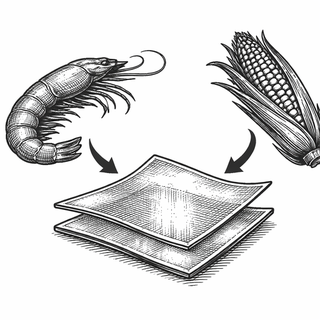
Researchers have developed a biodegradable double-layer packaging film made from chitin nanocrystals and zein - two materials that sound like rejected Pokémon names but are actually abundant, renewable, and kind of brilliant when you stick them together. The result is a food packaging material that repels water like a tiny rain jacket for your sandwich, blocks oxygen and UV light like a bouncer at a nightclub, and then just... decomposes when you're done with it. No microplastics. No guilt. Just science being incredibly cool.
The Plastic Problem Nobody Can Ignore (But Everyone Keeps Ignoring)
Here's the commercial landscape in a nutshell: the global food packaging market is worth over $400 billion, and roughly 40% of all plastic produced worldwide goes toward packaging. Most of it gets used once and then haunts the planet for the next 500 years. Consumers are screaming for alternatives, regulations are tightening across the EU, Asia, and North America, and yet biodegradable options have been stuck in a frustrating loop of "great concept, mediocre performance."
The problem has always been the same. Biodegradable films made from natural polymers tend to be terrible at keeping moisture out. They swell. They soften. They basically surrender the moment your strawberries start sweating. It's like building a raincoat out of tissue paper - conceptually on the right track, practically useless.
This is exactly the gap this new research targets.
Chitin + Zein: The Unlikely Power Couple
Let's meet the ingredients. Chitin is the second most abundant natural polymer on Earth (cellulose takes the gold medal). It's found in crustacean shells, insect exoskeletons, and fungal cell walls. Every year, the seafood industry generates millions of tons of shell waste, most of which ends up in landfills. Turning that waste into high-performance nanocrystals is the kind of upcycling that makes both environmentalists and CFOs smile.
Zein is a protein extracted from corn. It's hydrophobic - meaning it actively dislikes water - which makes it a natural candidate for moisture barrier applications. It's also biodegradable, non-toxic, and already approved for food contact in many jurisdictions.
The researchers used deacetylated chitin nanocrystals (D-ChNCs) as the base film substrate. Deacetylation gives the chitin surface a positive charge, which becomes extremely useful in the next step. They then applied a zein layer on top using electrostatic deposition - essentially letting opposite charges attract to create a tightly bonded bilayer structure. No harsh chemical crosslinkers. No complicated machinery. Just physics doing what physics does best.
The Numbers That Make This Exciting
The performance data is where this gets commercially interesting. Compared to the neat chitin nanocrystal film alone, the double-layer version showed a water contact angle of over 101 degrees. For context, anything above 90 degrees is considered hydrophobic - water beads up and rolls off rather than soaking in. Standard biodegradable films typically hover in the 40-70 degree range. Getting past 100 degrees with fully biodegradable materials is a significant achievement.
But it's not just about water resistance. The zein layer also enhanced the film's oxygen barrier properties and UV-blocking capabilities. Oxygen is enemy number one for food shelf life - it drives oxidation, promotes microbial growth, and turns your fresh produce into a science experiment faster than you'd like. UV light accelerates the same degradation processes. A single film that addresses moisture, oxygen, AND UV? That's the trifecta food packaging engineers have been chasing.
The manufacturing process itself is also worth noting. Electrostatic deposition is scalable, relatively low-cost, and doesn't require specialized equipment. This isn't some exotic lab-only technique that works beautifully at the milligram scale and falls apart at production volumes. The raw materials are cheap and abundant. The process is straightforward. From a startup perspective, the path from lab bench to production line looks refreshingly short.
Why the Timing Is Perfect
The sustainable packaging market is projected to exceed $500 billion by 2030, driven by regulatory pressure, consumer demand, and corporate ESG commitments. Major food brands are actively hunting for plastic alternatives that don't compromise shelf life. The EU's Single-Use Plastics Directive is already reshaping the European market, and similar legislation is advancing in the US, Canada, and across Asia-Pacific.
But here's the thing most biodegradable packaging startups run into: retailers and food producers won't switch unless the alternative performs at least as well as conventional plastic. "It's eco-friendly" doesn't cut it when your yogurt goes bad three days early and your return rates spike. This research demonstrates barrier properties that start to approach conventional plastic performance while maintaining full biodegradability. That's the unlock.
There's also the raw material story. Using seafood industry waste (chitin) and agricultural byproducts (corn-derived zein) creates a supply chain narrative that sustainability officers dream about. You're not just replacing plastic - you're converting two different waste streams into a premium product. The circular economy pitch practically writes itself.
What Comes Next
This is still early-stage research, and there are open questions. Long-term stability under real-world storage conditions needs further validation. Mechanical properties like tensile strength and flexibility at scale production volumes need testing. Regulatory approval pathways for food contact materials vary by country and can be lengthyeurdles.
But the foundation is strong. The materials are available, the process is scalable, and the market is desperate for exactly this kind of solution. If someone can take this bilayer technology and optimize it for specific high-value applications - think fresh produce packaging, cheese wrapping, or single-serve protein packaging - there's a genuine commercial opportunity sitting right here.
Shrimp shells and corn protein. Who knew the future of food packaging was hiding in the waste bin all along?
This blog post discusses research findings and should not be taken as medical or industrial advice. If you have concerns about food packaging safety or sustainability, please consult qualified professionals. Research discussed here represents ongoing scientific investigation and commercial validation is still in progress.
All images used in this post are decorative illustrations only and do not represent or reflect the accuracy, reality, or correctness of the referenced research.
Primary Source: Biodegradable chitin nanocrystal/zein double-layer film with enhanced barrier properties for sustainable food packaging. 2025. DOI: PubMed 41861872