
One of the recurring puzzles in drug delivery is almost comically stubborn: how do you place a medicine exactly where it is needed and then persuade it not to sprint out the door all at once? Hydrogels have looked like a strong candidate for years because they are soft, water-rich, and structurally similar to human tissue. But many of them still behave like a leaky sponge at the worst possible moment, releasing a big early burst of drug when what clinicians often want is patience. This new nanocellulose study attacks that problem with a neat chemical twist: instead of giving the material one reactive feature, the researchers built it with two.
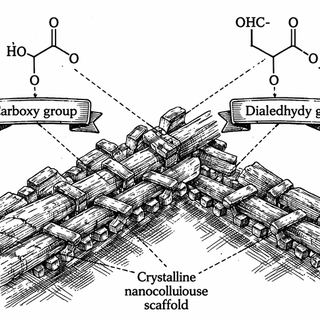
That matters because materials science is often a game of handles. If a hydrogel has only one kind of chemical “grip,” its options for assembly and performance are narrower. In this paper, the team reports a crystalline nanocellulose carrying both carboxy and dialdehyde groups. Think of it as upgrading from a door with one lock to a system with two coordinated keys. That extra layer of control can change how the gel forms, how stable it is, and how steadily it can release a therapeutic payload.
Why hydrogels keep showing up in biomedical research
Hydrogels are one of those platform technologies that refuse to stay in a single lane. They are being explored for wound care, tissue engineering, injectable therapies, and localized drug delivery. The appeal is fairly easy to quantify.
A good biomedical hydrogel can offer:
- High water content, which helps it resemble soft tissue
- Tunable porosity, which influences how molecules move through it
- Biocompatibility, which raises its odds of playing nicely with the body
- Localized placement, which can keep treatment concentrated where it is needed
That last point is a big one. Local delivery is attractive because systemic dosing can be a blunt instrument. If you can put the material where the problem is, you may be able to use less drug overall and reduce unwanted effects elsewhere. In theory, it is elegant. In practice, the release profile often ruins the party.
The classic problem is burst release. Large amounts of drug escape early, followed by a much weaker tail. If you like roller coasters, great. If you like stable therapeutic dosing, less great.
What this study changes
The researchers designed a bifunctional crystalline nanocellulose, meaning the nanocellulose surface carries two different reactive chemical groups: carboxy groups and dialdehyde groups.
Here is the core pattern the numbers-minded brain latches onto: one functional group is useful, two functional groups can be strategic. Each group brings different chemistry to the table.
- Carboxy groups can contribute charge, interaction potential, and crosslinking behavior.
- Dialdehyde groups can participate in additional chemical bonding pathways, especially useful for network formation.
By combining both on the same nanocellulose scaffold, the researchers created a more modular hydrogel platform. “Modular” is not just decorative lab vocabulary here. It suggests the material can be tuned more deliberately, rather than forcing every application through the same one-mechanism design.
Most reported nanocellulose hydrogel systems, according to the paper summary, rely on single-mode crosslinking. That is a limitation because a single crosslinking strategy can constrain gel strength, assembly conditions, and release behavior. This study moves toward a more flexible architecture, which is exactly the sort of incremental-looking change that can end up mattering a lot later.
Why dual functionality could improve drug release
Drug release from a hydrogel is shaped by several variables at once: pore structure, swelling, network density, chemical interactions with the drug, and degradation behavior. In short, the drug is not just sitting there waiting politely. It is responding to the material around it.
A bifunctional nanocellulose network could help on several fronts:
- It may support more controlled gel formation.
- It may create a denser or better organized polymer network.
- It may reduce the rapid diffusion that drives burst release.
- It may allow more sustained release over time.
That last piece is the headline result implied by the title itself: sustained drug release. In drug delivery, “sustained” is a small word doing a lot of work. It means the material is not simply carrying the drug. It is managing time, which is arguably the hardest variable in medicine. Biology changes by the hour. Patients definitely do. Materials that can keep up without becoming chemically fussy are rare enough to deserve attention.
Why nanocellulose is such an interesting base material
Nanocellulose has a strong reputation in biomaterials for good reason. It comes from cellulose, the same broad family of structural biopolymers found in plants, but engineered at the nanoscale into forms with useful mechanical and surface properties.
From a platform perspective, nanocellulose offers:
- A high surface area for chemical modification
- Strong mechanical behavior relative to its size
- Biocompatibility that makes it attractive for biomedical use
- Structural versatility for gels, films, and composites
That combination is why researchers keep returning to it. It is a bit like the reliable colleague in every group project who somehow also learned advanced chemistry over the weekend.
In this case, the team is not just using nanocellulose as passive filler. They are turning it into an active architectural element of the hydrogel. That distinction matters. Passive materials occupy space. Active materials shape function.
The bigger clinical angle
If follow-up development goes well, this kind of hydrogel platform could be useful anywhere local, prolonged drug delivery is desirable. That could include wound sites, implanted materials, tissue repair zones, or other situations where repeated dosing is inconvenient or less effective.
The potential gains are straightforward:
- Fewer dramatic release spikes
- Longer residence of therapeutic effect
- Better local control
- More adaptable hydrogel design across different drugs or clinical needs
Of course, this is the stage where scientific optimism has to stay on a leash. A promising materials platform is not the same thing as a validated therapy. Before anything like this reaches routine clinical use, researchers still need to establish reproducibility, loading capacity, release consistency across drugs, biocompatibility in realistic biological settings, and manufacturing feasibility at scale. Chemistry can look brilliant in a controlled experiment and then become humblingly complicated when real tissues, real fluids, and real timelines show up.
Why this paper is interesting beyond the chemistry
What I like about this study is that it addresses a very specific bottleneck rather than pretending to solve all of drug delivery in one sweep. The problem is clear: many nanocellulose hydrogels release too much, too fast. The proposed fix is also clear: redesign the material so it has more than one mode of interaction during hydrogel formation.
That is often how useful progress actually looks. Not fireworks. Better knobs to turn.
And in biomaterials, better knobs can be everything. A hydrogel that is more tunable is more likely to be matched to different drugs, tissue environments, or treatment goals. That makes it less of a one-off invention and more of a platform worth building on.
So the headline here is not just “scientists made a new hydrogel.” It is that they improved the logic of the scaffold itself. In data terms, they added another variable to the model, except this time the model might eventually sit in a wound bed or release a therapy over days instead of dumping it in a single enthusiastic afternoon.
This blog post discusses research findings and should not be taken as medical advice. If you have concerns about drug treatments or biomaterial-based therapies, please consult a healthcare provider. Research discussed here represents ongoing scientific investigation and clinical validation is still in progress.
All images used in this post are decorative illustrations only and do not represent or reflect the accuracy, reality, or correctness of the referenced research.
Primary Source: PubMed Record 41805236. Nanocellulose with dual carboxy and aldehyde functionality: a modular platform for hydrogel formation and sustained drug release. Available at: https://pubmed.ncbi.nlm.nih.gov/41805236/