
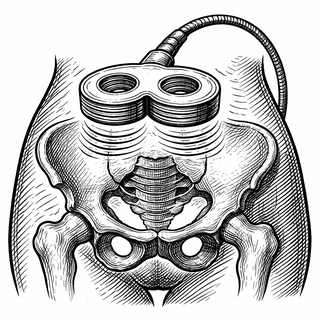
When someone tells you that magnets might help your chronic pain, your first instinct might be to back away slowly and check if they're also selling crystals and essential oils. But in this case, the science is actually pretty interesting - and a clinical trial (NCT07265687) is investigating whether pelvic functional magnetic stimulation can help women suffering from the often-debilitating pain of endometriosis.
Let's dig into this, because it turns out magnets are a lot more medically useful than your refrigerator would suggest.
Endometriosis: The Condition That Medicine Keeps Failing
If you're not familiar with endometriosis, consider yourself fortunate. For the roughly 10% of women of reproductive age who have it, this condition can be life-alteringly painful and frustratingly difficult to treat.
Here's the basic problem: tissue similar to the lining of the uterus (the endometrium) starts growing in places it absolutely should not be - on the ovaries, fallopian tubes, the outside of the uterus, the bowel, the bladder, and sometimes even further afield. This tissue responds to hormonal cycles just like the uterine lining does, which means it thickens, breaks down, and bleeds with each menstrual cycle.
Except, unlike the uterine lining which has an exit route, this blood and tissue has nowhere to go. The result? Inflammation, scarring, adhesions (where organs essentially stick together), and pain. Often excruciating, life-disrupting, "I can't go to work today" pain.
The kicker? On average, it takes 7-10 years from the onset of symptoms for a woman to receive an accurate diagnosis. That's nearly a decade of suffering, often while being told it's "just bad periods" or, everyone's favorite, that it might be "all in your head."
Current treatment options include hormonal therapies (which work for some but come with their own issues), surgical removal of endometriotic tissue (which can provide relief but isn't always permanent), and pain management strategies that often feel more like coping mechanisms than actual solutions.
Chronic Pelvic Pain: When Your Nervous System Joins the Party
Here's where things get complicated. Many women with endometriosis develop chronic pelvic pain (CPP) that persists even after the visible endometriosis has been surgically removed. What's going on?
The answer involves a concept called central sensitization. Basically, when your body experiences pain signals for long enough, your nervous system starts amplifying those signals. It's like your pain processing system gets stuck on high alert, interpreting normal sensations as painful and making actual painful sensations even worse.
Additionally, chronic pain often leads to muscle dysfunction. The pelvic floor muscles - that hammock of muscles supporting your pelvic organs - can become chronically tense (a condition called pelvic floor hypertonicity). These muscles essentially clench up protectively and then refuse to relax, creating additional pain that feeds back into the cycle.
So you end up with a multi-layered pain problem: the original tissue damage from endometriosis, a sensitized central nervous system amplifying pain signals, and dysfunctional muscles adding their own painful contribution. Traditional approaches that target just one of these components often fall short.
This is where magnetic stimulation enters the picture.
Magnetic Stimulation: How Does It Actually Work?
Magnetic stimulation uses rapidly changing magnetic fields to induce electrical currents in tissue. If you remember basic physics, a changing magnetic field creates an electrical field - that's how generators work. In medical applications, we use this principle to stimulate nerves and muscles without having to stick anything through the skin.
There are several types of magnetic stimulation being studied for chronic pelvic pain:
Transcranial Magnetic Stimulation (TMS): Applied to the brain, usually over the motor cortex. This approach targets the central sensitization component by essentially trying to "reset" how the brain processes pain signals.
Pelvic Floor Magnetic Stimulation (PFMS): Applied to the pelvic region, targeting the peripheral nerves and muscles directly. This approach aims to modulate the sacral nerves (S2-S4), promote muscle relaxation, and improve blood circulation in the pelvic floor.
Flat Magnetic Stimulation (FMS): A newer variation that uses homogeneous rather than curved electromagnetic fields. Proponents argue this provides more consistent stimulation across the target area.
The clinical trial NCT07265687 is specifically investigating pelvic functional magnetic stimulation - the approach that targets the peripheral structures rather than the brain.
The Evidence So Far
Research on magnetic stimulation for chronic pelvic pain is still in relatively early stages, but the existing data is encouraging.
A pilot study published in the Journal of Clinical Medicine examined repetitive transcranial magnetic stimulation (rTMS) in patients with chronic pelvic pain due to endometriosis. The protocol involved one session per day for 5 consecutive days, with each session delivering 1,500 pulses at 10 Hz over the primary motor cortex.
The results? Nine of twelve women reported improvement on the Patient Global Impression of Change scale, with reductions in both pain intensity and pain interference. No patients experienced serious adverse effects or significant increases in pain. The researchers concluded that rTMS appears well tolerated and might be of interest for patients whose pain hasn't responded to other treatments.
Another study published in Advances in Urology investigated flat magnetic stimulation for chronic pelvic pain with pelvic floor hypertonicity. The researchers found that 20-30 minutes of electromagnetic stimulus generated satisfactory results for pain reduction, consistent with earlier studies showing that 25-minute sessions were sufficient to produce significant decreases in pain sensation.
A systematic review examining magnetic therapy for chronic pelvic pain noted the "good results reported in the five trials, the scarcity of adverse effects, the low rate of abandonment, and the non-invasive nature of the electromagnetic treatment" - leading the authors to consider incorporating magnetic therapy into clinical practice.
Why the Pelvic Floor Matters
Recent research has highlighted the connection between pelvic floor dysfunction and chronic pelvic pain in gynecological conditions like endometriosis. A 2024 study published in PubMed examined ultrasound changes in pelvic floor features after flat magnetic stimulation treatment.
The pelvic floor isn't just about bladder control (though that's part of it). These muscles affect sexual function, bowel function, posture, and pain perception throughout the pelvic region. When they're chronically tense - as often happens in response to ongoing pain - they contribute to a feedback loop of muscle tension, reduced blood flow, nerve irritation, and more pain.
Magnetic stimulation targeting the pelvic floor can potentially break this cycle by:
- Inducing muscle contractions followed by relaxation (essentially forcing the muscles to stop clenching)
- Modulating the sacral nerves that control pelvic floor function
- Improving blood circulation to the region
- Reducing inflammation and promoting healing
What Makes This Approach Appealing
Beyond the potential effectiveness, magnetic stimulation has several practical advantages that make it attractive for chronic pelvic pain treatment:
Non-invasive: No needles, no incisions, no anesthesia. You sit in a chair with a magnetic coil positioned appropriately, and the treatment happens through your clothes. This is a significant advantage over surgical interventions.
Low side effect profile: The existing studies report minimal adverse effects. Most common complaints are minor and temporary - things like mild headache or tingling sensations.
No medication interaction: Unlike pharmacological approaches, magnetic stimulation doesn't interact with other medications or accumulate in your system.
Minimal time commitment: Sessions typically run 20-30 minutes, often scheduled over a period of days or weeks.
Repeatable: If the treatment works, it can generally be repeated if symptoms return.
The Challenges and Unknowns
Of course, it's not all straightforward. There are legitimate questions that research is still working to answer:
Optimal protocols: What frequency of stimulation? How many pulses per session? How many sessions? What's the best target location? These parameters aren't fully standardized yet.
Duration of effect: How long do the benefits last? Some studies follow patients for weeks, others for months - but we don't have long-term data yet.
Who responds best: Not everyone improves with magnetic stimulation. Can we predict who will benefit most?
Mechanism clarity: We have theories about how magnetic stimulation helps, but the exact mechanisms aren't fully understood.
Sample sizes: Many existing studies are small pilot trials. The field needs larger, well-controlled studies to confirm findings and refine treatment approaches.
What This Trial Could Tell Us
The NCT07265687 trial represents an important step in building the evidence base for magnetic stimulation in endometriosis-related chronic pelvic pain. Properly designed clinical trials are how we move from "this seems promising" to "we know this works and here's how to use it."
Key questions this research can help answer include:
- Does pelvic magnetic stimulation reduce pain scores in women with endometriosis?
- How do the benefits compare to other treatment options?
- What treatment protocol works best?
- How long do the effects persist?
- What predicts who will respond well?
The Bigger Picture
Chronic pelvic pain from endometriosis represents a massive unmet medical need. Current treatments are often inadequate, leaving many women suffering despite multiple surgeries and various medications. The need for new approaches is real and urgent.
Magnetic stimulation offers a genuinely different mechanism of action - one that doesn't rely on hormones, doesn't involve cutting tissue, and doesn't have the systemic side effects of many pain medications. If it proves effective, it could become an important tool in the multimodal approach that chronic pelvic pain typically requires.
And let's be honest: a treatment that's non-invasive, relatively quick, and low-risk would be a welcome addition to options for a condition that has historically been under-researched, under-recognized, and under-treated.
So yes, magnets for pain. Not the magnetic bracelets your uncle wears. Not the refrigerator magnets decorating your kitchen. But precisely targeted, carefully calibrated electromagnetic fields that might just help rewire dysfunctional pain circuits.
Science is weird. And sometimes wonderfully so.
Clinical Trial Reference: NCT07265687 - "Pelvic Functional Magnetic Stimulation on Pain in Endometriosis"
For more information on magnetic stimulation research: DOI: 10.3390/jcm8040508 (rTMS pilot study); DOI: 10.1155/2023/9983301 (flat magnetic stimulation in CPP); DOI: 10.3390/ijerph19105824 (systematic review)
Disclaimer: This blog post is for informational purposes only and does not constitute medical advice. Magnetic stimulation for endometriosis-related pain is still being researched and is not yet an established standard of care. Always consult with a qualified healthcare provider for diagnosis and treatment of endometriosis and chronic pelvic pain. Images and graphics are for illustrative purposes only and do not depict actual medical devices, procedures, mechanisms, or research findings from the referenced studies.