
Let's be honest for a second. Pancreatic cancer is terrifying. The five-year survival rate hovers around 10-12%, which is the kind of statistic that makes you want to close the browser tab and look at cat videos instead. For patients who've already tried first-line chemotherapy and watched their cancer shrug it off, the options get pretty grim pretty fast.
But here's where things get interesting. A clinical trial at NYU Langone Health is testing what happens when you combine traditional chemotherapy with basically... cooking the tumor from the inside out.
I know. It sounds medieval. It's actually pretty elegant.
The "We're Going to Do WHAT Now?" Procedure
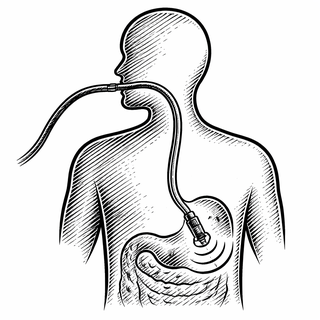
The trial NCT05723107 uses something called endoscopic ultrasound-guided radiofrequency ablation. Let me break that down into human words:
Endoscopic = doctors thread a thin, flexible tube down your throat and into your digestive tract (you're sedated, don't worry)
Ultrasound-guided = they can see exactly where they're going in real-time
Radiofrequency ablation = they use radio waves to generate heat and essentially cook the tumor cells until they die
It's like a very targeted, very precise microwave - except instead of reheating last night's pizza, it's destroying cancer cells while leaving the surrounding tissue mostly alone. The technical term for what happens to the cells is "coagulative necrosis," which sounds like a metal band name but actually just means "dead from heat."
Why This Might Actually Work
Dr. Tamas Gonda at NYU's Tisch Hospital is leading this Phase I pilot study, and the early data is genuinely encouraging.
A 2022 study followed 10 patients with locally advanced or metastatic pancreatic cancer who received EUS-RFA alongside their chemotherapy. The median survival was 20.5 months (Gonda et al., 2022). For context, patients with locally advanced pancreatic cancer typically survive 9-12 months. Two patients in that study were still alive past 61 and 81 months respectively. In pancreatic cancer world, those numbers are practically miraculous.
Another study of 22 patients found median survival of 24 months and one-year survival rates of 72.7% (Wang et al., 2022). Again - for this particular cancer, that's like finding out your car gets twice the gas mileage everyone told you it would.
The Unexpected Bonus: Teaching Your Immune System
Here's where it gets really interesting. When you heat up tumor tissue, you don't just kill cancer cells - you essentially create a mess of dead tumor material that your immune system has to clean up. And in the process, your immune system finally gets a good look at what those cancer cells actually look like.
Think of it like this: your immune system has been walking past the cancer wearing a fake mustache and trench coat for months, completely undetected. RFA rips off the disguise.
Research suggests that this heat-induced cell death can trigger an immune response, essentially teaching your body to recognize and attack cancer cells it previously ignored. One study found that RFA elevated levels of PD-L1 - a protein that, when targeted with immunotherapy drugs, helped sustain tumor reduction (Gao et al., 2022).
This could explain why some patients survive way longer than expected. It's not just the ablation killing tumor cells directly - it might be the ablation waking up the immune system.
Who Gets to Try This?
The trial is recruiting at Tisch Hospital in New York City right now. To qualify, you need:
- Confirmed pancreatic ductal adenocarcinoma (the most common type), measuring 1-4 cm
- Locally advanced, unresectable disease (meaning surgery isn't an option)
- Cancer that's progressed after first-line chemotherapy
- ECOG performance status of 0-2 (basically, you can take care of yourself and are active at least half the day)
If you have distant metastases, tumors outside the 1-4 cm range, or are pregnant, you're excluded. They're looking for 15 participants total, with estimated completion in March 2028.
Patients get the RFA procedure three times during treatment - weeks 1-3, 5-7, and 9-11 - while continuing their second or third-line chemotherapy.
The Safety Question
Since this is a Phase I trial, the main goal is figuring out if it's safe - specifically, how many patients can complete therapy without serious complications.
Previous research is reassuring on this front. In the 2022 study, there were no major adverse events like bleeding, perforation, infection, or pancreatitis. The main side effect was temporary worsening of existing abdominal pain in about half of treatment sessions, managed with short-term pain meds (Gonda et al., 2022).
A 2024 systematic review found adverse events in about 41% of patients receiving RFA for related biliopancreatic conditions, with biliary stricture (22.2%) and pancreatitis (14.3%) being most common (Gaspar et al., 2024). Not nothing, but generally manageable.
The Bigger Picture
Pancreatic cancer treatment has been frustratingly stagnant for decades. The disease resists chemotherapy like it's got a personal grudge, and by the time most people are diagnosed, surgery is off the table. For patients whose cancer has already blown through first-line treatment, options have been... limited.
This trial represents one piece of a larger puzzle. There's also an international randomized controlled trial called PELICAN investigating RFA combined with chemotherapy for locally advanced pancreatic cancer, building the rigorous evidence needed to make this a standard treatment option.
For now, if you're in New York, have exhausted first-line treatments, and meet the criteria - this might be worth a conversation with your oncologist. You can reach Dr. Gonda's team at 212-263-3095 or Tamas.Gonda@nyulangone.org.
Sometimes the best medical advances sound a little crazy at first. "We're going to thread a tube down your throat and microwave your tumor" definitely qualifies. But the data suggests it might actually work.
References
-
Gonda TA, et al. Endoscopic ultrasound-guided radiofrequency ablation for advanced pancreatic and periampullary adenocarcinoma. Sci Rep. 2022;12:16516. DOI: 10.1038/s41598-022-20316-2
-
Wang D, et al. Clinical outcomes of EUS-guided radiofrequency ablation for unresectable pancreatic cancer. Endosc Ultrasound. 2022;11(1):73-80. DOI: 10.1055/a-1717-0088
-
Gaspar RJ, et al. Radiofrequency ablation for ampullary neoplasia: Systematic review and meta-analysis. Endosc Int Open. 2024;12(4):E440-E449. DOI: 10.1055/a-2210-8655
-
Gao S, et al. Radiofrequency Ablation Promotes Neutrophil-Mediated Abscopal Immunomodulation in Pancreatic Cancer. Cancer Immunol Res. 2023;11(3):384-395. DOI: 10.1158/2326-6066.CIR-22-0379
This blog post is for educational purposes only and does not constitute medical advice. Clinical trial participation should be discussed with qualified healthcare providers. Always verify current trial status at ClinicalTrials.gov.
Images and graphics are for illustrative purposes only and do not depict actual medical devices, procedures, mechanisms, or research findings from the referenced studies.