
I’ll be honest, when I first read this title, I thought someone had found a way to reboot memory with a fancy garage-door opener. Then I read the details, and no, this is not snake oil in a lab coat. It is a pilot study looking at repetitive transcranial magnetic stimulation, or rTMS, as a possible way to improve cognitive function in older adults with mild to moderate impairment. That is a serious problem, and one medicine has not exactly solved while taking a victory lap.
Why this trial catches the eye
Cognitive impairment sits in that miserable middle ground between normal aging and full-blown dementia for a lot of people. Patients notice the slips. Families notice the slips. Everybody tries to joke about where they left the car keys until the joke stops being funny. Mild cognitive impairment and mild dementia are common, disruptive, and stubbornly hard to treat in a way that changes everyday life.
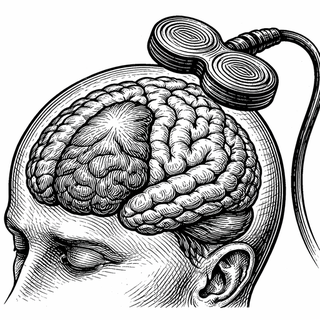
This trial, listed as NCT07547319, is testing whether accelerated rTMS can help. The setup is fairly straightforward: adults ages 50 to 90 with documented cognitive decline and Montreal Cognitive Assessment, or MoCA, scores from 10 to 25 receive six treatment sessions over about three weeks. The stimulation targets the left dorsolateral prefrontal cortex, which sounds like a mouthful because it is one, but think of it as a part of the brain heavily involved in planning, working memory, attention, and other higher-order mental chores that keep daily life from turning into chaos.
The treatment here uses the EXOMIND device and delivers high-frequency pulses, 6,300 per session, alternating among 12, 15, and 18 Hz. Six sessions, twice a week, and then the investigators follow people out to three months. In research terms, that is a prospective, single-center, open-label pilot study. In plain English, it means they are testing the waters carefully, watching what happens over time, and not yet pretending this is the last word on the subject.
What rTMS is actually doing
rTMS is non-invasive. No cutting, no drilling, no dramatic TV-monitor flatline noises. A magnetic coil is placed near the scalp, and it generates pulses that influence activity in specific brain circuits. It is already used in other settings, most famously depression. The appeal is obvious: if a brain network is underperforming, maybe you can nudge it into working better without putting the patient through surgery or flooding the body with another pill.
That does not mean it is magic. The brain is not a laptop, no matter how much clinicians wish we could fix it with one stern restart and a software patch. But the principle makes sense. Cognitive impairment often involves network-level dysfunction, not just one broken switch. If stimulation can improve how those circuits fire and communicate, even modestly, that could matter.
What this study is trying to prove
The primary outcome is practical and sensible: a change in MoCA score at one month after treatment. That is the main question. Did people improve after the course of rTMS, and was that improvement still there a month later?
The secondary outcomes are where things get more interesting. The investigators are not stopping at one broad screening score. They are also using the Creyos cognitive battery to look at more specific domains, including visuospatial working memory, episodic memory, deductive reasoning, mental rotation, verbal short-term memory, and attention. That matters because cognition is not one blob. A person can struggle badly in one area and hold up reasonably well in another. If you only use a blunt screening test, you can miss the details. Medicine has a long history of congratulating itself with the wrong measuring tape.
They are also tracking depressive symptoms with the PHQ-9. Smart move. Mood and cognition are frequent drinking buddies. Depression can worsen concentration, memory, motivation, and test performance. If someone feels better emotionally, that may change cognitive function too, and that is worth separating out.
Why the design matters
This is called an accelerated approach because the six sessions are packed into roughly three weeks. That has real-world appeal. If a treatment works, people are more likely to pursue it if it does not require endless clinic visits stretching toward the heat death of the universe.
The study is also focused on tolerability. That is not glamorous, but it is essential. A treatment can look brilliant on paper and still fail in daily practice if patients hate it, cannot complete it, or feel worse afterward. In older adults, especially those already dealing with cognitive decline, feasibility is half the battle. If the protocol is manageable, that alone raises the odds it could someday be used outside a tightly controlled study.
The flip side is that this is an open-label pilot trial. There is no sham control described in the summary provided, and that means expectations can influence outcomes. Pilot studies are useful for signal detection, safety, and groundwork, but they are not a coronation. If the results look promising, the next step is not to declare victory and start printing miracle headlines. The next step is a tougher, better-controlled trial.
Why this could matter in the real world
If this approach works, even modestly, it could fill an awkward gap in current care. Right now, families dealing with cognitive decline often hear some version of, “We’ll monitor things, optimize risk factors, maybe adjust medications, and hope for the best.” That is honest medicine, but it can feel thin when people want something concrete.
A non-invasive treatment that meaningfully improves memory, attention, or executive function for even a few months would be a big deal. Not because it would cure dementia. It would not. But because preserving function matters. Remembering appointments, following a conversation, managing bills, staying independent a little longer, recognizing when the stove is still on instead of conducting an accidental fire drill for the neighborhood, these are not small wins.
And if the domain-specific testing shows certain cognitive functions improve more than others, that would help refine who might benefit most. Maybe this becomes a targeted tool instead of a one-size-fits-all intervention. In neurology, that is usually where the grown-up science lives.
The hard part nobody should ignore
Cognitive decline is messy. Causes overlap. Symptoms fluctuate. Sleep, hearing loss, depression, medications, vascular disease, and plain old bad luck all get a vote. So when a study tries to improve cognition, it is walking into a crowded room full of confounders, each one insisting it is the main character.
That is why careful follow-up matters. This study checks participants at baseline, after treatment, at one month, and at three months, with total participation lasting up to 139 days. That structure gives the investigators a better shot at seeing whether any gains are brief, sustained, or mostly wishful thinking dressed up as statistics.
Bottom line
This trial is intriguing because it is aiming at a painfully common problem with a treatment that is non-invasive, targeted, and already familiar in other areas of brain health. It is also asking a smarter question than many older studies did by looking beyond a single global score and into specific cognitive domains.
Will six sessions of accelerated rTMS meaningfully sharpen cognition in adults with mild to moderate impairment? We do not know yet. That is the whole point of doing the trial instead of writing fan fiction about it. But the idea is credible, the need is real, and if the signal is strong enough, this little pilot could set the table for something much bigger.
Disclaimer: This article is for educational purposes only and is not medical advice. Research findings from a pilot study should be viewed as preliminary until confirmed in larger controlled trials.
Citation: ClinicalTrials.gov record NCT07547319, “Clinical and Neurophysiological Effects of Accelerated rTMS on Cognitive Function: A Prospective Pilot Study.” Primary URL: https://clinicaltrials.gov/study/NCT07547319 Table view: https://clinicaltrials.gov/study/NCT07547319?tab=table