
The good news: clotrimazole has been effectively killing Candida for decades, and we know exactly how to formulate it. The bad news: the vagina keeps throwing it away. Conventional creams and suppositories leak out, get swept up by the body's own self-cleaning mechanisms, and generally behave like a carefully prepared ragu you spent all afternoon simmering only to watch someone dump it down the drain before dinner. A team of researchers decided the fix wasn't a better drug - it was a better shape of drug carrier. And honestly, their logic is hard to argue with.
The Leaky Kitchen Problem
Vulvovaginal candidiasis (VVC) - the clinical name for the yeast infection that roughly 75% of women will experience at least once - is one of those conditions where the treatment itself isn't the bottleneck. Clotrimazole works. The azole antifungals have been reliable workhorses since the 1970s. The problem is delivery, and it's an engineering problem dressed up in biology.
The vaginal environment is, from a drug delivery standpoint, actively hostile to anything you put in it. There's a mucus barrier that traps foreign particles. There's a natural self-cleaning process that flushes material out. And there's the simple mechanical reality that gravity exists and creams are not known for their tenacity. The result is that conventional formulations achieve low bioavailability - most of the drug you apply never actually reaches therapeutic concentrations where it needs to be, for as long as it needs to be there.
It's like trying to marinate a steak by briefly waving it over a bowl of sauce. Technically the sauce touched the meat. Therapeutically, you've accomplished almost nothing.
When Spheres Aren't Good Enough
This is where the research gets genuinely interesting from an engineering perspective. The team designed clotrimazole-loaded PLGA microparticles - tiny biodegradable polymer carriers packed with antifungal drug - and then asked a question that sounds almost too simple: what if we made them not round?
PLGA (poly lactic-co-glycolic acid) is the sourdough starter of drug delivery polymers. It's FDA-approved, well-characterized, biodegradable, and has been used in everything from sutures to sustained-release implants. Loading it with clotrimazole is straightforward. The innovation here was in the geometry.
The researchers produced two formulations using a double emulsion-solvent evaporation method. First, clotrimazole-loaded PLGA porous microspheres (CPMs) - your standard spherical microparticles with some porosity. Second, clotrimazole-loaded PLGA non-spherical microparticles (CPNMs) - irregularly shaped particles designed to interact differently with the vaginal mucosa.
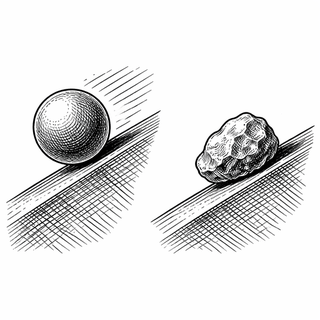
Think of it this way: if you drop a marble on a wet slide, it rolls right off. Drop a piece of crushed gravel, and it catches, grips, and stays put. Same material, same surface, radically different behavior. The researchers were essentially making pharmaceutical gravel.
The Numbers That Matter
Both formulations showed sustained release profiles in vitro, which is table stakes for any controlled-release system worth its polymer weight. The initial burst release within the first 24 hours was expected - PLGA systems almost always show this as drug near the particle surface diffuses out quickly.
Over seven days, CPMs released 46.55% of their clotrimazole payload. CPNMs hit 56.89%. That's a meaningful difference, but the real story showed up in the in vivo pharmacokinetics.
After intravaginal administration in mice, the non-spherical CPNMs maintained detectable drug concentrations for at least 72 hours. That's three full days of therapeutic presence from a single application, compared to the conventional cream-and-pray approach where you're reapplying daily and hoping for the best between doses.
The extended residence time makes intuitive engineering sense. Non-spherical particles have higher surface-area-to-volume ratios and more points of contact with the mucosal surface. They're harder to dislodge. They resist the body's cleaning mechanisms not through chemical adhesion tricks but through simple mechanical advantage - the same reason a star-shaped pasta holds more sauce than a smooth penne.
Biocompatibility: Not Just a Checkbox
Any vaginal formulation has to clear the biocompatibility bar, and CPNMs passed cleanly. Histological evaluation showed no obvious damage to vaginal epithelial cells and low cytotoxicity. This isn't surprising given PLGA's extensive safety track record, but it's worth confirming because changing particle geometry can sometimes create unexpected mechanical irritation. Jagged micro-scale particles pressing against delicate mucosal tissue is not automatically a gentle experience, so the clean histology is reassuring.
The Bigger Picture (and the Caveats)
From a device development perspective, this work is a solid proof-of-concept that particle morphology is an underexploited design variable in mucosal drug delivery. The pharmaceutical industry has spent enormous effort on surface chemistry - mucoadhesive coatings, PEGylation, chitosan modifications - but comparatively little on shape engineering. Sometimes the simplest design lever is the one nobody thought to pull.
That said, let's keep our feet on the ground. This is a mouse study. Murine vaginal physiology, while useful for initial screening, differs from human physiology in ways that matter for residence time and mucus dynamics. The jump from "works in mice for 72 hours" to "works in humans for 72 hours" is not a straight line. It's more like a recipe that works perfectly in your home oven but needs serious recalibration for the industrial kitchen.
Scalability is another open question. Double emulsion-solvent evaporation is well-established at lab scale, but producing non-spherical microparticles with consistent geometry at commercial volumes is a different recipe entirely. Spheres are easy - surface tension does the work for you. Non-spheres require more process control, more characterization, and more batch-to-batch variability management.
Still, the core insight - that shape is a meaningful and tunable parameter for improving mucosal drug delivery - is the kind of elegant, practical finding that actually moves the field forward. It doesn't require a new drug, a new polymer, or a new regulatory pathway. It just requires rethinking geometry.
And sometimes, in drug delivery as in cooking, the shape of the vessel matters just as much as what you put inside it.
This blog post discusses research findings and should not be taken as medical advice. If you have concerns about vulvovaginal candidiasis or any vaginal health issue, please consult a healthcare provider. Research discussed here represents ongoing scientific investigation and clinical validation is still in progress.
All images used in this post are decorative illustrations only and do not represent or reflect the accuracy, reality, or correctness of the referenced research.
Primary Source: Clotrimazole-loaded PLGA microparticles for local drug delivery to the vagina: Shape does matter. PubMed. 2026. PMID: 41943392