
Cancer care does not only need more powerful treatments. It needs better test drives. That is the big promise behind research on "cancer avatars" built with microfluidics, biofabrication, and biosensors: tiny, carefully engineered models that behave more like real tumors, so scientists can stop guessing quite so much and start measuring what matters.
That may sound a little like building a theme park for cells, but the goal is serious. Cancer is not one neat, tidy villain. Tumors are messy neighborhoods full of changing cell types, chemical signals, blood supply quirks, immune interactions, and structural barriers. Traditional lab models often flatten that complexity into something easier to handle but less faithful to life. Convenient? Yes. Representative? Not always.
For communities that already face delayed diagnosis, uneven access to specialty care, and worse cancer outcomes, that gap matters. If research tools do a poor job reflecting real human biology, the people most likely to be failed are often those already underserved by the health system.
What are "cancer avatars"?
In this paper, cancer avatars are not digital characters with lab coats and strong opinions. They are miniature experimental systems designed to mimic a patient's tumor environment more realistically than standard methods. Researchers are combining three technologies to make that happen.
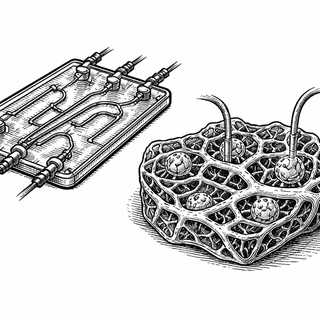
First, there is microfluidics, which uses tiny channels to move fluids in controlled ways. These devices can recreate blood flow, nutrient delivery, drug exposure, and cell-to-cell interactions at a scale that resembles what happens in the body more closely than a static dish on a bench.
Second, there is biofabrication, which uses advanced materials and engineering methods to build tissue-like structures. Instead of growing cancer cells on rigid, flat plastic, scientists can place them in more lifelike surroundings. That matters because tumor cells behave differently depending on the architecture around them. A cell, rather like a person, changes its attitude depending on the neighborhood.
Third, there are biosensors, miniaturized tools that can monitor biological signals in real time. These sensors can track biomarkers, cellular activity, and treatment responses continuously, rather than relying on occasional snapshots. In cancer research, that is a big deal. A blurry before-and-after picture misses the drama in the middle.
Why this is more than clever lab engineering
The review argues that this convergence of technologies could shift cancer research into a more precise era. Microfluidic systems are already valuable because they support miniaturization, automation, and parallel testing. In practical terms, that means researchers can run more standardized experiments, compare conditions more reliably, and potentially test multiple therapies with greater efficiency.
Adding biomimetic tissue structures makes the models more realistic. That is not just a technical flex. Tumors respond to drugs differently depending on oxygen levels, surrounding support cells, physical stiffness, and molecular cues in their environment. If a model cannot capture those features, it may tell an overly simple story.
Biosensors then add another layer of usefulness by allowing real-time, multiplex monitoring. Instead of waiting until the end of an experiment to see whether cells lived or died, researchers can watch dynamic changes unfold. They may be able to detect early signs of resistance, stress responses, or biomarker shifts that would otherwise be missed.
Put all of that together, and you get a better chance of identifying which treatments might work, which ones probably will not, and why.
Why health equity belongs in this conversation
This kind of research can sound futuristic in a way that accidentally leaves equity offstage. It should be front and center.
Many cancer patients do not benefit equally from innovation. Rural patients may live far from specialized centers. Low-income patients may face delays in diagnostic workups and treatment changes. Racial and ethnic minorities are still underrepresented in many areas of biomedical research, which can make "standard" knowledge less universal than we sometimes pretend.
More realistic tumor models could help in several ways if the field follows through thoughtfully. They might support faster and more informative drug testing. They could reduce wasted time on therapies that look promising in oversimplified models but fail in more human-like conditions. Over time, they may improve personalized treatment strategies, especially if future versions are built using patient-derived samples.
That last point matters. Precision oncology cannot just mean precision for patients lucky enough to be near elite institutions. If these platforms become cheaper, more standardized, and easier to scale, they could eventually support broader access to smarter cancer decision-making. That is the optimistic version. The realistic version is that none of this happens automatically. Good tools can still be distributed badly.
The biggest challenges
The paper is careful not to oversell the field, which is refreshing. Cancer avatars may be exciting, but excitement alone does not get devices into clinics, laboratories, or community cancer centers.
One challenge is clinical translation. A model can be elegant in the lab and still be too complicated, too slow, or too expensive for real-world use. Another is standardization. If every lab builds a slightly different system with different materials, cell sources, and measurement strategies, it becomes harder to compare results and establish trust.
There is also the question of access and infrastructure. Advanced microfluidic and biosensor platforms require technical expertise, quality control, and manufacturing consistency. If adoption is concentrated only in well-funded centers, the technology could deepen the same disparities it hopes to address.
And then there is the awkward but necessary question every shiny biomedical tool eventually faces: does it improve patient outcomes, or is it merely very impressive at conferences? That may sound sharp, but it is exactly the standard we should use.
What makes this research interesting right now
What stands out here is not one gadget. It is the integration. Microfluidics, biofabrication, and biosensors each bring something useful on their own, but together they create a stronger platform for modeling cancer as a living system rather than a frozen specimen.
That systems-level view is where real progress often hides. Cancer is adaptive. It responds to pressure, rewires itself, and exploits its surroundings. Studying it in a model that includes structure, flow, and real-time monitoring gives researchers a better shot at seeing those tricks before patients pay the price.
There is also a quiet public health win in the background. Better preclinical models could make research pipelines more efficient, reducing dead ends and improving the evidence base before therapies move further along. In a world where cancer care is expensive enough already, anything that helps separate likely winners from costly disappointments deserves attention.
The bottom line
This paper describes a future where cancer research relies less on oversimplified stand-ins and more on sophisticated mini-models that behave like the real thing. That could improve drug screening, diagnosis, and treatment selection. It could also, if implemented with equity in mind, help move better cancer science closer to the patients who have historically been left waiting at the back of the line.
That is the promise. The work ahead is making sure these avatars do not remain boutique science for a narrow slice of the health system. Cancer is complicated enough already. Our tools should be smarter, not just smaller.
This blog post discusses research findings and should not be taken as medical advice. If you have concerns about cancer, please consult a healthcare provider. Research discussed here represents ongoing scientific investigation and clinical validation is still in progress.
All images used in this post are decorative illustrations only and do not represent or reflect the accuracy, reality, or correctness of the referenced research.
Primary Source: Engineering cancer avatars with microfluidics, biofabrication and biosensors. PubMed. Record ID 42013883. https://pubmed.ncbi.nlm.nih.gov/42013883/