
When I saw this study title, I rolled my eyes. Then I read it.
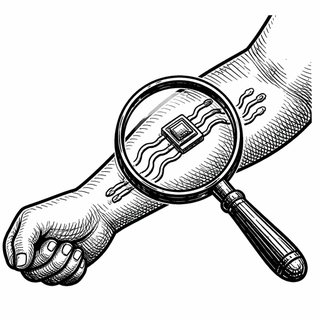
Because "tattoo biosensors" sounds like the kind of phrase invented halfway through a startup pitch and a third espresso. Ancient art. Modern diagnostics. Skin as a health dashboard. It all has a whiff of science-fiction theater.
And yet, the idea is surprisingly grounded.
The paper, Tattoo biosensors: ancient art for modern diagnostics, describes a serious shift in how we might monitor the body. Not by adding one more gadget to charge, strap on, sync, lose, and rediscover under the couch six months later. But by using the skin itself as the interface. A tattoo, in this vision, is not just decoration. It becomes a biosensor. A working one.
That is where things get interesting fast.
From Symbol to Sensor
Tattoos are old. Very old. Humans have used them to mark identity, affiliation, belief, memory, grief, status, rebellion, and occasionally regrettable decisions. They are cultural artifacts with needles attached.
What this paper highlights is a newer possibility: tattoos as functional medical tools.
A biosensor is a device that detects biological signals. That can mean chemicals, metabolites, changes in body conditions, or markers tied to health and disease. Put simply, a biosensor turns biology into readable information. Usually, that requires a wearable patch, an implanted device, or a trip to a lab. Tattoo biosensors aim for something more elegant. The sensor lives in or on the skin, close to the body's chemistry, where useful signals are already passing by.
That matters because skin is not just a wrapper. It is an organ. A big one. It is accessible, visible, and constantly interacting with the internal state of the body. If engineers can place sensing materials there safely and reliably, the skin becomes a diagnostic window with very little fuss.
Why Skin Is Such Good Real Estate
Medicine loves data. The body, less so. Getting useful information usually means blood draws, bulky equipment, repeated clinic visits, or devices that patients forget to wear after day four. Continuous monitoring sounds wonderful until it starts beeping during dinner.
Tattoo-based biosensors offer a different model. They could enable real-time monitoring without making a person feel like a walking appliance. That is the appeal.
The paper frames these systems as a portal from skin to body. A neat phrase, and a fair one. The concept is that tattoo-like sensors can detect physiological changes as they happen. Not hours later. Not after symptoms get bad enough to prompt action. Right then.
That could be useful for health monitoring in everyday life, for chronic disease management, and for catching subtle shifts before they become larger problems. The promise is less episodic medicine and more continuous insight.
Doctors have wanted that kind of thing for ages. Preferably without requiring everyone to become best friends with adhesive patches.
So What Would a Tattoo Biosensor Actually Do?
The broad idea is simple. The execution, of course, is where science earns its lunch.
A tattoo biosensor uses materials designed to respond to biological signals. Those signals might involve changes in chemistry, metabolism, or other measurable markers linked to health. The tattoo is not merely decorative pigment. It is engineered to sense something meaningful.
In practical terms, that could allow a person or clinician to monitor health status in real time. Think less "mystical body art" and more "subtle biochemical reporting system."
The paper also points toward future theranostic applications. That word is a mouthful, but the concept is tidy. Theranostics combines therapy and diagnostics. In other words, a system that not only detects a problem but may also help guide or deliver treatment.
That is where this field starts to sound genuinely ambitious. A tattoo that tracks physiology is already a leap. A tattoo that helps connect diagnosis and treatment begins to edge into a new category of medicine altogether.
Why This Is More Than a Clever Gimmick
Plenty of futuristic health ideas sound impressive right up until they meet real life. Sweat. Movement. Cost. Skin irritation. Human impatience. Regulatory paperwork with the personality of wet cement.
So why take this seriously?
Because it tries to solve a real problem. Modern medicine is still too dependent on snapshots. One blood test. One clinic visit. One number from one afternoon. Bodies are less polite than that. Biology changes by the minute. A person can look fine in an exam room and be heading toward trouble the rest of the week.
Continuous monitoring helps fill those gaps. Wearables already do some of this, but tattoo biosensors could potentially be lighter, less obtrusive, and more integrated into daily life. They may be especially attractive for people who need ongoing monitoring but do not want a visible medical device attached to them every hour of every day.
And unlike many shiny tech ideas, this one meets people where they already are. Tattoos are familiar. Personal. Socially legible. That cultural familiarity may matter more than engineers sometimes admit.
People do not just adopt technology because it works. They adopt it because they can live with it.
The Challenges, Naturally, Are Not Small
Before anyone starts booking a diagnostic sleeve, reality needs a seat at the table.
A tattoo biosensor has to be accurate. Very accurate. It must work consistently across different skin types, body locations, temperatures, activity levels, and time scales. It has to remain stable. It has to be biocompatible. It has to avoid causing irritation or harm. It must keep giving meaningful readings long after the novelty wears off.
Then there is interpretation. Sensing something is one thing. Knowing what that signal means, in context, is another. Biology is noisy. Skin is variable. Human bodies enjoy confounding tidy engineering assumptions.
And then we get to the usual grown-up questions. Privacy. Regulation. Clinical validation. Long-term safety. Equity. Cost. Who gets access, and who gets left with a brochure explaining the future from a distance?
The paper presents tattoo biosensors as an emerging bridge between art and diagnostics. That is accurate. It is a bridge, not a destination. There is still a lot of road on the other side.
Why I Keep Thinking About It
What sticks with me is not just the technology. It is the inversion.
For a long time, tattoos have been seen by institutions as expressive but medically irrelevant. Decorative. Cultural. Symbolic. Now the same format may become a diagnostic platform. Something ancient is being repurposed for something intensely modern.
That is elegant. Also a little funny. Humanity may end up using one of its oldest forms of body modification to build part of the future of personalized medicine.
If that future arrives, it could make health tracking more seamless, more immediate, and perhaps less annoying than the current parade of wearables and temporary patches. A tattoo biosensor would not replace every lab test or every doctor visit. It should not. But it could add a valuable layer of continuous information between those moments.
Which is often where medicine falls short.
My initial eye roll has, regrettably, been withdrawn. This is not just a clever title. It is a glimpse of a field trying to turn the skin into a smarter clinical interface. If it works, ancient art may end up doing one more job nobody expected: quietly helping medicine pay attention.
This blog post discusses research findings and should not be taken as medical advice. If you have concerns about health monitoring or diagnostic testing, please consult a healthcare provider. Research discussed here represents ongoing scientific investigation and clinical validation is still in progress.
All images used in this post are decorative illustrations only and do not represent or reflect the accuracy, reality, or correctness of the referenced research.
Primary Source: Tattoo biosensors: ancient art for modern diagnostics. PubMed Record 42025531. https://pubmed.ncbi.nlm.nih.gov/42025531/