
A seven-year-old sits in a cardiac catheterization lab. The interventional cardiologist reaches for a catheter that was tested in adults, manufactured for adults, and approved based on adult clinical trials. She mentally does the math, estimates the scaling, and hopes for the best. Down the hall, a toddler with a rare metabolic disorder needs a specialized infusion pump. The closest thing available was designed for someone four times his weight. This is not some underfunded clinic in the middle of nowhere. This is modern medicine, globally, right now.
A sweeping new global landscape overview published in 2025 lays bare the uncomfortable reality behind medical device innovation for rare and pediatric populations - and the picture is not pretty.
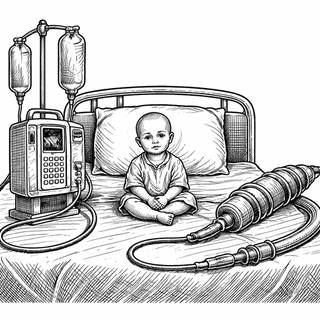
The Device Desert
Here's a fact that tends to surprise people: there are roughly 7,000 recognized rare diseases, collectively affecting an estimated 300 million people worldwide. About half of those affected are children. Pediatric patients in general make up a substantial chunk of hospital populations everywhere. And yet, the medical devices they depend on were overwhelmingly designed with adults in mind.
The industry calls this the "device desert." It's the gap between what pediatric and rare disease patients need and what actually exists on the market. Unlike pharmaceuticals, where pediatric formulations have been pushed forward by regulatory mandates over the past two decades, medical devices have largely slipped through the cracks. The economics are brutally simple. Small patient populations mean small markets. Small markets mean thin profit margins. Thin profit margins mean boardrooms that say "pass."
The result? Clinicians improvise. They modify adult devices off-label. They jury-rig solutions that would make an engineer wince. And they do it every single day.
A Global Snapshot of Innovation (or the Lack Thereof)
The recent landscape overview takes a wide-angle view of how medical device development for these underserved populations looks across different countries and regulatory systems. What emerges is a patchwork of good intentions, inconsistent incentives, and regulatory frameworks that sometimes help and sometimes actively hinder progress.
In the United States, the FDA has made some moves. The Humanitarian Device Exemption (HDE) pathway allows devices targeting conditions affecting fewer than 8,000 patients per year to reach market with less burdensome clinical evidence requirements. The Pediatric Device Consortia program, funded through the FDA, has helped incubate novel pediatric devices. These are real steps. But the pipeline remains thin.
Europe's Medical Device Regulation (MDR), which replaced the older directive system, has arguably made things harder. The more stringent requirements for clinical evidence and post-market surveillance have increased costs across the board. For small companies developing niche pediatric devices, those costs can be fatal. Several manufacturers have simply pulled products from the European market rather than shoulder the regulatory burden. The devices didn't stop working. They just stopped being available.
In lower- and middle-income countries, the situation is bleaker still. Access to even basic medical devices for children is limited by infrastructure, cost, and supply chain challenges. Innovation tends to concentrate where the money is, which means where the large adult patient populations are.
Why Kids Aren't Just Small Adults
This phrase gets repeated so often in pediatric medicine that it has become almost a cliche. But it keeps getting repeated because people keep forgetting it.
A child's anatomy changes dramatically from birth through adolescence. A device that works for a 50-kilogram teenager may be useless for a 3-kilogram preterm infant. Biocompatibility requirements differ. Growth changes the equation entirely - a cardiac implant that fits perfectly today may need replacement in two years as the child grows. Physiological parameters, metabolic rates, even skin thickness - all different, all mattering in ways that device engineers must account for.
For rare diseases, the challenges multiply. Clinical trials become a logistical nightmare when your entire target population could fit in a school auditorium. Endpoint selection is complicated by heterogeneous disease presentations. Natural history data is often sparse or nonexistent. Good luck powering a randomized controlled trial with 40 patients scattered across twelve countries.
Where the Bright Spots Are
Despite the grim statistics, the landscape isn't entirely barren. 3D printing has emerged as a genuine game-changer for pediatric devices, enabling patient-specific implants, surgical guides, and prosthetics that can be customized to a child's exact anatomy - and reprinted as they grow. Academic medical centers have become unlikely innovation hubs, with clinician-engineers developing bespoke solutions born from direct patient need rather than market analysis.
Regulatory science is evolving too. Adaptive trial designs, real-world evidence frameworks, and international harmonization efforts are slowly creating pathways that acknowledge the reality of small populations. Computational modeling and simulation are being explored as partial substitutes for traditional clinical trials, letting researchers test device performance in virtual patient populations before committing to expensive human studies.
International collaborations are picking up steam. Networks connecting pediatric device developers across borders can pool patient populations for clinical studies, share regulatory strategies, and avoid duplicating effort. When your patient population is tiny, borders become an obstacle you cannot afford.
The Money Problem (Because It's Always the Money Problem)
No amount of regulatory streamlining fixes the fundamental economic challenge. Developing a medical device costs millions. If your addressable market is a few thousand patients worldwide, the math doesn't work under traditional venture-backed models. This is where creative financing becomes essential - philanthropic funding, government grants, public-private partnerships, and prize-based incentives that decouple innovation from market returns.
Some have proposed volume-independent reimbursement models that guarantee manufacturers a viable return regardless of patient numbers. Others advocate for pediatric device obligations similar to the pediatric study requirements that exist for drugs. The solutions exist. What's needed is the collective will to implement them.
So What Now?
The global landscape overview makes one thing abundantly clear: the gap between what pediatric and rare disease patients need and what the medical device industry delivers is not a technical problem. The engineering talent is there. The clinical need is screaming. The regulatory pathways, while imperfect, exist.
This is a priorities problem. And priorities can change - if enough people decide that a seven-year-old in a cath lab deserves a catheter that was actually designed for her.
This blog post discusses research findings and should not be taken as medical advice. If you have concerns about pediatric medical devices or rare diseases, please consult a healthcare provider. Research discussed here represents ongoing scientific investigation and clinical validation is still in progress.
All images used in this post are decorative illustrations only and do not represent or reflect the accuracy, reality, or correctness of the referenced research.
Primary Source: Medical device development and innovation for rare and pediatric populations: a global landscape overview. 2025. PubMed: 42036679