
Forecast for oral oncology: breakthrough with a chance of controversy. Today's research climate calls for exosome-delivered chemo-photodynamic cocktails, with scattered optimism and a strong advisory to check your assumptions at the door. Visibility into clinical translation remains low, but the preclinical data is generating some real heat - literally.
The Problem: Mouth Cancer Doesn't Play Nice
Oral squamous cell carcinoma (OSCC) is one of those cancers that makes oncologists reach for stronger coffee. It's the most common malignancy of the oral cavity, accounting for roughly 90% of oral cancers, and despite decades of chemotherapy research, the treatment landscape remains frustratingly stubborn. The drugs we throw at it lack specificity (they carpet-bomb healthy tissue along with tumors), tumors develop resistance faster than you can say "multidrug efflux pump," and the systemic toxicity makes patients feel like they've been hit by a pharmaceutical bus.
So when a research team says they've found a way to deliver chemotherapy AND photodynamic therapy using the tumor's own tiny bubbles while simultaneously waking up the immune system? Yeah, that gets attention. Let's pump the brakes and look under the hood.
Exosomes: The Tumor's Mail Gets Hijacked
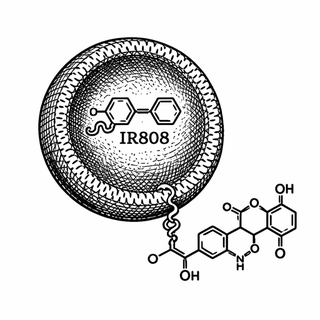
Here's where things get genuinely clever. Tumor-derived exosomes (TEX) are nanoscale vesicles - think of them as tiny care packages that cancer cells naturally release to communicate with their neighborhood. These little spheres (30-150 nm across) carry surface proteins that act like return address labels, helping them home back to the tumor tissue they came from. It's called homotypic targeting, and it's essentially the biological equivalent of "return to sender."
The research team behind ID-TEX exploited this homing ability by loading these exosomes with two therapeutic payloads: IR808 (a near-infrared dye for photodynamic therapy) and doxorubicin (a classic chemotherapy drug that's been around since the 1960s and still packs a wallop).
What makes this approach stand out from previous exosome drug delivery attempts is the how. Previous methods of cramming drugs into exosomes - electroporation, sonication, extrusion - are a bit like forcing cargo through a screen door. Sure, the stuff gets inside, but you've probably wrecked the door in the process. Those surface proteins responsible for targeting? Damaged. The membrane integrity keeping everything sealed? Compromised. The result: leaky, aggregated exosomes that look great in a grant application but face real hurdles in clinical translation.
The Loading Strategy: One Inside, One Bolted On
The ID-TEX system takes a different approach, and this is where methodological credit is due. IR808 is loaded endogenously - meaning the tumor cells themselves incorporate the dye before the exosomes are harvested. No rough handling, no membrane damage, no angry surface proteins. The exosomes come pre-loaded, factory fresh.
Doxorubicin, meanwhile, gets attached to the outside of the exosome using a hydrazone linker. This is a pH-responsive chemical bond - stable at normal blood pH (around 7.4) but designed to snap apart in the acidic environment inside endosomes and lysosomes (pH 4.5-5.5). It's a molecular trapdoor that only opens when the exosome reaches the right cellular compartment.
The result is a sequenced attack: DOX releases first upon acidification, migrating to the nucleus to cause DNA damage. Then IR808, activated by near-infrared light, generates reactive oxygen species (ROS) through photodynamic therapy. One-two punch. Chemotherapy softens them up, PDT finishes the job. At least, that's the pitch.
Turning Cold Tumors Hot (the Immunology Part)
Here's where the story gets really interesting - and where I'd want to see the most additional evidence. The researchers report that the combined oxidative stress from this chemo-PDT cascade triggers immunogenic cell death (ICD). This is the holy grail of cancer therapy: killing tumor cells in a way that actually teaches the immune system to recognize and attack the cancer.
The data reportedly shows dendritic cell maturation, recruitment of CD8+ and CD4+ T cells, and conversion of immunologically "cold" OSCC tumors (the kind the immune system ignores like a bad party guest) into "hot" tumors (suddenly the center of immune attention). If validated, this would mean a localized treatment could potentially generate systemic antitumor immunity.
That's a big "if." The jump from ICD markers in a preclinical model to reproducible immune activation in human patients is a canyon that has swallowed many promising therapies before.
Where the Skepticism Lives
Let's talk limitations, because there are some worth flagging:
Preclinical stage. This is not in patients yet. Mouse models of OSCC, while useful, don't perfectly recapitulate human tumor immunology, particularly the "cold to hot" conversion claim.
Tumor-derived exosomes carry baggage. Using the tumor's own exosomes as drug carriers is elegant, but TEX are also known to carry immunosuppressive cargo. The researchers argue that loading and surface modification mitigate this, but the safety profile of injecting tumor-derived material back into patients deserves rigorous scrutiny.
Photodynamic therapy requires light access. Oral tumors are more accessible than, say, pancreatic tumors, which helps. But light penetration depth remains a real constraint for any PDT approach, especially for bulky or deep-seated lesions.
Scalability and manufacturing. Harvesting patient-specific tumor exosomes, loading IR808 endogenously, then conjugating DOX with hydrazone linkers - this isn't exactly an off-the-shelf pipeline. GMP manufacturing of personalized exosome therapeutics is still an unsolved problem at scale.
Why It Still Matters
Credit where it's due: the endogenous loading strategy is a genuine methodological improvement over brute-force exosome engineering. The pH-responsive release mechanism is well-designed. And the CD47 "don't eat me" signaling preserved on the exosome surface - which helps these nanoparticles evade macrophage clearance - is a smart exploitation of existing biology rather than an engineered add-on.
The concept of combining three therapeutic modalities (chemo + PDT + immunotherapy) in a single nanoscale platform addresses real clinical needs. OSCC patients need better options, and approaches that can trigger systemic immunity from local treatment represent the direction the field needs to move.
Just don't expect this in your dentist's office anytime soon. The road from "works in mice" to "FDA approved" is long, expensive, and littered with the remains of once-promising nanoparticle therapies. But as preclinical proof-of-concept goes, ID-TEX is a well-constructed entry that tackles real problems in drug delivery with some genuinely thoughtful engineering.
We'll be watching this one - with appropriately calibrated expectations.
This blog post discusses research findings and should not be taken as medical advice. If you have concerns about oral squamous cell carcinoma or any oral health condition, please consult a healthcare provider. Research discussed here represents ongoing scientific investigation and clinical validation is still in progress.
All images used in this post are decorative illustrations only and do not represent or reflect the accuracy, reality, or correctness of the referenced research.
Primary Source: Dual-loaded homotypic exosomes with endogenous IR808 and pH-responsive DOX drive sequenced chemo-PDT and convert "cold" OSCC tumors "hot." PubMed. 2026. PMID: 41935298