
In the time it takes you to read this sentence, roughly 10 million of your cells just divided, and every single one of them had to decide which genes to keep switched on and which to leave firmly in the "off" position. The molecular Post-it note responsible for a lot of that decision-making? A tiny methyl group, parked right on top of a cytosine base in your DNA. It's basically nature's version of writing "DO NOT DISTURB" on a hotel door handle - except when those signs end up on the wrong doors, things can go very, very wrong.
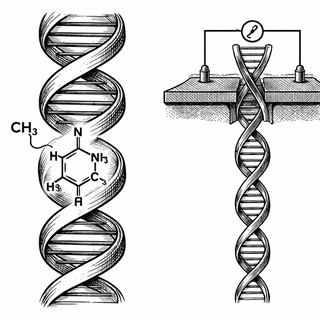
What Even Is DNA Methylation, and Why Should You Care?
DNA methylation - specifically at a site called 5-methylcytosine, or 5mC if you're into abbreviations - is one of the most studied epigenetic modifications in biology. Think of your genome as a massive instruction manual. Every cell in your body has the same manual, but a liver cell needs to read completely different chapters than a neuron. Methylation is one of the ways cells bookmark the chapters they need and tape shut the ones they don't.
When this system works well, embryos develop properly, cells differentiate on cue, and tissues maintain their identity. When methylation patterns go haywire? That's when diseases like cancer, neurological disorders, and autoimmune conditions can take hold. The exciting part is that unlike mutations in the DNA sequence itself, methylation is reversible - which means it's a genuinely promising therapeutic target. If we could just read these molecular sticky notes accurately enough.
The Problem with Reading Tiny Sticky Notes
Here's where things get frustrating. The gold-standard technique for mapping methylation has been bisulfite sequencing, and while it's served us well, it has the scientific equivalent of reading a book by setting it on fire first. Bisulfite treatment chemically trashes up to 90% of the DNA in your sample. It's like photocopying a document by running it through a shredder and then trying to piece it back together. You get results, sure, but you also get degradation artifacts, amplification bias, and a bill that makes your grant administrator weep.
Traditional ensemble biosensor assays aren't much better - they average signals across millions of molecules, which is a bit like determining the average height in a room and concluding everyone is 5'7". You lose all the interesting individual variation.
Enter the Single-Molecule Detectives
A recent review published in 2025 surveys an exciting suite of single-molecule biophysical methods that are changing how we detect methylation - and honestly, they sound like they belong in a spy movie. We're talking about nanopore sensing, single-molecule FRET (smFRET), optical and magnetic tweezers, and atomic force microscopy (AFM).
What makes these approaches special? They read methylation directly on individual DNA molecules, without the chemical carnage of bisulfite conversion. No labels needed (or minimal ones). No amplification bias. Just one molecule at a time, telling its own story.
Nanopore sensing threads a single DNA strand through a tiny protein pore and reads the electrical current changes as each base passes through. Methylated cytosines produce a different signal than unmethylated ones - like a speed bump that changes the sound of a car driving over it. It's elegant, it's direct, and it preserves the DNA for another day.
smFRET uses pairs of fluorescent dyes to measure nanometer-scale distances within a single DNA molecule. Since methylation subtly changes how DNA bends and flexes, smFRET can pick up those conformational shifts. It's like detecting that someone rearranged the furniture in a room by measuring how far apart the lamps are.
Optical and magnetic tweezers literally grab onto individual DNA molecules and stretch, twist, or pull them while measuring the forces involved. Methylated DNA responds differently to mechanical stress than unmethylated DNA. We're talking about feeling the difference in stiffness of a single molecule. If that doesn't make you appreciate modern physics, I don't know what will.
AFM drags a needle with a tip just nanometers wide across a DNA molecule sitting on a surface, building a topographic map. It can physically see where methyl groups sit. It's Google Earth for your genome, at the single-molecule level.
When Machines Learn to Read the Bumps
Now, here's where it gets really fun. Each of these techniques generates enormous, complex datasets. A nanopore sequencer doesn't just spit out "methylated" or "not methylated" - it produces a river of electrical signals that need to be interpreted. And that's exactly the kind of pattern recognition problem that machine learning was born to solve.
ML algorithms are already revolutionizing nanopore-based methylation calling. Neural networks trained on known methylation patterns can now distinguish 5mC from regular cytosine with impressive accuracy, even in noisy real-world data. The review highlights that similar ML approaches are beginning to transform smFRET, tweezers, and AFM data analysis too, tackling the twin challenges of throughput and reproducibility.
Could we imagine a future where a clinician sends a patient's tumor biopsy through a nanopore sequencer, an AI reads the methylation landscape in real time, and the results inform a targeted epigenetic therapy - all before lunch? We're not there yet, but the pieces are falling into place faster than most of us expected.
Why This Convergence Matters for Patients
Here's what I find most compelling as someone who lives at the intersection of the lab bench and the bedside: these aren't just cool physics experiments. The convergence of single-molecule biophysics and machine learning is building toward something genuinely clinically useful - scalable, high-resolution epigenetic profiling.
For cancer patients, aberrant methylation is often one of the earliest detectable changes - sometimes appearing years before a tumor becomes visible on imaging. For patients with developmental disorders, understanding methylation patterns can illuminate mechanisms that genetic sequencing alone misses. And because methylation is reversible, every improvement in our ability to map it precisely brings us closer to therapies that can actually rewrite those faulty molecular sticky notes.
The road from single-molecule experiments to routine clinical tools is long, winding, and full of validation studies. But the direction of travel is clear, and the pace is accelerating.
The Bottom Line
We've gone from setting DNA on fire to read its methylation marks, to gently threading it through nanoscale pores and feeling its mechanical properties one molecule at a time - and then teaching computers to interpret what we find. That's not just incremental progress. That's a fundamentally different way of listening to what our genomes are trying to tell us.
And honestly? The genomes have been waiting for us to get better microphones.
This blog post discusses research findings and should not be taken as medical advice. If you have concerns about epigenetic conditions or DNA methylation-related disorders, please consult a healthcare provider. Research discussed here represents ongoing scientific investigation and clinical validation is still in progress.
All images used in this post are decorative illustrations only and do not represent or reflect the accuracy, reality, or correctness of the referenced research.
Primary Source: Seeing and Feeling DNA Methylation: Single-Molecule Biophysics Meets Machine Learning. Chemical Reviews. 2025. DOI: 10.1021/acs.chemrev.5c00146