
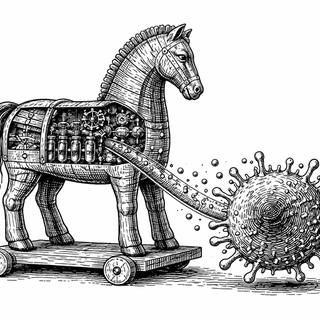
Your liver has cancer. Your immune system knows it's there. Your killer T cells - the elite Navy SEALs of your immune defense - are sitting right next to the tumor, armed and ready. And they're doing absolutely nothing. They've been brainwashed by the tumor's own corrupted macrophages into a state of permanent exhaustion, like soldiers who forgot what they're fighting for. That nightmare scenario is the daily reality for roughly 900,000 people diagnosed with hepatocellular carcinoma (HCC) every year worldwide, and it's exactly why a team of researchers just built what I can only describe as the biomedical equivalent of the Trojan Horse from, well, Troy.
The Mole Inside the Immune System
To understand why this research is so exciting, you need to understand how liver cancer cheats. HCC doesn't just grow fast - it actively sabotages the immune system from within. Think of it like that scene in The Matrix where Agent Smith takes over people's bodies and turns them against Neo. Except here, the agents are M2-polarized tumor-associated macrophages (TAMs), and Neo is your CD8+ T cells.
Macrophages are supposed to be the good guys. They're your immune system's first responders - big, hulking cells that eat pathogens and wave red flags to recruit the rest of the immune cavalry. But tumors are sneaky. HCC convinces these macrophages to switch sides, polarizing them into their M2 form. M2 TAMs don't fight cancer. Instead, they actively suppress the immune response, creating what scientists call an immunosuppressive tumor microenvironment (TME). It's basically the Upside Down from Stranger Things, except it's inside your liver and Eleven isn't coming to save you.
Finding the Off Switch
Using single-cell RNA sequencing - which is basically reading the individual instruction manual of every single cell in a tumor sample - the research team identified a protein called TET3 as the ringleader of this immune betrayal. TET3 was found to be highly expressed in M2 TAMs lurking within HCC tissues.
Here's where the molecular detective work gets really satisfying. TET3 promotes M2 polarization by boosting the activity of a transcription factor called IRF4 through a process called hydroxymethylation. Think of hydroxymethylation as TET3 putting a chemical sticky note on IRF4's promoter region that says "turn this gene ON, like, a LOT." Once IRF4 cranks up, it triggers the CXCL12/CXCR4 signaling axis, which is basically a chemical megaphone that screams at nearby CD8+ T cells to stand down and stop fighting.
So the chain of villainy goes: TET3 activates IRF4, IRF4 pumps out CXCL12, CXCL12 exhausts T cells, and the tumor throws a party. It's like a Rube Goldberg machine of immunosuppression, and the researchers decided the best move was to smash the very first domino.
Building the Trojan Horse
This is where the nanoengineering gets chef's kiss levels of elegant. The team designed dual-targeted lipid nanoparticles - tiny fat bubbles roughly 100 nanometers across (about 1,000 times smaller than the width of a human hair) - loaded with siRNA that specifically silences the TET3 gene. They named their creation TET3 siRNA@αmp-Lipo, which sounds like a Wi-Fi password but is actually a precision-guided molecular weapon.
The "dual-targeted" part is what makes this special. The nanoparticles are decorated with macrophage-specific peptides on their surface, acting like a fake ID badge that lets them waltz right up to M2 TAMs and get swallowed up. It's the same principle as the Trojan Horse - look like something the enemy wants to let inside, then unleash chaos once you're past the gates. Except instead of Greek soldiers, the payload is small interfering RNA that shuts down TET3 production.
Does It Actually Work?
Short answer: impressively well. In lab experiments, the nanoparticles showed excellent biocompatibility (they don't poison everything they touch - always a good start), stability (they don't fall apart before reaching their target), and the ability to effectively silence TET3 in M2 macrophages. Once TET3 was knocked down, the macrophages stopped their M2 shenanigans, and the CD8+ T cells started waking back up and doing their job.
The in vivo results were equally promising. In animal models of HCC, the nanoparticle treatment remodeled the tumor microenvironment from an immunosuppressive wasteland back into a functional battlefield where the immune system could actually fight. Combined with existing immunotherapy approaches, the strategy showed enhanced anti-tumor effects - suggesting this could be a powerful ally to checkpoint inhibitors and other immunotherapies that struggle against HCC's suppressive environment.
Why This Matters Beyond Liver Cancer
Here's the thing that makes this research particularly tantalizing: the TET3-IRF4 axis isn't unique to liver cancer. Many solid tumors create immunosuppressive microenvironments using similar playbooks. If this nanoparticle platform can reprogram the TME in HCC, there's a real possibility it could be adapted for pancreatic cancer, glioblastoma, and other notoriously immune-cold tumors that have historically laughed in the face of immunotherapy.
The platform itself - lipid nanoparticles with targeting peptides delivering siRNA - is also built on technology we already know scales well. mRNA vaccines proved that lipid nanoparticles can be manufactured at massive scale and delivered safely to millions of people. This research essentially takes that proven delivery chassis and gives it a new address and a new payload.
We're still in the preclinical stage, so nobody should be planning a victory parade just yet. The jump from mouse models to human clinical trials is notoriously treacherous - the Valley of Death, as drug developers grimly call it. But the elegance of this approach, targeting an epigenetic master switch rather than the tumor itself, represents a genuinely clever strategy that attacks cancer's support network rather than cancer directly. Sometimes the best way to win a war isn't to fight the army - it's to cut off their supply lines.
And honestly? Watching the immune system get un-brainwashed and go back to work is deeply satisfying. Even the Borg could be disconnected from the Collective eventually.
This blog post discusses research findings and should not be taken as medical advice. If you have concerns about hepatocellular carcinoma or liver health, please consult a healthcare provider. Research discussed here represents ongoing scientific investigation and clinical validation is still in progress.
All images used in this post are decorative illustrations only and do not represent or reflect the accuracy, reality, or correctness of the referenced research.
Primary Source: Dual-targeted lipid nanoparticles for TET3 siRNA delivery: nanobiotechnology strategy to remodel tumor immune microenvironment in hepatocellular carcinoma. PubMed: 41923247