
Tap, press, tiny sting. That is the soundless drama of an injection doing its very precise little job, and in this clinical trial, that simple moment might point toward a very different future for pelvic organ prolapse care. I read the summary for NCT07544667, a randomized trial testing intravaginal injection of poly-L-lactic acid, or PLLA, for stage 2 cystocele, and I had the exact reaction every grad student dreads and secretly loves: I fell down the rabbit hole and did not come back for a while.
Why this trial is such a big deal
Let me translate the condition first. Cystocele is a type of pelvic organ prolapse where the front wall of the vagina weakens and the bladder starts pushing into that space. People can feel a vaginal bulge, pressure, heaviness, discomfort, and sometimes a whole frustrating parade of bladder symptoms. It is not rare. It affects millions of women in the United States, and the number is expected to grow.
The usual treatment menu is not exactly thrilling. On one side, there are conservative approaches like pelvic floor therapy or pessaries. On the other, there is surgery. Surgery can absolutely help many people, but it is still surgery. That means recovery, procedural risk, scar tissue, and changes to vaginal anatomy that can affect sexual function. For a condition tied so closely to quality of life, that tradeoff is not small.
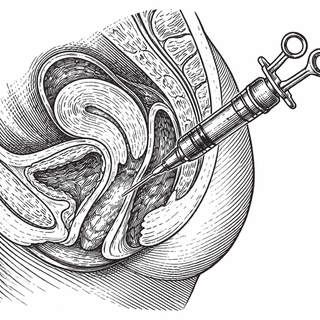
Now enter this trial with a very spicy idea: what if instead of mechanically reshaping tissue, we could stimulate tissue repair and strengthening from within?
That is where PLLA comes in.
The treatment idea: less rebuild, more remodel
PLLA is described in the study summary as an FDA-approved biostimulant for dermatologic use with a broad safety profile over the past decade. In plain English, it is a material already used in other settings to encourage the body to make more structural support, especially collagen. The body is not getting a steel beam installed. It is getting more of a nudge, like a project manager who shows up with a clipboard and says, "Could we maybe reinforce this wall a bit?"
And wait, it gets better.
This trial is not using PLLA for a beauty tweak or skin contour issue. It is testing whether intravaginal injections of PLLA could help women with stage 2 anterior vaginal wall prolapse, specifically cystocele. That means the goal is not just symptom management. The goal is potentially regeneration. That word matters.
According to the study summary, the researchers want to see whether this approach is safe and whether it shows preliminary efficacy compared with placebo. They also want to look at something medicine has often treated like an optional footnote when it should not be one: sexual function.
Why the sexual function angle matters so much
This is one of the most interesting parts of the whole trial.
Pelvic organ prolapse does not just affect anatomy. It affects confidence, comfort, intimacy, and daily life in ways that are deeply physical and deeply personal. Some current treatments can change vaginal topography or create scar tissue, and that can influence sensation and function. The study summary states bluntly that there are no treatment options that restore vaginal tissue strength while preserving, or even optimizing, sensation and blood flow.
That is a huge unmet need.
So this trial is asking a smarter question than "Can we push the tissue back where it belongs?" It is asking, "Can we improve support in a way that respects how this tissue is supposed to feel and function?" That is a much more human question, and honestly, medicine could stand to ask it more often.
What makes this trial feel fresh
The study is described as a randomized controlled trial comparing PLLA injection versus placebo in women with stage 2 cystocele. That design matters because it is the gold standard for sorting real effects from wishful thinking, hype, and the occasional very persuasive placebo response.
The other intriguing piece is that the summary mentions prior work with regenerative biologics for the vulva and vagina showing promise, but says this strategy has not been explored for prolapse. That puts this trial in a fascinating in-between zone. It is not coming out of nowhere, but it is also not just repeating a familiar playbook. It is testing whether a concept from one area of tissue regeneration can cross over into pelvic floor medicine.
That is the kind of research pivot that makes me sit up straight in my chair like a lab mouse hearing the snack drawer open.
If it works, the real-world impact could be enormous
If this approach succeeds, the implications could be much bigger than one product or one procedure.
A successful result could push prolapse care toward a model of regeneration rather than reconstruction. Instead of relying mainly on devices or surgery, clinicians might someday have a minimally invasive option designed to strengthen tissue biologically. That could mean fewer surgeries for some patients, less disruption of vaginal structure, and possibly better preservation of sensation and function.
It could also widen the middle ground between "watch and wait" and "book the operating room." Right now, that middle ground can feel pretty cramped. A safe, office-based injectable treatment could make management more flexible and more tailored to the person in front of the clinician, not just the prolapse stage on paper.
And if you are thinking, "Okay, but this is still early," yes, absolutely. We are not handing out victory balloons yet. This trial is looking at safety and preliminary efficacy, which means it is an early but very meaningful step. Still, paradigm shifts usually do not arrive with fireworks. They start with a carefully designed trial and a question that sounds a little audacious until it starts sounding obvious.
The challenge this study is trying to solve
The hardest thing about pelvic organ prolapse treatment is that the problem is mechanical, biological, and personal all at once.
You are dealing with tissue support, symptoms, anatomy, comfort, body image, sexual function, and aging physiology in the same conversation. A treatment that helps one dimension but harms another is not really a clean win. That is why this PLLA trial stands out. It is trying to solve the support problem without casually sacrificing tissue quality and function on the way there.
That is a much taller order than it sounds. Bodies are not IKEA shelves. You do not just tighten one screw and call it a day.
The bottom line
What grabbed me about NCT07544667 is not only the intervention itself, but the mindset behind it. This trial treats prolapse as more than a structural defect to be patched. It treats vaginal tissue as living tissue worth restoring, not just rearranging. That is a subtle shift in framing, but it could lead to a very different kind of care.
For people with cystocele, that possibility matters. A lot.
At minimum, this study adds energy to a field that badly needs more options. At best, it could help move pelvic floor medicine toward treatments that are less invasive, more regenerative, and more aligned with how patients actually live in their bodies.
And honestly, that is the kind of clinical trial that makes you want to underline half the page and bother your friends about connective tissue over coffee.
Disclaimer: This post is for educational purposes only and is based on the publicly described trial summary. It is not medical advice and should not be used to diagnose or treat any condition.
Citation: ClinicalTrials.gov. Intravaginal Injection of Poly-L-Lactic Acid for Treatment of Cystocele: A Randomized Trial (NCT07544667). Available at: https://clinicaltrials.gov/study/NCT07544667 and https://clinicaltrials.gov/study/NCT07544667?tab=table