
Here's a problem that's been bugging doctors for decades: iron is simultaneously one of the most essential elements in your body and one of the sneakiest to measure accurately. Too little iron? You're anemic, exhausted, and your cells are basically running on fumes. Too much? You're looking at organ damage, oxidative stress, and a laundry list of chronic conditions. And the kicker is that detecting iron levels - particularly the proteins that shuttle iron around - typically requires expensive fluorescent dye probes, specialized equipment, and the kind of synthesis complexity that makes organic chemists weep into their lab notebooks. What if you could skip all that and just... watch proteins melt?
The Fluorescent Dye Problem (And Why It's Expensive)
Traditional protein fluorescence sensing is powerful stuff. It's used across food safety testing, disease diagnostics, and environmental monitoring. The catch? You almost always need to synthesize specific fluorescent dye probes that attach to your target protein. Each probe is custom-built for its target, which drives up costs, adds synthesis steps, and introduces potential interference. It's like needing a custom-tailored suit for every single dinner party - effective, sure, but wildly impractical at scale.
The numbers paint a clear picture. Fluorescent labeling reagents can run anywhere from $200 to $500 per milligram for specialized probes. Multiply that across thousands of clinical or environmental samples, factor in the labor hours for conjugation chemistry, and you've got a detection method that works brilliantly but costs like it knows it.
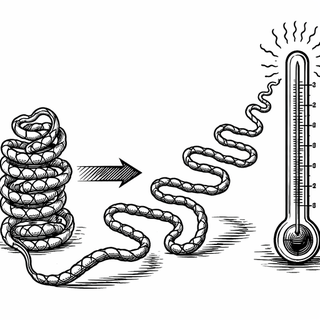
Enter the Melt: Proteins Have a Built-In Signal
Here's where this research gets clever. A team has developed a label-free, melting-based protein sensing strategy that sidesteps the entire dye-probe bottleneck. Instead of gluing a fluorescent tag onto your protein of interest, this approach exploits something proteins already do naturally: fluoresce.
Proteins contain aromatic amino acids - tryptophan, tyrosine, and phenylalanine - that are intrinsically fluorescent. Under normal conditions, these amino acids are tucked inside the protein's folded structure, and their fluorescence is partially quenched. But when you heat a protein and it begins to unfold (or "melt," if you want to be dramatic about it), those aromatic residues become exposed. Their fluorescence intensity changes in measurable, predictable ways.
The melting temperature (Tm) - the point at which half the protein is unfolded - shifts depending on what's bound to the protein. Bind iron to an iron-binding protein, and the Tm changes. No iron present? Different Tm. It's essentially a thermal fingerprint, and it's remarkably sensitive.
How the Biosensor Actually Works
Think of it like a stress test for proteins. You gradually crank up the temperature while monitoring the fluorescence signal from those built-in aromatic amino acids. As the protein unfolds, you get a characteristic melting curve - fluorescence intensity plotted against temperature, producing a sigmoidal curve with an inflection point at the Tm.
The elegant part is what happens when iron ions are in the mix. Iron-binding proteins like transferrin and ferritin have well-characterized interactions with iron. When iron binds, it stabilizes (or in some cases destabilizes) the protein structure, shifting the melting temperature. By measuring that shift - delta-Tm - you can both detect the presence of iron-binding proteins AND quantify the concentration of iron ions in a sample.
No custom dye probes. No conjugation chemistry. No expensive reagents beyond what you'd find in a standard biochemistry lab. Just heat, light, and math.
Why This Matters Beyond the Lab Bench
The applications here fan out in several directions, and each one has real numbers behind it.
Food safety: Iron contamination in food and water is a global monitoring challenge. The WHO estimates that iron deficiency affects roughly 1.6 billion people worldwide, while iron overload conditions like hemochromatosis affect about 1 in 200 people of Northern European descent. Cheap, fast iron detection methods could dramatically improve screening throughput.
Clinical diagnostics: Current serum iron and ferritin tests require immunoassay-based methods that, while reliable, are equipment-intensive. A melting-based approach could enable point-of-care testing in resource-limited settings where a full clinical chemistry analyzer isn't available.
Environmental monitoring: Industrial runoff frequently contains elevated iron levels that impact aquatic ecosystems. A portable, label-free detection method could enable field-based water quality testing without needing to ship samples back to a centralized lab.
The Data Scientist's Take
What I find particularly satisfying about this approach is its mathematical elegance. The melting curve is essentially a thermodynamic readout - you're measuring the Gibbs free energy of unfolding as a function of temperature. The relationship between ligand binding and thermal stability is well-described by established biophysical models, which means the signal-to-noise characteristics are predictable from first principles.
That's not something you can say about every biosensor platform. Many detection methods are empirically optimized - you tweak conditions until the signal looks good and hope the calibration holds. Here, the physics does most of the heavy lifting.
What Comes Next
Like any new sensing strategy, this approach will need extensive validation across real-world sample matrices. Serum, food homogenates, and environmental water samples all contain interferents that could complicate the melting curve. The specificity question - can you distinguish iron-binding proteins from other metal-binding proteins using Tm shifts alone? - will need careful benchmarking.
But the foundation is solid. Label-free detection methods that leverage intrinsic protein properties have a strong track record of eventually reaching clinical and industrial adoption, precisely because they eliminate the reagent cost barrier that keeps fancier methods locked in research labs.
Sometimes the best sensor is the one that was already there, waiting for someone to turn up the heat.
This blog post discusses research findings and should not be taken as medical advice. If you have concerns about iron levels or related conditions, please consult a healthcare provider. Research discussed here represents ongoing scientific investigation and clinical validation is still in progress.
All images used in this post are decorative illustrations only and do not represent or reflect the accuracy, reality, or correctness of the referenced research.
Primary Source: Protein Melting Biosensors for Label-Free and Self-Reporting of Iron-Binding Proteins and Iron Ion. PubMed. 2026. DOI: PubMed 41860100