
If you've ever had a migraine - a real one, not the kind people casually throw around when they've had a long day at work - you know it's less of a headache and more of a full-body hostage situation. Light becomes your enemy. Sound is violence. And the inside of your skull feels like it's hosting an unsanctioned demolition derby.
Now imagine someone told you a little wearable device strapped to your upper arm could help prevent those attacks. No pills. No injections. Just gentle electrical pulses doing something fancy to your nervous system while you go about your day. Sounds like science fiction, right? Well, a new clinical trial is putting that exact idea to the test in the real world - and the results could change how millions of people manage chronic migraine.
The Trial That Caught My Eye
The study, registered as NCT07487701 on ClinicalTrials.gov, is examining how well a technology called Remote Electrical Neuromodulation (REN) works for preventing migraines in people with chronic migraine. That's the key word here - prevention. We're not talking about putting out fires after they start. We're talking about keeping the fires from igniting in the first place.
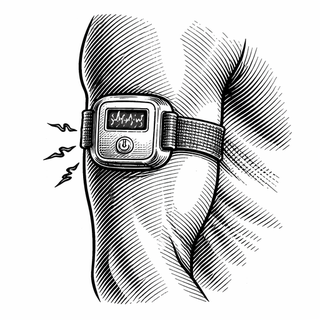
The device in question is FDA-cleared and designed to be worn on the upper arm, where it delivers controlled electrical stimulation. The theory? By activating a natural pain-regulation pathway called conditioned pain modulation (CPM), you can essentially tell your brain's pain signaling system to take it down a notch. Think of it like noise-canceling headphones, but for your nervous system.
This particular study is tracking real-world outcomes over three months in people with chronic migraine - defined as 15 or more headache days per month. If you just flinched at that number, you're not alone. That's half the month spent in some form of pain. Every month.
Why This Matters More Than You'd Think
Here's the thing about current migraine prevention options: they exist, and some of them work reasonably well. Beta-blockers, anticonvulsants, antidepressants, and the newer CGRP monoclonal antibodies (like erenumab and fremanezumab) have all shown real benefits in clinical trials. But adherence? That's where the wheels tend to come off.
Studies have shown that roughly half of patients prescribed preventive migraine medications discontinue them within a year, often due to side effects ranging from weight gain and fatigue to cognitive fog and dizziness (Hepp et al., 2017, Cephalalgia; DOI: 10.1177/0333102416637832). For people already fighting through 15+ migraine days a month, being told their treatment will also make them feel lousy in new and exciting ways is... not ideal.
That's where a non-invasive wearable starts to look pretty appealing. If you can get meaningful prevention without the pharmacological side effects, you've just unlocked a treatment option that people might actually stick with.
The Science Behind the Zap
Remote Electrical Neuromodulation works by stimulating peripheral nerves in the upper arm, which in turn activates descending pain inhibition pathways in the brainstem. In less jargon-heavy terms: the device talks to nerves in your arm, which pass a message up to your brain saying, "Hey, maybe ease up on the pain signals, yeah?"
This mechanism - conditioned pain modulation - is your body's built-in volume knob for pain. In many migraine sufferers, this system is impaired, meaning their brains are essentially stuck with the volume turned up to eleven. REN aims to help recalibrate that dial.
Previous research has shown promising results for REN in acute migraine treatment. A randomized, double-blind, placebo-controlled trial by Yarnitsky et al. demonstrated that REN provided significant pain relief compared to sham stimulation (Yarnitsky et al., 2019, Headache; DOI: 10.1111/head.13551). Additional real-world studies have supported these findings, showing that REN can be comparable to standard acute migraine medications in terms of pain freedom at two hours (Rapoport et al., 2019, J Headache Pain; DOI: 10.1186/s10194-019-1014-4).
An open-label pilot study also specifically looked at REN in chronic migraine patients for acute treatment and found meaningful reductions in pain and associated symptoms (Nierenburg et al., 2020, Pain Ther; DOI: 10.1007/s40122-020-00199-z).
But here's the cliffhanger: most of that evidence has been for acute treatment - zapping the migraine once it's already knocking at the door. This new trial is asking a bigger, bolder question. Can regular preventive use of REN actually reduce how often migraines show up in the first place?
What Success Would Look Like
If this real-world evidence study shows that consistent preventive REN use meaningfully reduces monthly migraine days in chronic sufferers - without the side effect baggage of daily medications - it could reshape the treatment landscape.
Think about what that means practically. A person who currently loses half their month to migraine attacks could potentially reclaim days. Workdays. Weekends with family. Tuesday evenings where they actually want to cook dinner instead of lying in a dark room bargaining with the universe.
And because it's a wearable, there's no worrying about drug interactions, no "did I take my pill today?" anxiety, and no tapering off if you want to stop. You just... take it off.
Of course, this isn't a magic bracelet. Real-world evidence studies have their limitations - there's no placebo control group, which means we can't completely rule out the placebo effect. And chronic migraine is a complex, multifactorial condition. What works beautifully for one person might be underwhelming for another.
But the fact that researchers are studying this device specifically in the chronic migraine population - the people who need help the most and are often hardest to treat - tells you something about where the confidence level is.
The Bigger Picture
We're living through a genuinely exciting era in migraine research. Between the CGRP revolution, neuromodulation devices, and a growing understanding of migraine as a neurological disease (not just a "bad headache"), patients have more options than ever. And the trend is clearly moving toward treatments that are more targeted, less toxic, and more compatible with real human lives.
This REN prevention trial is one piece of that puzzle. It's asking a simple but powerful question: can we help people with chronic migraine suffer less, without asking them to swallow more pills?
I, for one, am rooting for the arm zapper.
You can review the full trial details on ClinicalTrials.gov or check out the table view for the study parameters.
References:
-
Hepp, Z., et al. (2017). Adherence to oral migraine-preventive medications among patients with chronic migraine. Cephalalgia, 37(4), 825-833. DOI: 10.1177/0333102416637832
-
Yarnitsky, D., et al. (2019). Remote Electrical Neuromodulation (REN) Relieves Acute Migraine: A Randomized, Double-Blind, Placebo-Controlled, Multicenter Trial. Headache, 59(8), 1240-1252. DOI: 10.1111/head.13551
-
Rapoport, A.M., et al. (2019). Remote electrical neuromodulation (REN) in the acute treatment of migraine: a comparison with usual care and acute migraine medications. J Headache Pain, 20(1), 83. DOI: 10.1186/s10194-019-1014-4
-
Nierenburg, H., et al. (2020). Remote Electrical Neuromodulation for the Acute Treatment of Migraine in Patients with Chronic Migraine: An Open-Label Pilot Study. Pain Ther, 9(2), 531-543. DOI: 10.1007/s40122-020-00199-z
Disclaimer: This blog post is for informational and educational purposes only and does not constitute medical advice. Always consult your healthcare provider before making changes to your treatment plan. Clinical trial results are pending, and the efficacy of preventive REN use as described in this study has not yet been confirmed.