
Everyone expected the next big pancreatic cancer advance to be another better missile aimed at tumor cells. Plot twist - this paper tries to starve the tumor, scramble its energy logistics, and turn the treatment into a built-in diagnostic platform at the same time. That is a very startup-founder sentence, I know, but honestly, when a single system shows up claiming therapy plus imaging plus metabolic sabotage, my internal product radar starts blinking like it just found a market with terrible incumbents.
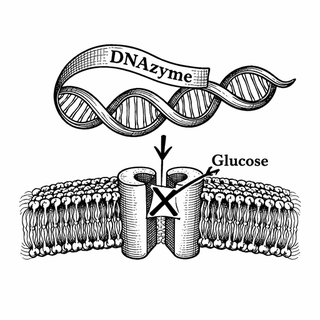
The study, titled A multifunctional DNAzyme-nanozyme cascade system for glucose metabolic reprogramming and theranostics of pancreatic cancer, focuses on one of the ugliest commercial and clinical problems in oncology: pancreatic cancer. This disease is notorious for being detected late, resisting treatment, and moving with the sort of confidence usually reserved for monopolies. Researchers here designed a targeted nanosystem called HMAD@EP-XQ2d to interfere with the tumor's glucose metabolism, which is one of the key ways pancreatic cancer keeps its engine running.
Why pancreatic cancer is such a hard customer
Pancreatic cancer cells are metabolically greedy. Like badly behaved cloud workloads, they keep consuming resources and sending the bill elsewhere. Many tumors depend heavily on glycolysis, a glucose-hungry pathway that helps them generate energy and biomass fast enough to survive and spread. If you can disrupt that flow, you are not just poking the tumor. You are messing with its business model.
One of the components highlighted in the paper is a DNAzyme designed for silencing GLUT1, a gene involved in glucose transport. In plain English, GLUT1 helps move glucose into cells. Cancer cells often lean on transport systems like this because they need an absurd amount of fuel. So if a therapy can reduce GLUT1 activity in pancreatic cancer cells, the tumor may have a harder time importing the sugar it relies on.
That matters because a lot of cancer therapies still behave like brute force operations. Hit the cell hard, hope enough tumor dies, then manage side effects. A strategy that targets the metabolic wiring of the disease has a different flavor. It is less "big hammer" and more "shut off access, gum up production, and monitor the outcome."
The interesting part: this is not one gadget, it is a stack
What makes this paper especially intriguing is that the system is described as a cascade platform. That usually means the components are intended to work together in sequence or in amplification, rather than each doing a separate, unrelated job.
According to the summary provided, the nanosystem combines:
- A DNAzyme for
GLUT1gene silencing - Gold nanoparticle-based nanozymes for catalytic activity
- A manganese-containing component in the HMnO-based platform, although the full abstract provided here is truncated
That combination is where the commercial imagination starts doing push-ups.
DNAzymes are programmable catalytic nucleic acids. They are attractive because they can be designed with molecular specificity, but they also face real-world delivery challenges. Nanozymes, meanwhile, are nanomaterials that mimic enzyme-like behavior. They can be more stable and more manufacturable than fragile biological enzymes. Put them together in a targeted system and you are trying to get specificity, catalytic function, and tumor-directed accumulation in a single package.
That is not just a science project. That is the outline of a platform thesis.
Why "theranostics" is such a big deal
The paper explicitly frames the system as a theranostic approach. That word gets thrown around a lot, but it has real commercial teeth when it works. Theranostics means combining therapy and diagnostics, so the same platform can potentially help treat a disease and also help visualize, track, or measure what is happening.
From a product perspective, that is appealing for obvious reasons. If one system can both intervene and report, you get tighter feedback loops. Clinicians want to know whether a treatment is reaching the target. Developers want to know whether the mechanism is firing. Investors want to know whether there is a story beyond "it shrank something in mice once."
A treatment that doubles as a monitoring tool has a cleaner translational narrative than a treatment that disappears into the body and leaves everyone guessing. In oncology, where timing, targeting, and patient selection are everything, that kind of built-in visibility is not a nice extra. It can be the difference between a clever molecule and a viable product.
The real idea here is metabolic reprogramming
The phrase "glucose metabolic reprogramming" is doing a lot of work in this paper's title, and it should. This is the part that makes the study feel bigger than a one-off nanoparticle story.
Cancer metabolism has been a long-running fascination in oncology because tumors often rewire how they consume nutrients. They are not just growing faster than healthy tissues. They are using different operational logic. If researchers can selectively redirect or disrupt that logic, the upside is potentially broad. It suggests a class of therapies aimed at vulnerabilities that tumors create for themselves.
The pancreatic cancer angle makes this even more compelling. Pancreatic tumors tend to be biologically aggressive and clinically stubborn. So a system that targets a fundamental metabolic dependency could, in theory, address a problem that standard therapies keep struggling with.
Now, to be clear, "could" is doing honest scientific labor here. This is research, not a product launch. Nobody should read a paper title and start writing revenue projections on a whiteboard. I mean, I will absolutely think about revenue projections, but only in pencil.
What problem this kind of system is trying to solve
A lot of advanced cancer nanomedicine faces the same ugly bottlenecks:
- Getting enough of the agent to the tumor
- Achieving specificity without too much collateral damage
- Producing a measurable therapeutic effect
- Showing evidence that the mechanism is actually working
- Turning elegant chemistry into something scalable and clinically usable
This paper appears to be addressing several of those at once by building a targeted, multifunctional system rather than a single-purpose payload. That is ambitious, which means it is also risky. Multifunctional platforms are attractive because they promise synergy. They are difficult because every added feature can increase development complexity, manufacturing burden, regulatory scrutiny, and translational risk.
Still, if this approach holds up in follow-up studies, the upside is not small. A successful platform that can silence a metabolic gene, generate catalytic anti-tumor effects, and support diagnostic readouts would have obvious expansion potential. Pancreatic cancer would be the beachhead indication, not necessarily the whole company.
Why this matters beyond one paper
I keep coming back to the same commercial question: what if the winners in oncology are not just better drugs, but better systems?
This study fits that possibility. It suggests a world where cancer treatment platforms are modular, target-aware, mechanism-driven, and measurable in real time. That is a more software-like future for medicine. Not software literally, before anyone emails me, but software-like in the sense that components are stacked, functions are integrated, and feedback is built in.
The biggest caveat is also the oldest one in biotech. Preclinical cleverness does not automatically become clinical success. Delivery, safety, reproducibility, manufacturing, and patient variability are undefeated opponents. Pancreatic cancer, in particular, is not known for handing out easy wins.
But the paper is still worth paying attention to because it attacks a brutal disease through a smarter operational lens. Instead of merely trying to kill tumor cells head-on, it aims to deprive them of fuel, layer in catalytic stress, and keep diagnostic capabilities in the loop. That is the kind of multimodal thinking that can eventually turn from interesting paper to investable platform.
And in a field where too many ideas are either scientifically elegant but commercially awkward, or commercially exciting but biologically thin, this one has the decency to at least try being both.
This blog post discusses research findings and should not be taken as medical advice. If you have concerns about pancreatic cancer, please consult a healthcare provider. Research discussed here represents ongoing scientific investigation and clinical validation is still in progress.
All images used in this post are decorative illustrations only and do not represent or reflect the accuracy, reality, or correctness of the referenced research.
Primary Source: A multifunctional DNAzyme-nanozyme cascade system for glucose metabolic reprogramming and theranostics of pancreatic cancer. PubMed Record 42025735. https://pubmed.ncbi.nlm.nih.gov/42025735/