
Apple's AirDrop lets you beam photos across a room in seconds. Impressive. Now consider the yam. This humble root vegetable has been quietly running its own delivery service - shipping nanoscale packages loaded with antioxidant proteins, protective lipids, and functional RNA straight to liver cells. No Bluetooth required. No pairing. Just digestion.
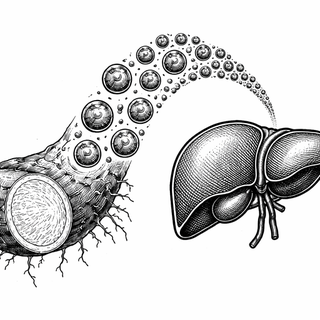
A new study has pulled back the curtain on these biological care packages, called exosome-like nanoparticles, and the results suggest your Thanksgiving side dish might be hiding some genuinely sophisticated molecular machinery.
What Exactly Is a Yam Mailing to Your Organs?
Plants produce tiny membrane-bound vesicles that look and behave a lot like the exosomes our own cells use to communicate. Researchers have been eyeing these plant-derived exosome-like nanoparticles (ELNs) for a while now, mostly because they're biocompatible, stable in the gut, and apparently quite good at getting themselves absorbed.
The research team isolated these nanoparticles from yam tissue and ran them through a thorough inspection. What they found was a tidy little sphere averaging 214.7 nanometers across - roughly 400 times smaller than a human hair - wrapped in a uniform bilayer membrane. Think of it as a very, very small bubble with a surprisingly organized wall.
Inside that bubble? A curated shipment. The nanoparticles were loaded with phosphatidylcholine (a lipid your cell membranes already love), antioxidant proteins like GPX1 and GSTP1, and members of the miR159 microRNA family. That last item is particularly interesting. MicroRNAs are short RNA molecules that can silence specific genes. They're biological dimmer switches. And these yam vesicles are packed with them.
Surviving the Acid Bath
Any delivery system is only as good as its ability to survive the journey. Your stomach is not a hospitable transit hub. It's a churning pool of hydrochloric acid and digestive enzymes that exists specifically to destroy biological structures.
The yam nanoparticles, it turns out, handle this just fine. Stability testing in simulated gastrointestinal fluids showed they maintain their structural integrity through conditions that would dissolve most biological membranes. They arrive at the intestinal lining intact and ready for uptake.
Using in vivo imaging, the researchers tracked the nanoparticles after oral administration and watched them accumulate preferentially in liver tissue. In cell culture, HepG2 liver cells readily internalized them. The yam, it seems, has accidentally engineered a rather effective oral drug delivery vehicle.
Protecting the Liver From Chemical Assault
Here's where the study gets medically interesting. Acute liver injury (ALI) is a serious clinical problem. It can be triggered by drug overdoses, toxin exposure, infections, or metabolic crises. Treatment options remain limited. The liver is remarkably good at regenerating, but when damage outpaces repair, the results can be fatal.
The researchers used carbon tetrachloride (CCl4) to induce liver injury in mice - a well-established model that mimics the oxidative damage seen in human ALI. One group received yam nanoparticles orally beforehand. The control group did not.
The differences were stark. Mice that received the yam ELNs showed significantly lower levels of ALT and AST - the two blood markers that spike when liver cells are dying. Their livers showed less tissue damage under the microscope. Oxidative stress markers told a similar story: MDA (a byproduct of lipid damage) went down, while GSH (the liver's primary antioxidant) went up.
In plain terms, the yam nanoparticles appeared to pre-arm the liver's defenses before the chemical insult arrived.
The RNA Connection
The researchers didn't stop at observing the protective effect. They wanted to know how it worked. In vitro experiments pointed to the microRNA cargo as a key player. The functional RNA molecules inside the nanoparticles appeared to modulate cellular oxidative stress responses - essentially telling liver cells to ramp up their antioxidant defenses before trouble showed up.
This is a fascinating concept. The yam isn't just passively delivering nutrients. It's shipping regulatory molecules that can influence gene expression in the cells that absorb them. Cross-kingdom RNA communication sounds like science fiction, but the evidence for it has been building steadily over the past decade.
Remodeling the Lipid Landscape
Perhaps the most visually striking finding came from desorption electrospray ionization mass spectrometry imaging (DESI-MSI) - a technique that maps the spatial distribution of molecules across a tissue slice. These images showed that yam ELNs physically rearranged how glycerophospholipids were distributed in liver tissue.
The nanoparticles suppressed lipid peroxidation - the chain reaction where free radicals damage cell membrane fats - and dialed down inflammatory signaling. Targeted lipidomics analysis confirmed that several metabolic pathways derailed by the toxin exposure, including glycerophospholipid metabolism and linoleic acid metabolism, were corrected back toward normal by the yam nanoparticles.
The liver's metabolic homeostasis, in other words, was being actively restored.
Before You Start a Yam-Only Diet
Let's pump the brakes on the excitement for a moment. This is a preclinical study in mice. The gap between "works in a mouse model" and "works in a human patient" is littered with promising therapies that didn't survive the crossing. We don't know optimal dosing in humans. We don't know how processing and cooking affect these nanoparticles. We don't know whether eating yams delivers anything close to the concentrated, purified ELN doses used in this study.
What we do know is that plant-derived nanoparticles represent a genuinely novel therapeutic platform. They're cheap to produce, orally bioavailable, and apparently well-tolerated. If the protective effects hold up in further studies, yam ELNs could offer a preventive strategy for people at elevated risk of liver injury - from chronic medication use to occupational chemical exposure.
The idea that a root vegetable contains its own nano-delivery system, complete with regulatory RNA and antioxidant enzymes, is the kind of finding that makes you look at the produce aisle a little differently. Nature has been doing nanotechnology for millions of years. We're just now reading the user manual.
This blog post discusses research findings and should not be taken as medical advice. If you have concerns about liver health or acute liver injury, please consult a healthcare provider. Research discussed here represents ongoing scientific investigation and clinical validation is still in progress.
All images used in this post are decorative illustrations only and do not represent or reflect the accuracy, reality, or correctness of the referenced research.
Primary Source: Preventive effects and mechanisms of yam exosome-like nanoparticles on acute liver injury. PubMed. 2026. PMID: 41937194