
Ever had a friend who just won’t stop talking about their new fitness tracker? You know, the one that vibrates when you’ve been sitting too long and cheers you on like a caffeinated squirrel when you hit your step goals? Well, it turns out that technology is not just for fitness enthusiasts. Recent research is making waves in the world of stroke recovery, showcasing how internet-based tele-rehabilitation and wearable devices can help people bounce back after a stroke. Let’s break down the exciting findings from a recent study conducted by the brilliant minds at the Affiliated Rehabilitation Hospital of Chongqing Medical University.
Stroke: A Bigger Problem Than You Might Think
First, let’s talk about strokes. They are a major public health issue globally, affecting millions of people every year. Picture a sudden glitch in your brain’s operating system, leaving you with mobility issues, cognitive challenges, or emotional hurdles. It’s no walk in the park, and recovery can be a tedious journey filled with therapy sessions and rehab routines that sometimes feel like a never-ending treadmill.
That’s where our study comes into play. The researchers explored whether internet-based tele-rehabilitation (ITR) and wearable-device-assisted (WDA) rehabilitation could help stroke patients after they’ve been discharged from the hospital. Think of it like having a personal trainer who’s always in your pocket, encouraging you to stay active and engaged, no matter where you are.
The Setup: A Recipe for Rehabilitation
In this study, 160 subacute stroke patients were divided into four distinct groups at the time of their discharge from the hospital. Imagine a reality show where each group has its own unique challenges:
- Control Group: Stick to the traditional rehab methods, like a nostalgic throwback to the '90s.
- Internet-Based Tele-Rehabilitation (ITR) Group: Get cozy with online therapy sessions and virtual check-ins.
- Wearable-Device-Assisted (WDA) Group: Strap on some fancy tech that tracks their movements and progress.
- Combined Intervention (IWT) Group: The all-star team that gets the best of both worlds!
Each group underwent various assessments over 12 weeks, including the Modified Barthel Index (MBI) and several other scales to measure physical, cognitive, and emotional recovery.
The Results: Spoiler Alert - It’s Good News!
Over the course of the study, all intervention groups demonstrated impressive improvements in functional recovery compared to the control group. But the real rockstars? The IWT group! They showed the most significant gains, making recovery look like a walk in the park – or maybe a sprint through a scenic trail, if you will.
What does this mean for those who have experienced a stroke? Well, besides the obvious benefits of improved function and mobility, there were also notable decreases in anxiety and depression. It’s almost like having a built-in cheer squad that not only helps you move your body but also boosts your mental health. And if you’ve ever tried to lift a heavy box while in a bad mood, you know how interconnected our physical and emotional states can be.
The Real-World Impact: Changing Lives One Click at a Time
What’s truly exciting about this study is its potential for real-world application. Stroke recovery is often a long, hard road, but with tele-rehabilitation and wearable devices, we might just have found a way to give patients the support they need to thrive. This means that, in the not-so-distant future, stroke survivors might not have to rely solely on in-person therapy sessions, which can be a logistical nightmare.
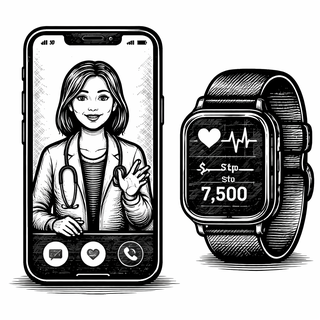
Imagine this: You’re at home, wearing a smartwatch that gently nudges you to do your exercises, while a physical therapist checks in on you via video chat. It’s like having a personal trainer and a therapist rolled into one! Not only does this approach make rehab more accessible, but it also allows patients to receive ongoing support in the comfort of their own homes.
For caregivers, the benefits are equally significant. The reduction in caregiver burden means that families can spend more quality time with their loved ones instead of worrying about the logistics of getting to therapy sessions. It’s win-win for everyone involved!
A Bright Future Ahead
The research from Liu et al. is a game-changer in the field of stroke rehabilitation. By embracing technology and innovative approaches, we can help stroke patients regain not only their physical abilities but also their confidence and mental well-being. If you or someone you know has experienced a stroke, keep an eye out for these emerging therapies – the future looks bright, and recovery just got a whole lot more engaging!
For more insights on this study, you can check it out here.
Disclaimer: This blog post is meant for informational purposes only and should not be considered medical advice. For personalized advice, please consult a healthcare professional. Images and graphics are for illustrative purposes only and do not depict actual medical devices, procedures, mechanisms, or research findings from the referenced studies.
Citation: Liu C, Wang Y, Jiang H, Xie Y. Internet-Based and Wearable-Device-Assisted Tele-Rehabilitation for Stroke Patients after Discharge: A Randomized Trial. Can J Neurol Sci. 2025 Dec 22:1-9. doi: 10.1017/cjn.2025.10469.