
Note to self: Stop scheduling coffee meetings with colleagues in busy hospital cafeterias. The background noise makes it nearly impossible to follow the conversation, and I have perfectly functioning hearing. Now imagine navigating that auditory chaos with a cochlear implant.
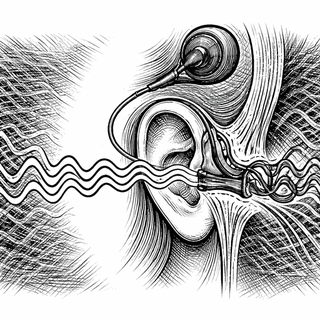
That little mental grumble I had last Tuesday is actually the crux of a fascinating clinical trial that caught my attention this week. Because for the millions of people worldwide who rely on cochlear implants to hear, background noise isn't just annoying - it's a genuine barrier to communication, connection, and quality of life.
The Cocktail Party Problem (Without the Fun Cocktails)
Here's something that might surprise you: the human brain is astonishingly good at filtering sounds. Right now, as you read this, your auditory system is probably ignoring the hum of your refrigerator, distant traffic, maybe a neighbor's questionable taste in music. We call this selective listening, and most of us take it completely for granted - like breathing, or remembering to charge our phones at 3% battery.
But cochlear implant users? They don't get that luxury.
Cochlear implants are genuinely miraculous devices - tiny technological marvels that convert sound waves into electrical signals and deliver them directly to the auditory nerve. They've restored hearing to hundreds of thousands of people with severe to profound hearing loss. But here's the catch: while these devices have gotten remarkably sophisticated at transmitting speech in quiet environments, throw in some background noise and things get... complicated.
Imagine trying to follow a conversation while someone plays a recording of a busy restaurant directly into your ear at the same volume as the person speaking. That's closer to the daily reality for many cochlear implant users. Not exactly a party, cocktail or otherwise.
Enter the Sound Management Wizards
Which brings us to clinical trial NCT07500311 - a study that's essentially asking: "What if we made cochlear implants smarter about noise?"
MED-EL, one of the major cochlear implant manufacturers, has developed what they call Automatic Sound Management (ASM) features. Think of these as a collection of audio processing tools designed to help the implant distinguish between "sounds you want to hear" and "sounds that are just getting in the way." The trial aims to evaluate how well these various ASM features actually work in helping adult cochlear implant users understand speech when there's background noise competing for attention.
Why does this matter? Because understanding speech in noise isn't just about convenience - it's about participation in life. It's about being able to follow your grandchild's story at a noisy family dinner. It's about catching what your doctor says in a busy clinic. It's about not having to constantly ask people to repeat themselves or retreat from social situations that feel too acoustically overwhelming.
What Makes This Research Particularly Interesting
Now, you might be thinking: "Okay, so they're testing noise reduction features. Companies test their products all the time. What's the big deal?"
Fair question. Let me tell you why this particular study has me genuinely curious.
First, we're looking at real-world performance assessment. Laboratory settings with carefully controlled noise are one thing, but how do these features hold up when the noise is unpredictable, varied, and frankly chaotic - like actual life? Studies that measure speech perception in background noise are getting at something fundamental about how these devices perform when it matters most.
Second, this represents the ongoing evolution of cochlear implant technology. First-generation devices were revolutionary simply because they worked at all. Now we're in an era where the question isn't "can this person hear?" but "how well can this person understand speech in challenging acoustic environments?" That's a meaningful shift from basic function to quality of experience.
Third, the adult cochlear implant population is growing. As our population ages and as cochlear implant candidacy criteria have expanded, more adults than ever are receiving these devices. Many of them are active professionals, busy grandparents, or social butterflies who absolutely need their devices to perform in noisy environments - not just in quiet rooms.
The Challenge of Hearing in a Noisy World
Here's a question that keeps audiologists and cochlear implant engineers up at night: How do you program a device to know what sounds are important?
It sounds simple until you really think about it. The clink of a glass isn't important unless you're a server in a restaurant and it signals a customer needs attention. Traffic noise is ignorable unless that traffic is about to hit you. The challenge isn't just reducing noise - it's reducing the right noise while preserving the speech signals that matter.
Automatic Sound Management features attempt to do this through various algorithmic approaches - analyzing the acoustic environment, identifying speech patterns, adjusting microphone directionality, and modulating how different frequency ranges are processed. It's essentially giving the cochlear implant a tiny brain that can make moment-to-moment decisions about what to emphasize and what to suppress.
Does it work? That's exactly what this trial intends to find out.
Why You Should Care (Even If You Hear Just Fine)
Beyond the direct implications for cochlear implant users, research like this advances our understanding of auditory processing in general. The algorithms developed to help cochlear implants manage noise have applications in hearing aids, audio processing for telecommunications, and even those noise-canceling headphones you use on airplanes.
And let's be honest - hearing loss affects nearly everyone eventually. By the time we're over 65, roughly one in three of us will have significant hearing impairment. The technologies and processing strategies being refined now will likely benefit many of us directly someday, or at minimum, someone we love.
Looking Forward
Clinical trials like NCT07500311 might not make headlines the way cancer drug breakthroughs do, but they represent the steady, methodical work of making existing technologies better - of taking something that already works and asking "how can we make this work better for more people in more situations?"
And honestly? That's the kind of research that often has the biggest real-world impact. Not the moonshot, but the careful calibration. Not the revolution, but the refinement.
For the millions of cochlear implant users navigating our noisy world, better speech understanding in background noise isn't a luxury feature. It's the difference between isolation and connection, between struggling and thriving.
That seems worth studying to me.
Disclaimer: This blog post is for educational and informational purposes only and should not be construed as medical advice. Clinical trials are research studies, and their outcomes are not predetermined. If you are interested in cochlear implants or participating in clinical research, please consult with a qualified healthcare provider. For more information about this specific trial, visit ClinicalTrials.gov (NCT07500311) or view the study details in table format.