
Here's what you need to detect a cancer-associated microRNA at the point of care: a hydrogel laced with DNA, a carefully arranged lattice of tiny particles, a saliva sample, and the same phone you used to doomscroll at 2 AM. No PCR machine. No centrifuge. No lab coat required, though you're welcome to wear one for the aesthetic.
A new study describes a photonic crystal hydrogel biosensor that changes color when it encounters microRNA-21 - a molecule that has been implicated in the progression of several cancers. The shift is visible, quantifiable by smartphone camera, and works in actual human saliva and serum. If that sounds too elegant for diagnostics, well, that's sort of the point.
MicroRNA-21: The Tiny Molecule With a Big Reputation
MicroRNAs are short, non-coding RNA fragments - typically around 22 nucleotides long - that regulate gene expression at the post-transcriptional level. They're molecular middle managers: they don't write the memos, but they decide which ones get shredded. MicroRNA-21 (miRNA-21) is particularly notorious. Elevated levels of miRNA-21 have been associated with breast, lung, colorectal, and pancreatic cancers, among others. It's been called an "oncomiR" - an oncogenic microRNA - and its overexpression tends to suppress tumor suppressor genes while promoting cell proliferation and survival.
In short, if your cells are producing too much miRNA-21, that's a signal worth catching early. The problem is that detecting it has traditionally required quantitative reverse-transcription PCR (qRT-PCR), Northern blotting, or next-generation sequencing - techniques that are exquisitely sensitive but demand laboratory infrastructure, trained personnel, and time. Not exactly something you can do in a rural clinic, let alone a pharmacy.
How a Gel Changes Color to Find RNA
The biosensor described in this study is built around a photonic crystal hydrogel, or PCH. To understand how it works, think of it as a molecular mood ring - except instead of responding to your body temperature, it responds to the presence of a specific RNA sequence.
The sensor starts with a colloidal lattice - a regular arrangement of nanoparticles embedded in a hydrogel matrix. Critically, this lattice uses a non-close-packed architecture. In a close-packed crystal, particles are jammed together like oranges at the grocery store. In a non-close-packed arrangement, there's deliberate spacing between them, creating interstitial domains - essentially, roomy channels for molecules to diffuse into. This design choice turns out to be quite consequential.
The hydrogel matrix is functionalized with single-stranded DNA probes complementary to miRNA-21. When miRNA-21 enters the gel and binds to those probes via Watson-Crick base pairing (yes, the same A-T and G-C rules you memorized in high school biology are doing useful work here), two things happen in rapid succession.
First, the hybridization event causes a localized charge redistribution. The newly formed double-stranded complexes alter the ionic environment within the gel. Second, the physical insertion of RNA into the DNA-functionalized network creates what the researchers call "volume-insertion effects." Together, these phenomena ratchet up the internal osmotic pressure, and the hydrogel responds the only way it knows how: it swells.
As the gel swells, the lattice spacing between particles increases. Because this lattice is a photonic crystal - meaning it diffracts light at wavelengths determined by the spacing between planes of particles - the expansion shifts the diffracted wavelength. The gel literally changes color. What was one hue becomes another, and the magnitude of that shift corresponds to how much miRNA-21 is present.
Why the "Non-Close-Packed" Part Matters
This is where the engineering gets clever. In a close-packed photonic crystal, the particles are so tightly arranged that there's limited room for target molecules to penetrate into the bulk of the gel. Detection ends up being more of a surface phenomenon, slower and less sensitive.
The non-close-packed design flips that limitation on its head. The large interstitial spaces act as highways for miRNA-21 to diffuse deeply into the gel, engaging more DNA probes across a greater volume. More binding events means more swelling, which means a larger photonic shift. The result is a signal that's not just detectable - it's amplified by the architecture itself.
The researchers report a detection limit of 0.32 nanomolar, which, while not quite at the femtomolar sensitivity of some PCR-based assays, is impressive for a system that requires no enzymatic amplification, no thermal cycling, and no electricity beyond what's in your pocket.
Saliva, Serum, and Smartphones
Perhaps the most compelling part of this work is where it was validated. The sensor performed robustly in both saliva and serum - two of the most accessible bodily fluids in clinical practice. Saliva collection is non-invasive and doesn't require phlebotomy training. Serum is standard clinical material. Neither requires the elaborate sample preparation that many molecular assays demand.
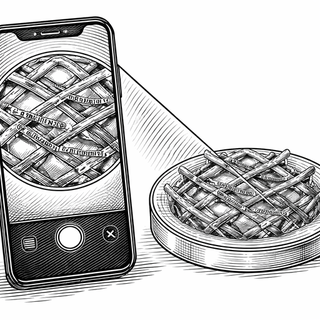
The color changes produced by the sensor were quantified using a smartphone camera, making the readout both portable and low-cost. No spectrophotometer, no fluorescence microscope - just the same device your teenager uses to take selfies, repurposed for molecular diagnostics. There's a certain democratic appeal to that.
The sensor also demonstrated strong sequence selectivity, meaning it could distinguish miRNA-21 from closely related sequences. This is not a trivial accomplishment; microRNA families often differ by only a nucleotide or two, and cross-reactivity is a perennial headache in nucleic acid detection.
What This Could Mean - and What It Doesn't Mean Yet
Let's be clear about what this is and isn't. This is a proof-of-concept study demonstrating a novel biosensing platform. It is not a commercial diagnostic device. It has not been through clinical trials, regulatory review, or large-scale validation in diverse patient populations. The 0.32 nM detection limit, while useful, may need to be pushed lower for certain clinical applications where miRNA concentrations in biofluids can be vanishingly small.
That said, the design principles here are genuinely promising. The combination of structural photonics with hydrogel chemistry creates a detection mechanism that is, as the authors put it, "mechanistically transparent." You can actually explain why it works without invoking black-box machine learning or proprietary reagent cocktails. In an era of increasingly opaque diagnostic technologies, there's something refreshing about a sensor whose operating principle you can draw on a whiteboard.
The broader implication is that photonic crystal hydrogels could become a platform technology - adaptable to different nucleic acid targets simply by swapping the DNA probe sequence. MiRNA-21 is the proof of concept; the architecture could, in principle, be retooled for other oncomiRs, viral RNA, or bacterial DNA targets. Portable, low-cost nucleic acid detection has been a holy grail in global health for decades, and while this study doesn't quite deliver the grail, it offers a plausible map to where it might be buried.
The Bottom Line
A research team has built a hydrogel that changes color in the presence of a cancer-associated microRNA, using physics that would make a materials scientist smile and engineering that would make a global health advocate optimistic. It works in spit. It reads out on a phone. And it does it all without a single enzyme, a single thermal cycler, or a single excuse for why point-of-care molecular diagnostics can't be simple.
The irony, of course, is that we've spent billions developing increasingly complex molecular diagnostic platforms, and here's a gel that essentially says: "I swell, therefore I detect." Sometimes the most sophisticated solution is the one that doesn't need to be.
This blog post discusses research findings and should not be taken as medical advice. If you have concerns about cancer biomarkers or microRNA testing, please consult a healthcare provider. Research discussed here represents ongoing scientific investigation and clinical validation is still in progress.
All images used in this post are decorative illustrations only and do not represent or reflect the accuracy, reality, or correctness of the referenced research.
Primary Source: Self-assembly of non-close-packed photonic crystal hydrogels enables robust point-of-care detection of microRNA in body fluids. PubMed: 41941853