
Two truths and a lie. Ready? One: plants release microscopic bubble-like particles stuffed with bioactive molecules that can survive your digestive tract and talk to your cells. Two: these nano-sized plant vesicles may fight neurodegeneration, heart disease, and muscle wasting all at once. Three: we fully understand how they work and they're available at your local pharmacy right now. If you picked number three as the lie, congratulations - your diagnostic instincts are intact. The first two are very real, and the research behind them is picking up speed faster than a med student running toward free pizza.
What Are Plant-Derived Exosome-Like Nanovesicles, Anyway?
In the ER, I've watched plenty of trends come and go. Leeches made a literal comeback. Maggot therapy is a thing. So when someone tells me that tiny bubbles shed by plants - called plant-derived exosome-like nanovesicles, or PDEVs - might be the next big thing in treating age-related diseases, I at least keep my eyebrow raise to a minimum.
Here's the short version. Just like your cells release little membrane-bound packages called exosomes to communicate with other cells, plants do something remarkably similar. These PDEVs are nanoscale vesicles packed with microRNAs, proteins, lipids, and phytochemicals. Think of them as tiny care packages from your salad, each one loaded with molecular instructions that your body can actually read.
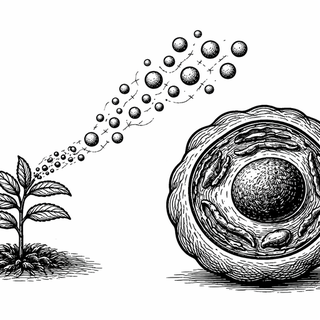
A recent review published in 2025 lays out the therapeutic potential of these vesicles across a wide range of age-related conditions (DOI: 10.1016/j.arr.2025.02.001). The authors argue that PDEVs represent a genuine breakthrough platform - not just another overhyped supplement aisle miracle.
The Aging Problem (Yes, All of It)
Getting old is, medically speaking, a multi-system catastrophe happening in slow motion. Chronic inflammation, oxidative stress, cellular senescence (cells that refuse to die but also refuse to work - the coworkers of the biological world), and mitochondrial dysfunction all pile up over the decades. These aren't separate problems. They're interconnected dominoes, and once they start falling, you get the greatest hits of geriatric medicine: neurodegeneration, cardiovascular disease, metabolic disorders, sarcopenia (muscle loss), cachexia (wasting), and skin aging.
Current treatments tend to target one domino at a time. PDEVs, on the other hand, appear to have what researchers call "pleiotropic effects" - which is a fancy way of saying they multitask. A single type of vesicle can carry anti-inflammatory microRNAs, antioxidant compounds, and senescence-modulating proteins all at once. It's like hiring one contractor who actually knows plumbing, electrical, AND drywall. Suspicious? Maybe. But the early data is encouraging.
Why Plants Beat the Competition
Now, mammalian exosomes have been studied for drug delivery for years. They work, but they come with baggage - literally. Harvesting them from animal or human cell cultures is expensive, hard to scale, and raises immunogenicity concerns (your immune system may not appreciate foreign mammalian packages showing up unannounced).
Synthetic nanoparticles? Also useful, but manufacturing them at consistent quality is like trying to make identical snowflakes in a factory.
PDEVs sidestep both problems with an elegance that would make an engineer jealous. They're naturally biocompatible (your gut has been processing plant material for millennia, after all). They trigger minimal immune response. They're stable in biological environments. And here's the kicker - they can be produced at scale from readily available plant sources at a fraction of the cost. We're talking ginger, grapes, lemons, broccoli. The produce aisle just got a lot more interesting.
The Delivery Problem (Your Gut Is a War Zone)
Before you start blending kale smoothies with renewed vigor, let's talk about the elephant in the room - or rather, the acid bath in your stomach.
Oral delivery of anything therapeutic is a gauntlet. Your GI tract features a pH that could strip paint, enzymes designed to dismantle molecules, bile salts that bust up lipid membranes, and a mucus layer that functions like biological flypaper. PDEVs are tough little packages, but they're not invincible. Variability in how your intestines absorb them and how your gut microbiome interacts with them means that what works in a petri dish doesn't always translate to what works in a patient.
Researchers aren't ignoring this. Protective strategies are being developed - encapsulation, enteric coatings (think of it as armor plating for nano-bubbles), and surface engineering to help them slip past the gut's defenses. Some groups are working on ligand-functionalized PDEVs (essentially adding molecular GPS to the vesicles), hybrid nanovesicles that combine plant and synthetic components, and stimuli-responsive delivery systems that release their payload only when they reach the right neighborhood in your body.
These aren't science fiction. They're active areas of research, and they represent the bridge between "this works in the lab" and "this works in your grandmother."
The Reality Check
I wouldn't be a good ER doc if I didn't give you the honest prognosis. PDEVs are promising, but they're not ready for prime time. The field faces real challenges: mass production that maintains quality, batch-to-batch consistency (because nature doesn't do identical twins very well), standardized methods for isolating and characterizing these vesicles, and the regulatory maze that any new therapeutic platform has to navigate.
We don't yet have large-scale clinical trials. We don't have FDA-approved PDEV therapies. And anyone selling you "plant exosome supplements" right now is getting ahead of the science by several laps.
But the foundation being laid is solid. The convergence of traditional phytomedicine knowledge with modern nanotechnology is creating something genuinely new - not just another repackaging of old ideas with a nano- prefix slapped on for marketing purposes.
Why This Matters
Every shift in the ER, I see the consequences of aging. The falls, the strokes, the hearts giving out, the minds fading. We're reasonably good at acute care. We're less good at the slow, grinding deterioration that puts people in my department in the first place.
If PDEVs can deliver on even a fraction of their promise - safe, scalable, multi-target therapies derived from plants - they could change how we approach age-related disease from the ground up. Not a cure for aging (let's not get carried away), but potentially a way to slow down some of the worst parts of it using tools that nature has been refining for a few hundred million years longer than we have.
The plants have been making these vesicles this whole time. We just finally started paying attention.
This blog post discusses research findings and should not be taken as medical advice. If you have concerns about age-related conditions, please consult a healthcare provider. Research discussed here represents ongoing scientific investigation and clinical validation is still in progress.
All images used in this post are decorative illustrations only and do not represent or reflect the accuracy, reality, or correctness of the referenced research.
Primary Source: Therapeutic potential of plant-derived exosome-like nanovesicles as a phytomedicine in age-related diseases. Ageing Research Reviews. 2025. DOI: PubMed 42034933