
The modern fitness app is a small marvel of optimism. It will cheerfully hand you a badge for jogging through a city corridor that also has three bus routes, a construction site, and air quality best described as "crunchy." That tension sits at the heart of a new PubMed-listed study on the "green exercise" paradox, which is a wonderfully academic way of saying: yes, exercise is good for you, but inhaling fine particulate pollution while doing it may complicate the sales pitch.
This study, titled The "green exercise" paradox: Quantifying the estimated breakpoint of acute physiological perturbation from ambient PM2.5 in urban runners using wearable biosensors, tackles a problem that public health policy has been tiptoeing around for years. We tell people to move more. We also tell them air pollution is harmful. Urban residents, being inconveniently attached to cities, are then left to sort out what happens when those two messages collide on a Tuesday morning run.
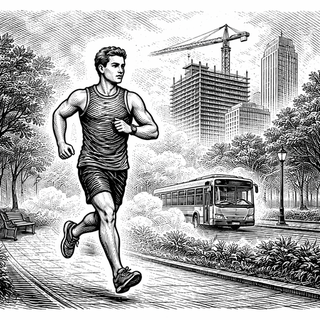
When a Healthy Habit Meets a Dirty Atmosphere
At a basic level, the paradox is easy to understand. Exercise boosts cardiovascular fitness, metabolic health, mood, and all the other things that keep wellness newsletters gainfully employed. But when people exercise outdoors, especially in traffic-heavy urban settings, they also breathe faster and deeper. That means more air moving through the lungs and, potentially, more PM2.5 coming along for the ride.
PM2.5 refers to tiny airborne particles with a diameter of 2.5 micrometers or less. Tiny enough to slip past the body's usual defenses, these particles have been associated with inflammation, oxidative stress, cardiovascular strain, and respiratory irritation. They are, in policy terms, one of those pollutants that appears in many reports and ruins everyone's afternoon.
What makes exercise different is the exposure pattern. A person sitting on a bench in a park is not ventilating their lungs the way a runner is. During vigorous activity, the body becomes a far more efficient intake system. Convenient for oxygen. Less convenient for combustion byproducts.
What This Study Actually Did
The researchers conducted a prospective panel study of 72 runners in Nanchang, China. Each participant completed eight monitored running sessions across four seasons, from March 2024 to January 2025, for a total of 576 sessions. That is a respectable amount of real-world data and, one assumes, a very committed calendar.
Importantly, the study did not rely on a distant city monitoring station and a lot of hopeful interpolation. It used personal PM2.5 exposure measurements from calibrated Plantower PMS7003 monitors, paired with wearable biosensors to capture acute physiological responses. That matters. One of the enduring frustrations in environmental health research is that "ambient exposure" often means "whatever the nearest monitor thought was happening a few blocks away." Personal monitoring gets closer to the lived reality of a runner weaving through actual streets, actual traffic, and actual weather.
The phrase "estimated breakpoint" in the title is the real hook. In plain English, the researchers were not merely asking whether pollution affects runners. They were trying to identify the point at which the exposure may start producing measurable short-term physiological disturbance. Bureaucrats love a threshold. Clinicians like actionable cutoffs. City planners tolerate both when maps are involved.
Why the Breakpoint Idea Is So Interesting
Most public advice about air pollution and exercise is vague in the way that public advice often becomes when several agencies are trying not to upset one another. People hear things like "avoid strenuous outdoor activity when air quality is poor," which is technically reasonable and operationally mushy.
A breakpoint approach is more useful. It suggests there may be a range where the benefits of outdoor exercise remain relatively intact, and a range where acute physiological stress becomes more likely. That does not mean exercise suddenly turns into a villain at a precise PM2.5 number. Biology rarely respects the formatting preferences of regulatory documents. But it does raise the possibility of more tailored guidance.
That could eventually support advice such as:
- when to shift a run to a lower-traffic route
- when to reduce intensity
- when to reschedule outdoor workouts altogether
- how cities might design safer exercise corridors
This is where the study moves from interesting physiology to genuine systems relevance. If policymakers can identify exposure thresholds that matter during exercise, that opens the door to smarter public health messaging, urban design standards, and even app-based alerts that are based on something more useful than generic hand-wringing.
Wearables Enter Their Public Health Era
There is also a methodological point worth appreciating here. Wearables are often marketed as lifestyle accessories with a side hobby in guilt production. In research, though, they can do something much more serious. They can capture dynamic, real-time physiological changes during everyday activity in everyday environments.
That makes studies like this one especially valuable. Instead of treating pollution exposure as static and human response as delayed, wearable biosensors let researchers look at what happens in the moment. Acute changes matter. They may help explain why some environments feel harder to exercise in even before a person develops any obvious illness. They may also help identify who is more vulnerable, whether because of age, fitness status, asthma, cardiovascular risk, or other factors.
The broader implication is hard to miss: public health is getting better at measuring reality outside the clinic. Which is good, because reality has been running ahead of our regulatory categories for some time.
What This Could Mean in the Real World
If follow-up studies confirm and refine these findings, the practical implications could be substantial.
For individuals, it could mean more precise guidance rather than the current binary of "go outside" versus "stay inside forever." For coaches and schools, it could shape decisions about training times and locations. For cities, it could strengthen the case for low-emission zones, greener running routes, traffic management near parks, and public dashboards that connect exercise recommendations to air quality conditions in real time.
For health policy people, this is the part where the coffee gets stronger. Exercise promotion and air pollution control are usually handled in separate bureaucratic lanes. One office wants more physical activity. Another office wants cleaner air. A transportation agency is somewhere nearby explaining why signal timing is very complicated. This study is a reminder that human beings experience those systems all at once.
The healthiest city is not the one that merely posts a jogging trail on a map. It is the one that makes the air along that trail worth inhaling.
The Catch, Because There Is Always a Catch
This was a study in one city, with a modest sample size, and the summary provided here does not include the final quantified breakpoint value. So this is not the moment to declare a universal PM2.5 rule for every runner everywhere. Local pollution mixtures differ. Weather matters. Traffic patterns matter. Individual susceptibility matters. And short-term physiological perturbation is not the same thing as long-term disease outcome.
Still, the concept is strong, and the study design is timely. It addresses a real-world problem with personal exposure monitoring and repeated measures across seasons. That is a more policy-relevant package than yet another broad statement that pollution is bad and exercise is good, which, while true, is not exactly a decision tool.
The bigger lesson is simple. Public health advice works better when it reflects the environments people actually live in. Urban runners do not exercise in laboratory air. They exercise in transportation policy, land use policy, emissions policy, and parks policy. Sometimes all before breakfast.
This blog post discusses research findings and should not be taken as medical advice. If you have concerns about air pollution exposure, exercise safety, or cardiopulmonary health, please consult a healthcare provider. Research discussed here represents ongoing scientific investigation and clinical validation is still in progress.
All images used in this post are decorative illustrations only and do not represent or reflect the accuracy, reality, or correctness of the referenced research.
Primary Source: The "green exercise" paradox: Quantifying the estimated breakpoint of acute physiological perturbation from ambient PM2.5 in urban runners using wearable biosensors. PubMed record 42025676. https://pubmed.ncbi.nlm.nih.gov/42025676/