
For $1,000 - what medical innovation just changed the game for glutathione detection? Answer: a bioinspired transistor sensor that uses a hydrogel-filled microchannel to spot tiny amounts of glutathione with impressive sensitivity. Which, admittedly, is not the sort of answer that wins over a tired parent at 6:30 p.m. But stay with me, because this is one of those studies that sounds like a chemistry set collided with a computer chip and somehow produced something genuinely useful.
First, what is glutathione and why should anyone care?
Glutathione, often shortened to GSH, is one of the body’s main antioxidant molecules. Think of it as part cleanup crew, part repair staff, part "please do not let this cell catch metaphorical fire" department. It helps cells manage oxidative stress, which shows up in all kinds of health problems, from inflammation to liver disease to metabolic and neurologic conditions.
That does not mean glutathione by itself gives doctors a crystal ball. Biology is rarely that polite. But if researchers can measure GSH quickly and accurately, it could become a helpful clue in tracking disease, monitoring treatment response, or spotting trouble earlier.
From a parent perspective, that matters because better monitoring tools can eventually mean fewer shrug-filled conversations and more concrete answers. Not magic. Just better data.
What did this study actually build?
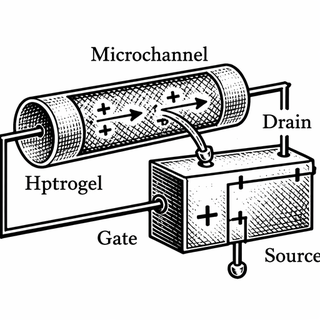
The paper describes a bioinspired hydrogel-functionalized microchannel-gated junction field-effect transistor, which is a phrase so long it should have to pay rent. Here is the plain-English version.
The researchers built a sensor that combines:
- A tiny microchannel that controls how ions move
- A hydrogel placed inside that channel
- A junction field-effect transistor, or JFET, that converts chemical changes into an electrical signal
The whole idea is inspired by biological ion channels, the little gatekeepers cells use to control traffic. Instead of copying biology exactly, the researchers borrowed the logic: if you can control charge and pore size in a tiny channel, you can make the system respond to specific molecules.
In this case, the target molecule was glutathione.
How does it work without requiring a PhD and three whiteboards?
The hydrogel is made from modified hyaluronic acid and a chemical crosslinker containing disulfide bonds. Those disulfide bonds are the key. When glutathione shows up, it reduces those bonds and starts to break apart the hydrogel network.
That changes two things inside the microchannel:
- The pore size gets larger
- The negative charge density increases
Those shifts reduce the resistance in the microchannel. The sensor then translates that resistance change into a measurable change in current through the transistor.
So the sensor is not "seeing" glutathione the way an eye sees a traffic light. It is detecting how glutathione changes the gel, and then reading that change electrically. It is more like noticing someone came through the house because the couch cushions are suddenly squashed and the snack drawer looks suspiciously lighter.
Why is this interesting?
Because the numbers are strong for an early sensor study.
The researchers report:
- A linear detection range from 100 nM to 1.00 mM
- A detection limit of 38.1 nM
- Good selectivity for glutathione
- Good reproducibility
- Good recovery in diluted human serum samples
That last point matters. Lots of clever lab gadgets work beautifully in ideal conditions and then get stage fright the moment real human samples enter the picture. Testing in diluted serum is not the same thing as full clinical use, but it is a step in the right direction.
If this kind of platform keeps working in more realistic settings, it could become a useful diagnostic building block.
What problem is this trying to solve?
Traditional chemical detection methods can be sensitive, but they are often slower, more complex, more equipment-heavy, or less convenient for point-of-care use. In real life, especially in pediatric care, simpler matters. Faster matters. Smaller matters. Anything that reduces the parade of tubes, delays, and "we’ll know more in a few days" has a real human value.
This sensor is trying to solve a very practical problem: how do you detect a biologically meaningful molecule at very low levels with high sensitivity, using a compact system that could potentially be adapted for clinical diagnostics?
That does not mean your pediatrician will have one in the exam room next Tuesday. It means researchers are working on the kind of platform that might someday make monitoring easier and more precise.
Will this help my kid?
Right now, not directly. That is the honest answer.
This is still a research-stage sensor platform. It is promising because it performed well in the lab and showed encouraging results in diluted human serum. But it has not yet become a standard clinical test, and this paper does not show that using the sensor improves outcomes for children or adults.
Still, I would not dismiss it as "neat but irrelevant." A lot of meaningful medical progress starts this way - with a tool that improves measurement before it improves treatment. Better diagnostics can lead to earlier detection, better tracking of disease activity, and smarter treatment decisions. That is not flashy, but neither is a smoke detector, and I am still very fond of ours.
For families dealing with illnesses tied to oxidative stress or metabolic imbalance, research like this points toward a future where biomarker monitoring might become more sensitive and more practical. The gap between "interesting paper" and "useful clinic tool" is real, but this study gives that bridge another plank.
What are the catch points?
A few obvious ones.
First, this is a device study, not a clinical outcomes study. It shows sensing performance, not patient benefit.
Second, human serum testing was diluted serum, which is helpful but still not the same as proving the sensor works reliably in the messy, variable conditions of real-world clinical samples.
Third, any new biosensor has to clear the usual hurdles: manufacturing consistency, cost, stability, ease of use, regulatory review, and performance against existing methods. Science can make a beautiful prototype. Health care then asks the less glamorous questions, like whether it survives being handled by actual humans before coffee.
Why I think this paper is worth watching
Because it does two smart things at once.
It borrows a principle from biology, using channel-like control of ions, and combines it with the signal sensitivity of a transistor. That is the kind of cross-discipline idea that can sometimes move a field forward. Not because it sounds futuristic, but because it solves a real technical bottleneck.
And glutathione is not a random target. It is biologically meaningful, widely relevant, and connected to disease processes researchers care about. If a sensor platform can measure it well, the odds go up that the platform itself may be useful beyond just this one molecule.
That may be the most interesting part of the paper. It is not only about glutathione. It is about building a sensing strategy that could eventually be adapted for broader diagnostics. Tiny channel, big ambition.
This blog post discusses research findings and should not be taken as medical advice. If you have concerns about conditions related to oxidative stress, inflammation, or metabolic health, please consult a healthcare provider. Research discussed here represents ongoing scientific investigation and clinical validation is still in progress.
All images used in this post are decorative illustrations only and do not represent or reflect the accuracy, reality, or correctness of the referenced research.
Primary Source: Bioinspired Hydrogel-Functionalized Microchannel-Gated Junction Field-Effect Transistor for Highly Sensitive Glutathione Detection. PubMed record 41861117. Available at: https://pubmed.ncbi.nlm.nih.gov/41861117/