
Inflammation rarely feels glamorous from the patient side. It feels like soreness that overstays its welcome, swelling that behaves like it pays rent, and the low-grade oxidative wear-and-tear that quietly nudges tissues toward trouble. Most people do not spend much time wishing for a better esterification strategy, but in a roundabout way, that may be exactly what this new research is about. The irony is delightful: sometimes the road to calmer biology starts with teaching plant-derived molecules to hold hands more efficiently.
The basic idea, without the chemistry-induced headache
The study behind PubMed record 42019850 reports the creation of a new compound called ferulic acid-grafted xylooligosaccharides, abbreviated XOS-FA. In plain English, the researchers took xylooligosaccharides, which are short sugar chains derived from plant material, and chemically linked them to ferulic acid, a plant-based phenolic compound known for antioxidant potential.
That “grafted” part matters. This was not a casual mixture, the molecular equivalent of tossing two ingredients in a bowl and hoping for the best. The team used a green and safe esterification reaction to form covalent ester bonds, meaning ferulic acid was chemically attached to the XOS backbone. Structural tests using FTIR and NMR spectroscopy supported that this attachment really happened.
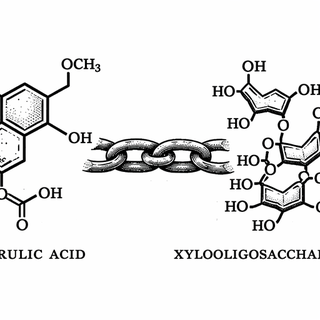
That may sound technical, because it is technical, but the practical idea is straightforward: if you combine a useful antioxidant molecule with a carbohydrate scaffold in a smarter, cleaner way, you may end up with a compound that behaves better than either piece alone.
Why ferulic acid and xylooligosaccharides?
Ferulic acid has attracted interest for years because it can help neutralize reactive oxygen species, the unstable molecules involved in oxidative stress. Oxidative stress is one of those annoyingly broad biological themes that shows up everywhere, from inflammation to aging to chronic disease. It is the biochemical equivalent of rust, except the rust is happening in living tissue, which is generally considered poor design.
Xylooligosaccharides, or XOS, are short chains built from xylan, a component of plant cell walls. They are often discussed in food and biomaterials research because they are biocompatible and come from renewable sources. On their own, they are useful building blocks. Attached to ferulic acid, they may become something more functionally interesting.
The attraction here is not just that both ingredients come from plants. It is that the pairing could improve performance while keeping the synthesis process greener and safer. For anyone tired of hearing that “natural” automatically means “effective,” this study offers a more satisfying standard: not vibes, but chemistry.
What the researchers actually found
According to the summary provided, the investigators successfully synthesized this XOS-FA conjugate and confirmed the chemical structure with spectroscopy. They observed characteristic signals consistent with ester bond formation, supporting that ferulic acid was covalently grafted onto the XOS backbone.
More interestingly, the resulting conjugate showed enhanced antioxidant and anti-inflammatory activities.
That is the headline worth paying attention to. Plenty of molecules look lovely on paper and then perform with all the urgency of a committee meeting. Here, the modified compound appears to have improved biological activity compared with what one might expect from a simpler formulation.
Even at this early stage, that suggests the chemical design was not merely decorative. The grafting may have changed how the molecule behaves in a biologically useful way, potentially improving stability, interaction with reactive species, or overall functional activity.
Why “green synthesis” is more than a marketing flourish
Scientists are not immune to trendy adjectives, and “green” gets used often enough to deserve suspicion. Still, in this case, it is not just cosmetic language.
A greener synthesis route matters because biomedical materials do not exist in a vacuum. How a compound is made affects safety, scalability, cost, and environmental burden. If a promising anti-inflammatory material can be synthesized using a safer esterification process, that improves the odds that it might eventually be practical outside a laboratory notebook.
This is one of those overlooked bottlenecks in translational science. We love the glamorous part, the molecule with the impressive graph. Less attention goes to the part where someone has to make the stuff reliably, cleanly, and without requiring half a refinery and a prayer. A safer synthesis route does not guarantee success, but it removes one very common excuse for failure.
Why this research is intriguing
I find this paper interesting for a simple reason: it treats chemistry as engineering rather than decoration. Instead of asking whether one plant-derived molecule is “good for inflammation,” the study asks whether thoughtful molecular construction can produce a better tool.
That is a much more serious question.
The combination of enhanced antioxidant and anti-inflammatory activity is especially relevant because those processes often travel together. Oxidative stress and inflammation have a notoriously codependent relationship. One stirs up the other, the other returns the favor, and suddenly the tissue environment resembles a neighborhood dispute that has gone on for decades.
A compound designed to interrupt both processes is conceptually appealing. If future work supports these findings, materials like XOS-FA could be explored in food science, nutraceutical development, biomaterials, or therapeutic delivery systems. That does not mean a clinic is about to start prescribing designer plant conjugates next Tuesday. It means the platform itself may be worth building on.
The real-world promise, and the real-world caveats
If follow-up development goes well, this kind of conjugate could matter because it sits at the intersection of biocompatibility, sustainability, and function. Researchers are constantly looking for molecules that can reduce inflammatory damage without introducing a pile of new problems. Plant-derived, chemically optimized materials are attractive for exactly that reason.
But this is where the physician in me applies the brakes.
A compound showing enhanced antioxidant and anti-inflammatory activity in early research is not the same thing as a proven treatment for human disease. There is a great distance between “interesting molecular behavior” and “clinically useful intervention,” and that distance is paved with formulation challenges, dosing questions, toxicity testing, mechanistic studies, and the occasional crushing disappointment.
We also need to know how this conjugate behaves in more complex biological systems. Does it remain stable where it needs to? Is it absorbed? Does it reach relevant tissues? Does it work in living models the way it works in initial assays? Those details tend to ruin everyone’s optimism, which is rude of them but medically necessary.
The bigger takeaway
What this study offers, at minimum, is a clever proof of concept. It shows that ferulic acid can be covalently grafted onto xylooligosaccharides using a green, safe esterification approach, and that the resulting conjugate appears to have improved antioxidant and anti-inflammatory properties.
That may not sound dramatic if you prefer your medical headlines with lasers, robots, or at least a headline-friendly acronym. Still, this is the kind of quiet materials science that can end up being genuinely useful. Biomedical progress is often less about a single miracle and more about a long series of smarter components.
And sometimes one of those components is a carefully engineered plant-sugar-phenolic hybrid with a better attitude than the originals.
This blog post discusses research findings and should not be taken as medical advice. If you have concerns about inflammation, oxidative stress, or related health conditions, please consult a healthcare provider. Research discussed here represents ongoing scientific investigation and clinical validation is still in progress.
All images used in this post are decorative illustrations only and do not represent or reflect the accuracy, reality, or correctness of the referenced research.
Primary Source: Green synthesis of ferulic acid-grafted xylooligosaccharides with enhanced antioxidant and anti-inflammatory activities. PubMed Record 42019850. PubMed