
Colorectal cancer awareness month just wrapped up in March, but the disease didn't get the memo. It's still the third most common cancer worldwide, and its nastiest trick - spreading to the lining of the abdomen - remains one of the hardest problems in oncology. So when a research team publishes a paper about a shape-shifting gel that delivers chemo drugs right where they're needed while sparing healthy organs, this parent sits up and pays attention.
The Problem: Chemo Soup Sloshing Around Your Insides
When colorectal cancer metastasizes to the peritoneum (the thin membrane lining your abdominal cavity), doctors have a treatment called HIPEC - hyperthermic intraperitoneal chemotherapy. Think of it as a hot chemo bath for your insides. Surgeons remove as much visible tumor as possible, then flood the abdominal cavity with heated chemotherapy drugs, typically around 43°C (about 109°F).
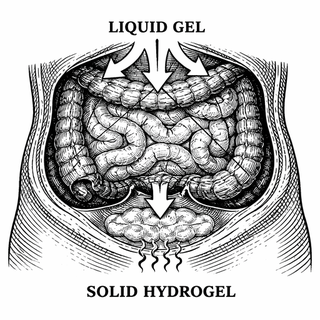
It sounds aggressive because it is. And while HIPEC has helped extend survival for many patients, it has real limitations. Your intestines are constantly moving. You're breathing. The peritoneum acts as a barrier that limits drug absorption. So you've got this toxic cocktail sloshing around, trying to kill cancer cells that are stuck to surfaces while the patient's own body mechanics are working against it. Meanwhile, the drugs don't discriminate very well between cancer cells and healthy tissue, which means liver and kidney damage are legitimate concerns.
As a parent, when I read about side effects like hepatorenal toxicity, I don't see clinical jargon. I see someone's kid dealing with organ damage on top of cancer. That's the kind of problem worth solving.
Enter the Smart Gel: Liquid When You Need It, Solid When It Counts
Researchers have developed something genuinely clever here - a biodegradable polyurethane hydrogel loaded with two cancer-fighting drugs: cisplatin (a workhorse chemotherapy drug) and 17AAG (a heat shock protein inhibitor that disrupts cancer cells' survival mechanisms). The system goes by the catchy name CDDP/17AAG@PU, which sounds like a Wi-Fi password but is actually a pretty elegant piece of engineering.
Here's the trick: at normal body temperature (37°C), the gel stays liquid. This means it can flow and spread across the peritoneal surface, reaching into all the nooks and crannies where tumor deposits hide. But when heated to 43°C - the same temperature used in standard HIPEC treatment - the gel solidifies in place.
Imagine pouring pancake batter into a hot pan. It flows everywhere, filling gaps, then sets into shape. Except instead of breakfast, you're coating cancer deposits with a sustained-release drug delivery system. (I promise that's the last food analogy I'll use for chemotherapy.)
Two Drugs, Better Together
The choice to combine cisplatin with 17AAG isn't random. Cisplatin works by cross-linking DNA strands in cancer cells, essentially gluing their genetic material together so the cells can't replicate. It's been a mainstay of cancer treatment for decades, but it's hard on the body.
17AAG takes a different angle. It's a heat shock protein 90 (Hsp90) inhibitor. Cancer cells rely on Hsp90 to keep their abnormal signaling proteins folded and functional. When you block Hsp90 - especially in a heated environment - those cancer-promoting proteins start to degrade. The research showed this combination suppressed key oncogenic signaling proteins including p-PI3K, p-AKT, and MMP2, which are essentially the cancer cell's growth and invasion toolkit.
The synergy matters. One drug attacks DNA directly. The other dismantles the cellular machinery cancer needs to survive. Together, they hit cancer cells from two directions, and the heat from HIPEC actually enhances both mechanisms.
The Safety Factor: Less Collateral Damage
What grabbed my attention most was the safety profile. In their experiments, the researchers compared the hydrogel system against free (unencapsulated) drug delivery. The results were striking.
Mice receiving the hydrogel system showed significantly lower levels of ALT (a liver damage marker) and creatinine (a kidney function marker) compared to those receiving the same drugs in free form. There was also noticeably less apoptosis - cell death - in normal intestinal tissue.
This is the part where my parent brain lights up. The drugs still killed cancer effectively (in vivo experiments showed better tumor inhibition than single-drug treatments or controls), but they did less harm to healthy organs. The hydrogel acts like a slow-release capsule, metering out the drugs at safe doses over time rather than flooding the system all at once.
What Makes This Different from Previous Approaches
Researchers have tried drug-loaded hydrogels before, but this system addresses several problems simultaneously. The polyurethane material is biodegradable, meaning it breaks down naturally in the body without requiring removal. The temperature-responsive behavior matches existing clinical HIPEC protocols, so adopting this wouldn't require doctors to reinvent their surgical workflow. And the sustained-release properties mean the drugs keep working long after a traditional HIPEC bath would have been drained away.
The researchers also demonstrated that the gel maintains excellent biocompatibility, which is a polite way of saying it doesn't poison you. For something you're putting directly inside someone's abdomen, that bar needs to be cleared convincingly.
Tempering Expectations (Because Science)
Now, before anyone gets too excited, this is still early-stage research. The in vivo experiments were conducted in animal models, and the leap from mice to humans is famously unpredictable. Plenty of promising preclinical results have fizzled in clinical trials. Manufacturing consistency, long-term safety data, regulatory approval - there's a long road between a promising lab result and a treatment your oncologist can prescribe.
But the underlying logic is sound. Deliver drugs locally. Release them slowly. Match the system to existing clinical infrastructure. Reduce toxicity while maintaining or improving efficacy. Each of those goals individually would be worth pursuing. Hitting all of them in one system is what makes this research worth watching.
For families dealing with colorectal cancer that has spread to the peritoneum, the current options are limited and often brutal. Any research that pushes toward making treatment more effective and more tolerable isn't just scientifically interesting - it's the kind of work that could change someone's prognosis from "we'll manage symptoms" to "we have a real shot." And that's the kind of research I'll always make time to read about.
This blog post discusses research findings and should not be taken as medical advice. If you have concerns about colorectal cancer or peritoneal metastasis, please consult a healthcare provider. Research discussed here represents ongoing scientific investigation and clinical validation is still in progress.
All images used in this post are decorative illustrations only and do not represent or reflect the accuracy, reality, or correctness of the referenced research.
Primary Source: Synergistic Thermochemotherapy via Injectable Polyurethane Hydrogel Co-Delivering Cisplatin and 17AAG for Peritoneal Metastasis of Colorectal Cancer. PubMed: 41937371