
Spring is here, and while most people are worried about seasonal allergies making their lives miserable, there's a subset of the population dealing with something far more persistent and puzzling: the sensation that their mouth is literally on fire. No, they haven't been stress-eating ghost peppers during tax season. They have oral dysesthesia, and until now, treatment options have been about as satisfying as a participation trophy.
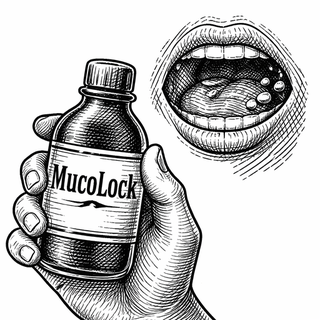
Enter MucoLock™, a new oral rinse currently in Phase II clinical trials that might finally give these patients something to smile about - without wincing.
What Even Is Oral Dysesthesia?
Imagine waking up one day and your tongue feels like you just sipped coffee that was approximately the temperature of the sun's surface. Except you didn't. And that sensation doesn't go away. For hours. Sometimes days. Sometimes it becomes your new permanent roommate.
Oral dysesthesia - often called burning mouth syndrome (BMS) when it presents as that characteristic burning sensation - is a condition where patients experience abnormal sensations in their mouth without any visible cause. We're talking pain, burning, tingling, or numbness that shows up uninvited and refuses to leave. It predominantly affects postmenopausal women (because apparently menopause wasn't enough of a party), though it can strike anyone.
The frustrating part? Doctors look in the patient's mouth and see... nothing. No lesions, no inflammation, no smoking gun. Just a perfectly normal-looking oral cavity belonging to someone who insists it feels like they're gargling lava. This disconnect between symptoms and visible pathology has made BMS notoriously difficult to treat and, historically, easy to dismiss.
The Current Treatment Landscape: A Buffet of Mediocrity
If you've ever researched treatments for burning mouth syndrome, you know the options read like a medical "throw everything at the wall and see what sticks" approach. Patients have tried everything from alpha-lipoic acid supplements to clonazepam lozenges, capsaicin rinses (yes, fighting fire with fire - literally), and various antidepressants.
The results? Mixed at best, disappointing at worst. Many patients bounce from specialist to specialist, collecting diagnoses and prescriptions like unwanted frequent flyer miles, never quite finding relief. The condition affects an estimated 0.7% to 5% of the general population, which might sound small until you realize that's potentially millions of people worldwide walking around with phantom mouth fires.
MucoLock™ Steps Up to the Plate
This is where things get commercially interesting - and as someone who sees every clinical trial as a potential product, my ears perked up immediately.
The current Phase II trial (NCT07506018) is an open-label study testing MucoLock™ oral rinse specifically for stomatitis characterized by oral dysesthesia. The protocol is refreshingly simple: participants use the topical solution as a "swish and spit" rinse (think mouthwash, but with actual therapeutic intent) three times daily for five minutes each session, continuing for 28 days.
The study is examining two primary questions:
1. Tolerability - Can patients actually use this stuff without additional discomfort?
2. Efficacy - Does it actually reduce mouth pain and burning sensations?
Both questions matter enormously. A treatment that works but feels like swishing battery acid isn't going to win any patient compliance awards.
Why This Trial Has Me Excited
From a business perspective, this trial represents a potentially massive market opportunity hiding in plain sight. Here's the thing about oral dysesthesia and burning mouth syndrome - they're conditions that significantly impact quality of life but have been chronically underserved by pharmaceutical development.
Think about it: eating becomes a chore instead of a pleasure. Talking can be uncomfortable. Even just existing with your mouth closed can be unpleasant. Patients often develop anxiety and depression secondary to their condition, creating a cascade of healthcare needs. A treatment that actually works could transform daily life for millions of people.
The open-label design of this Phase II trial suggests the researchers are still gathering initial efficacy and safety data. If results are promising, we could see randomized controlled trials in the pipeline, potentially leading to FDA approval and a first-in-class treatment for a condition that's been stubbornly resistant to therapeutic intervention.
The Bigger Picture: Finally Taking Oral Pain Seriously
What makes this trial particularly noteworthy is what it represents for the broader field of oral medicine. For too long, mouth pain without visible pathology has been relegated to the "it's probably stress" or "have you tried drinking more water?" category of medical advice.
The fact that pharmaceutical companies are investing in rigorous clinical trials for oral dysesthesia signals a shift in how we approach these conditions. We're moving from "learn to live with it" to "let's actually fix this."
The mechanism behind MucoLock™ likely involves creating a protective barrier on the oral mucosa - essentially giving the irritated nerve endings a much-needed timeout from whatever stimuli are triggering their overreaction. If this approach proves successful, it could open doors for similar formulations targeting other oral mucosal conditions.
What Happens Next?
The 28-day treatment period and open-label design mean we should see results from this trial relatively soon in the clinical research timeline. For patients currently suffering from oral dysesthesia, this is a trial worth watching - and potentially worth discussing with their healthcare providers regarding eligibility.
For investors and industry watchers, MucoLock™ represents the kind of unmet medical need that can translate into significant market success if the science holds up. The target population is large, the current treatment options are inadequate, and patient demand for effective solutions is high.
Will MucoLock™ be the fire extinguisher that burning mouth syndrome patients have been waiting for? Only the data will tell. But the fact that someone is finally taking this condition seriously enough to run a proper Phase II trial? That's already a win.
For more information about this clinical trial, visit ClinicalTrials.gov or view the detailed study table.
Disclaimer: This blog post is for educational and informational purposes only and does not constitute medical advice. Clinical trials are research studies, and their outcomes are not guaranteed. If you are experiencing oral pain or burning sensations, please consult a qualified healthcare provider. The information presented here reflects the publicly available trial registration data and should not be used to make treatment decisions.
Citation: ClinicalTrials.gov Identifier: NCT07506018. "A Phase II Open-Label Trial of MucoLock™ Oral Rinse for the Treatment of Stomatitis Characterized by Oral Dysesthesia." U.S. National Library of Medicine. Available at: https://clinicaltrials.gov/study/NCT07506018