
Things I learned this week: my coffee maker has a descaling mode to break up calcium buildup, my showerhead needed the same treatment, and apparently, so do some people's coronary arteries. The difference? Nobody's proposing we run vinegar through human hearts. Instead, we've got something far more elegant - and honestly, way cooler - called intravascular lithotripsy. Yes, we're using tiny sonic booms inside blood vessels now. Medicine in 2026 is wild.
When Arteries Turn to Stone (Sort Of)
Here's the thing about coronary artery disease: it's not just about the soft, squishy plaque you might picture clogging up pipes. For a significant number of patients - especially those who are older, have diabetes, or are on dialysis - that plaque becomes heavily calcified. We're talking calcium deposits that make arteries about as flexible as a garden hose that's been left out in the winter. Frozen solid.
Why does this matter? Because when interventional cardiologists try to place a stent in these rock-hard vessels, they run into problems. The balloon won't expand properly. The stent doesn't deploy correctly. It's like trying to wallpaper a brick wall - technically possible, but the results are less than ideal. Heavily calcified lesions have historically been the "here be dragons" territory of coronary intervention.
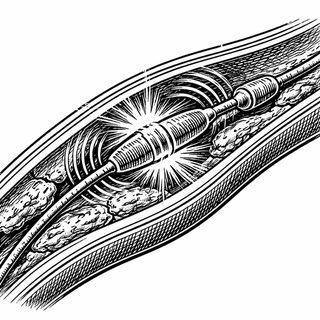
Enter the Shockwave: Kidney Stone Tech Gets a Promotion
If you've ever known someone who passed a kidney stone (or been that someone - my condolences), you might have heard of lithotripsy. It's a technique that uses acoustic pressure waves to break up stones without surgery. Urologists have been using this approach for decades. Then someone brilliant asked: what if we could do the same thing inside coronary arteries?
The Shockwave C2 Aero Coronary IVL System is essentially this idea, miniaturized and threaded through your blood vessels on a catheter. It delivers localized sonic pressure waves that crack through the calcium deposits in arterial walls - think of it as a very precise, very tiny jackhammer - while leaving the soft tissue relatively unharmed. The calcium fractures, the vessel becomes more compliant, and suddenly that stent has a fighting chance of sitting where it should.
The AERO CAD Study: Real-World Evidence Takes Flight
Which brings us to the trial that caught my attention: AERO CAD (NCT07512206). This is a prospective, multi-center, single-arm study designed to evaluate how the Shockwave C2 Aero system performs in actual clinical practice. Up to 200 patients across 8 U.S. sites will be enrolled, and researchers will be tracking both procedural success and clinical outcomes - including target lesion failure at 30 days.
Now, you might wonder: if this device is already on the market (this is a post-market study, after all), why do we need more data? Excellent question. Clinical trials that lead to FDA approval are often tightly controlled affairs - specific patient populations, carefully selected sites, experienced operators. Real-world evidence studies like AERO CAD help us understand how devices perform when they're out in the wild, being used by a broader range of physicians on a more diverse patient population.
It's the difference between knowing a car performs well on a test track versus knowing it handles potholes in Chicago in February. Both pieces of information are valuable.
Why Should We Care? (Spoiler: Patient Outcomes)
Let me paint a picture of who this matters to. Imagine you're 72 years old, you've had diabetes for two decades, and you're experiencing chest pain with exertion. Your cardiologist does an angiogram and finds severe blockages - but they're so calcified that traditional balloon angioplasty might not cut it. A few years ago, your options would have been limited. Maybe aggressive atherectomy (literally shaving plaque out of your arteries), which carries its own risks. Maybe bypass surgery, which is major and not everyone is a candidate for.
Intravascular lithotripsy offers another path. One that's less traumatic to the vessel wall than mechanical atherectomy, that can be performed in the cath lab, and that appears to improve the chances of successful stent placement.
The AERO CAD trial is building the evidence base that helps cardiologists - and patients - feel confident in this approach. Every patient enrolled, every outcome tracked, adds to our collective understanding.
The Bigger Picture: Calcified Disease Isn't Going Away
Here's a demographic reality we need to grapple with: our population is aging. The prevalence of conditions that promote vascular calcification - diabetes, chronic kidney disease, long-term dialysis - is increasing. This means more patients presenting with severely calcified coronary disease, not fewer.
We need tools that work for these patients. And we need data proving those tools work. Studies like AERO CAD aren't just checking boxes for regulatory purposes; they're answering questions that practicing physicians face every day in their cath labs.
What Happens Next?
The study is currently recruiting, with enrollment planned across multiple U.S. centers. Participants will undergo PCI with the Shockwave C2 Aero system, and researchers will track outcomes including whether the procedure achieved its goals (did the stent deploy successfully?) and whether patients remain free of target lesion failure at 30 days.
If the results mirror what we've seen in earlier studies and real-world registries, we'll have even more confidence in this technology. And that confidence translates directly into treatment options for patients who previously might have been told their disease was too complex for intervention.
Final Thoughts
There's something deeply satisfying about seeing technology developed for one purpose find new life in another. Lithotripsy started as a way to spare patients from kidney stone surgery. Now it's cracking calcium in coronary arteries and potentially changing outcomes for some of the most challenging cases in interventional cardiology.
Is it a little bit like using a tiny sonic boom inside someone's heart? Absolutely. Is that incredibly cool? Also yes. Does the AERO CAD trial represent exactly the kind of rigorous, real-world evidence gathering that helps us move from "this seems promising" to "this is standard of care"? You bet.
I'll be watching this one with interest. My coffee maker may handle its calcium deposits with citric acid, but for coronary arteries, I'll take the acoustic pressure waves, thank you very much.
Disclaimer: This blog post is for educational and informational purposes only and should not be considered medical advice. Clinical trial information and medical treatments should be discussed with qualified healthcare providers. Individual patient circumstances vary, and treatment decisions should be made in consultation with your physician.
Primary Source:
ClinicalTrials.gov. AERO CAD: A Prospective, Multi-Center, Single-Arm Study Evaluating the Shockwave C2 Aero Coronary IVL System in Calcified Coronary Artery Disease. Identifier: NCT07512206. Available at: https://clinicaltrials.gov/study/NCT07512206