
I have a confession: I never expected to spend a Friday night genuinely excited about friction. And yet here we are, because a new review paper just dropped that makes the science of slippery surfaces feel like the blockbuster nobody saw coming.
The paper, "Slippery by Design," walks us through the world of zwitterionic polymers - a class of materials that might sound like a villain from a chemistry-themed sci-fi movie but are actually some of the most promising players in modern biomedical engineering. And honestly? The implications for health equity are something I can't stop thinking about.
Wait, What Even Is a Zwitterionic Polymer?
Okay, let's break this down. "Zwitterionic" comes from the German word Zwitter, meaning "hybrid" or "hermaphrodite." These polymers carry both positive and negative charges on the same molecule. Think of them as the diplomats of the molecular world - they get along with just about everything because they're playing for both teams simultaneously.
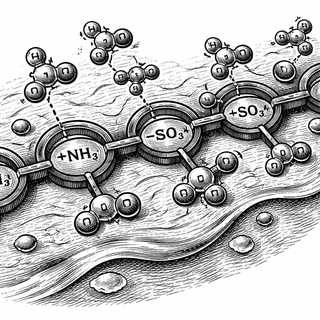
This dual-charge trick lets them grab onto water molecules and form incredibly stable hydrated layers. The result? Surfaces so slippery they make a freshly waxed bowling lane look like sandpaper. Nature figured this out ages ago - your joints, your eyes, basically every surface in your body where things need to slide past each other without causing a ruckus, relies on similar water-based lubrication strategies (Hou et al., 2024).
Why Should We Care About Slippery Surfaces in Medicine?
Here's where it gets real.
Think about every catheter that's ever been inserted into a patient. Every contact lens sitting on an eyeball. Every artificial joint grinding away in someone's hip. All of these devices need to move smoothly against biological tissue without causing damage, inflammation, or infection. When they don't, you get complications - and complications disproportionately affect people who already face barriers to follow-up care.
In underserved communities, where access to specialists and revision surgeries can involve travel distances that would make a long-haul trucker wince, a medical device that works better the first time isn't just convenient - it's a lifeline. If zwitterionic coatings can reduce catheter-related infections or extend the lifespan of joint implants, we're talking about fewer hospital readmissions, fewer complications, and better outcomes for people who can least afford a do-over.
Research on biofouling-resistant coatings has shown that zwitterionic materials dramatically reduce protein adsorption and bacterial adhesion compared to conventional polymers, making them strong candidates for next-generation medical device surfaces (Leng et al., 2024).
The Lubrication Mechanism (Or: Why Water Is the Real MVP)
The secret sauce behind zwitterionic lubrication is something called hydration lubrication. Unlike oil-based lubricants (your car engine's approach), these polymers create a thin cushion of water molecules bound so tightly to the surface that they resist being squeezed out even under high pressure.
Imagine pressing two wet sponges together. The water squishes out, and eventually the sponges stick. Now imagine those sponges are magnetically holding onto every water molecule with a death grip. That's zwitterionic hydration lubrication. The water stays put, and the surfaces keep gliding.
The review breaks down several families of these polymers - phosphobetaines, sulfobetaines, carboxybetaines - each with slightly different charge arrangements and performance characteristics. It's like choosing between different grades of motor oil, except the "engine" is your body, and the stakes are considerably higher.
Recent work on phosphorylcholine-based zwitterionic hydrogels has demonstrated friction coefficients approaching those of natural cartilage, which opens real possibilities for treating osteoarthritis - a condition affecting over 500 million people globally, with the heaviest burden falling on populations with the least access to joint replacement surgery (Chen et al., 2024).
Three Areas Where This Gets Exciting
Disease Treatment
Zwitterionic lubricants are being explored as treatments for conditions like dry eye disease and osteoarthritis - both incredibly common, both undertreated in low-resource settings. Eye drops that maintain lubrication longer could be genuinely transformative for the estimated 344 million people worldwide with dry eye. That's not a niche market; that's a small continent's worth of uncomfortable blinking.
Tissue Protection
When surgeons operate, they're essentially introducing foreign objects into a biological system that has spent millions of years learning to attack foreign objects. Zwitterionic coatings on surgical tools could reduce tissue adhesion and post-operative scarring. For patients in settings where post-surgical monitoring is limited, anything that reduces complication rates is a win.
Medical Device Upgrades
Catheters, stents, contact lenses, biosensors - the list of devices that could benefit from a zwitterionic makeover is staggering. Urinary catheters alone cause an estimated 150,000 to 300,000 infections annually in the United States. Globally, in hospitals without robust infection control protocols, that number balloons. A catheter that bacteria literally cannot stick to? Yes, please. Studies have confirmed that zwitterionic surface modifications significantly outperform traditional PEG-based coatings in long-term anti-fouling performance (Liu et al., 2023).
The Challenges (Because of Course There Are Challenges)
The review doesn't shy away from the fact that we're not quite at the finish line. Manufacturing zwitterionic coatings at scale is still tricky. Long-term durability in the chaos of the human body - with its fluctuating pH, enzyme attacks, and immune responses - remains an open question. And translating lab results into affordable, mass-produced medical devices involves navigating regulatory pathways that move at roughly the speed of continental drift.
There's also the equity question I keep coming back to: even if these materials prove transformative, will they be accessible to the communities that need them most? History suggests that the latest medical innovations tend to reach wealthy health systems first, with everyone else waiting in a queue that sometimes never moves. If zwitterionic coatings add significant cost to devices, we risk creating yet another tier in an already stratified healthcare system.
Looking Forward
What makes this review valuable isn't just the chemistry - it's the roadmap. The authors explicitly connect molecular-level design principles to real-world clinical applications, which is exactly the kind of translational thinking we need more of. Too often, materials science papers end with "...and this could maybe possibly be useful someday, perhaps." This one actually draws the lines from structure to function to patient benefit.
I'm particularly hopeful about the potential for zwitterionic materials in point-of-care diagnostics. Biosensors that resist biofouling could function more reliably in field conditions - think rural clinics, mobile health units, disaster relief settings. When your diagnostic tool works the first time in a village clinic with no backup equipment, that's not just good engineering. That's health equity in action.
The science of slippery is just getting started. And I, for one, am here for every frictionless moment of it.
This blog post discusses research findings and should not be taken as medical advice. If you have concerns about joint health, medical devices, or related conditions, please consult a healthcare provider. Research discussed here represents ongoing scientific investigation and clinical validation is still in progress.
All images used in this post are decorative illustrations only and do not represent or reflect the accuracy, reality, or correctness of the referenced research.
Primary Source: "Slippery by Design: Mechanistic Insights and Biomedical Applications of Zwitterionic Polymer Interfaces." PubMed. 2026. PubMed ID: 41895424
Additional References:
- Hou et al. "Bioinspired lubrication and antifouling surfaces." Materials Horizons. 2024. DOI: 10.1039/D4MH00895B
- Leng et al. "Zwitterionic Materials for Antifouling Applications." Chemical Reviews. 2024. DOI: 10.1021/acs.chemrev.4c00425
- Chen et al. "Phosphorylcholine-based zwitterionic hydrogels for cartilage repair." Acta Biomaterialia. 2024. DOI: 10.1016/j.actbio.2024.01.033
- Liu et al. "Zwitterionic polymer coatings: Design principles and biomedical applications." Progress in Polymer Science. 2023. DOI: 10.1016/j.progpolymsci.2023.101765