
Picture yourself on an operating table. You're blissfully unconscious - which is kind of the point of anesthesia - while a team of highly trained professionals removes your appendix, replaces your hip, or does whatever surgical thing needs doing. Meanwhile, your anesthesiologist is staring at a monitor watching your vital signs, ready to intervene if anything goes sideways.
Now imagine that monitor could tell your anesthesiologist, "Hey, this patient's blood pressure is going to drop in about 12 minutes" - before it actually happens. That's the promise of the Hypotension Prediction Index (HPI), and clinical trial NCT07301307 is exploring how to combine this AI-powered crystal ball with assisted fluid management to keep surgical patients stable.
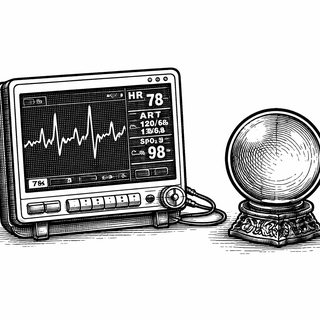
Welcome to predictive hemodynamic medicine, where machine learning meets the messy reality of keeping humans alive during surgery.
The Problem: Intraoperative Hypotension Is Bad, Common, and Hard to Prevent
Let's start with what we're actually trying to prevent here. Intraoperative hypotension (IOH) - that's when your blood pressure drops too low during surgery - is remarkably common. Depending on how you define "too low," it can occur in 30-90% of surgeries. Think about that for a second. Something that happens in up to nine out of ten surgeries isn't some rare complication - it's an expected part of the surgical experience.
Why does it happen? Lots of reasons. Anesthesia drugs relax blood vessels and can depress heart function. Surgical manipulation can trigger reflexes that tank blood pressure. Blood loss contributes. Underlying heart disease doesn't help. Sometimes patients are just... sensitive.
And why does it matter? Because organs need blood flow. Your kidneys, your heart, your brain - they're all counting on adequate perfusion to keep functioning. When blood pressure drops, flow decreases, and organs suffer. Studies have shown that IOH is associated with increased risk of postoperative acute kidney injury, myocardial injury, and even mortality. The longer and deeper the hypotension, the worse the outcomes.
The traditional approach has been reactive: watch the blood pressure, and when it drops below a threshold (often 65 mmHg mean arterial pressure), do something about it. Give fluids. Give vasopressors. Call for backup. The problem is that by the time you're reacting, the damage may already be happening.
Enter the Hypotension Prediction Index: Teaching Machines to See the Future
The HPI was developed by Edwards Lifesciences using machine learning applied to arterial blood pressure waveforms. Here's the basic idea: your arterial waveform - the squiggly line showing your blood pressure beat by beat - contains a tremendous amount of information. Not just the peak and trough pressures, but the shape, the slope, the subtle variations that human eyes can't consistently detect.
The HPI algorithm analyzed over 2.6 million features from these waveforms and identified the 23 characteristics with the best predictive value for impending hypotension. The result is a number from 0 to 100. Zero means "this patient's blood pressure looks completely stable." One hundred means "we're about to have a problem." The typical intervention threshold is an HPI of 85 or higher.
Validation studies show the HPI can predict hypotensive events (MAP dropping below 65 mmHg for more than one minute) about 5-15 minutes before they occur. That's huge. Fifteen minutes of warning gives anesthesiologists time to figure out WHY the pressure is going to drop and intervene appropriately, rather than scrambling to fix it after the fact.
The Performance Data: Reasonably Crystal-Bally
Studies have shown impressive performance metrics. The HPI demonstrates an overall sensitivity of 83% and specificity of 83% for predicting intraoperative hypotension. The pooled area under the curve (AUC) across surgeries is 0.90 - that's pretty darn good for medical prediction algorithms.
A multicenter prospective observational study of over 700 noncardiac surgery patients found that 41% of patients avoided hypotension entirely when monitored with HPI, compared to just 12% in a comparable study where HPI wasn't used. That's a big difference.
One randomized trial showed that the median time-weighted average of hypotension was 0.16 mmHg in the HPI intervention group versus 0.50 mmHg in controls - a statistically significant reduction. Patients monitored with HPI spent less time with low blood pressure.
But Does Reducing Hypotension Actually Improve Outcomes?
Here's where things get interesting - and a bit humbling for the "technology saves everything" crowd.
A recent multicenter randomized clinical trial specifically looked at whether HPI-guided management actually improved clinical outcomes - particularly acute kidney injury, which is one of the most common complications associated with intraoperative hypotension.
The results? Mixed. The incidence of moderate-to-severe acute kidney injury was 6.1% in the HPI group versus 7.0% in standard care - not statistically different. Overall complications occurred in 31.9% of the HPI group versus 29.7% of standard care - again, not statistically different.
So here's the paradox: HPI clearly reduces the duration and severity of hypotension, but this doesn't always translate to improved clinical outcomes. Why?
Several possibilities. Maybe the hypotension threshold of 65 mmHg isn't the right target for everyone. Maybe the interventions triggered by HPI (fluids, vasopressors) have their own downsides that offset the benefits. Maybe the relationship between intraoperative hypotension and postoperative complications is more nuanced than we thought. Or maybe we need larger studies to detect real differences.
This is science working as it should. An intervention sounds great in theory, shows promise in early studies, and then the hard work begins to figure out exactly when, how, and for whom it actually works.
NCT07301307: Adding Fluid Management to the Mix
This brings us to the current trial, which isn't just studying HPI in isolation - it's looking at HPI combined with Assisted Fluid Management (AFM).
Here's the logic: when HPI predicts hypotension, you need to decide what to do about it. Sometimes the answer is fluids - if the patient is hypovolemic (low on fluids), more IV fluids will fill the tank and improve blood pressure. Sometimes the answer is vasopressors - if blood vessels are too relaxed, drugs that constrict them can restore pressure. Sometimes you need both.
But figuring out whether a patient needs fluids isn't always straightforward. Give too little, and they stay hypovolemic. Give too much, and you risk fluid overload, which has its own complications including pulmonary edema and prolonged hospital stays. It's a Goldilocks problem, and getting it "just right" is harder than it sounds.
Assisted Fluid Management systems use advanced hemodynamic parameters - things like stroke volume variation, cardiac output, and arterial waveform analysis - to help guide fluid therapy. The idea is to give fluids when they'll actually help and avoid them when they won't.
Combining predictive alerts (HPI) with decision support for intervention (AFM) creates a more complete system. It's not enough to know trouble is coming - you also need to know what to do about it.
The Bigger Picture: From Reactive to Proactive Medicine
What excites me about this area of research is the philosophical shift it represents. For most of medical history, we've been reactive. Symptom appears. Doctor treats symptom. Complication develops. Doctor treats complication. It's like driving by looking in the rearview mirror.
Technologies like HPI represent a move toward proactive medicine. Problem is predicted. Doctor prevents problem. It's driving by actually looking at the road ahead.
Now, as the clinical outcome data shows, prediction isn't magic. Just because you can see a problem coming doesn't mean you automatically know how to prevent it or that your prevention attempts won't have their own trade-offs. But prediction is a necessary first step. You can't prevent what you can't see coming.
The Reality Check: Technology Is a Tool, Not a Savior
I want to be balanced here because the hype around AI in medicine can get out of hand. HPI is a useful tool. It genuinely helps reduce intraoperative hypotension. But it hasn't been shown to definitively improve patient outcomes in randomized trials - yet.
That doesn't mean it won't. It might mean we need to refine how we use it. Maybe HPI is most valuable for certain patient populations. Maybe it works best when combined with specific treatment protocols. Maybe the benefit is there but smaller than we'd like and requires larger studies to detect.
This is exactly the kind of research that NCT07301307 represents - taking a promising technology and figuring out how to make it actually useful in clinical practice. Not just "does this algorithm predict hypotension?" (yes, it does) but "does using this algorithm plus assisted fluid management actually help patients?" That's the question that matters.
Looking Ahead
The future of intraoperative care is likely to involve more of this kind of integration - predictive algorithms that alert clinicians to developing problems, combined with decision support systems that help guide interventions, combined with the human expertise of trained anesthesiologists who can put it all together in the context of an individual patient.
We're not there yet. The current generation of technology is better at prediction than at improving outcomes. But that's okay - that's what iterative research is for. Each study teaches us something. Each trial moves us a little closer to the goal.
And somewhere in an operating room, an anesthesiologist is looking at an HPI alert and thinking about whether this patient needs fluids or vasopressors - making a decision with better information than they would have had ten years ago. That's progress, even if it's not a miracle.

This article discusses clinical trial NCT07301307. For more information, visit clinicaltrials.gov. References include published literature on HPI performance and outcomes (doi: 10.1097/ALN.0000000000005260; doi: 10.1007/s10877-023-01017-1) and Edwards Lifesciences clinical evidence summaries.
Disclaimer: This blog post is for informational purposes only and does not constitute medical advice. Clinical trials are ongoing research studies, and outcomes may vary. Always consult with qualified healthcare professionals regarding medical decisions and treatment options. Images and graphics are for illustrative purposes only and do not depict actual medical devices, procedures, mechanisms, or research findings from the referenced studies.