
Age: Brand new. Interests: Long walks on treadmills, electrical engineering, being strapped to your feet. Looking for: 15 healthy adults willing to take a chance on experimental footwear. Deal-breakers: People afraid of tiny shocks (kidding), anyone who can't commit to a 2-hour relationship. Turn-ons: Biomechanics, dielectric elastomer actuators, making walking slightly less exhausting.
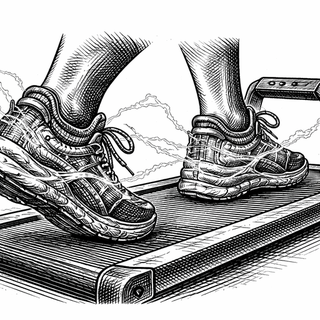
Welcome to the future of footwear, courtesy of the mad scientists at the University of Nebraska at Omaha who apparently looked at regular shoes and thought, "You know what these need? Electrical assistance."
What the Hell Is a Flash-Sole?
Look, I've seen a lot of weird stuff roll through the ER. But a shoe that gives your ankle a little electric nudge every time you push off? That's new territory, even for me. The Flash-Sole is basically what happens when engineers decide that walking, that thing humans have been doing successfully for a few hundred thousand years, could use an upgrade.
The device uses something called "stacked dielectric elastomer actuators," which is science-speak for "squishy materials that move when you run electricity through them." Think of it like artificial muscles embedded in your shoe's midsole. Every time you take a step, these bad boys activate and give your ankle a gentle assist during push-off, that critical moment when you're propelling yourself forward.
It's not approved by the FDA yet, which is why they're running this trial. Someone has to be the guinea pig, and honestly, fifteen brave souls signing up to walk around in experimental footwear for science? That's the kind of commitment I can respect.
The Two-Hour Speed Date With Science
Here's how this thing goes down. You show up at the Biomechanics Research Building (which I'm picturing as a warehouse full of people walking on treadmills in various states of sensor-covered glory). You answer some health questions to make sure you're not going to keel over mid-experiment. Then comes the fun part.
First, they let you walk in your own shoes. You know, as a control. "Look at this person walking normally," the researchers note solemnly. "Observe the lack of electrical assistance. Fascinating."
Then they strap you into the Flash-Sole shoes and cover your legs with sticky sensors that measure every twitch and flex of your muscles. You're also wearing a safety harness because apparently someone thought, "What if the electric shoes make them walk TOO well?" Better safe than airborne, I suppose.
You walk on a treadmill at a comfortable speed while they turn the device on and off, presumably to see if you notice the difference or if this whole thing is just very expensive placebo footwear. Finally, you fill out a survey about comfort and usability, which I imagine includes questions like "Did the shoes make you feel like a cyborg?" and "On a scale of 1-10, how weird was that?"
Why This Actually Matters
I know what you're thinking. "Doc, we have bigger problems than making walking slightly easier for healthy people." And you're right. But here's the thing about early-stage research: you don't start with the patients who desperately need it. You start with healthy volunteers to make sure your fancy electric shoes don't, you know, electrocute people or make them walk backwards or spontaneously combust.
This is a feasibility study. The researchers are asking three deceptively simple questions: Is it safe? Is it comfortable? Does it actually work? Once they nail down those answers with healthy adults, then they can start thinking about the people who could really benefit.
And who might that be? Oh, I don't know, maybe the millions of people with mobility impairments who struggle with every single step. Stroke survivors dealing with foot drop. Patients with neuromuscular diseases. Elderly folks whose gait has gotten shakier over the years. Anyone recovering from lower limb injuries who could use a boost while they rebuild strength.
Current assistive devices for walking are either passive (like ankle-foot orthoses that just hold your foot in position) or robotic exoskeletons that cost more than a luxury car and require a PhD to operate. The Flash-Sole is aiming for that sweet spot: active assistance that's soft, lightweight, and hopefully won't require you to take out a second mortgage.
The Soft Robot Revolution
We're living through a quiet revolution in wearable robotics, and most people don't even realize it. The old paradigm was all rigid frames and heavy motors, stuff that looked like it belonged in a sci-fi movie and felt about as comfortable as wearing a trash can. Soft robotics changed the game by using flexible materials that work with your body instead of against it.
Dielectric elastomer actuators are particularly cool because they're essentially muscle-like. They expand and contract when voltage is applied, generating force without the bulk and weight of traditional motors. It's biomimicry at its finest: humans figured out that the best way to assist human movement is to copy the way muscles actually work.
The challenge has always been getting enough power output from these soft materials while keeping them, well, soft. You can't just crank up the voltage indefinitely or you end up with crispy shoes and unhappy test subjects. The "stacked" part of "stacked dielectric elastomer actuators" is key here. By layering multiple actuators, you multiply the force output without needing dangerously high voltages.
Real Talk: The Long Game
This isn't going to cure anything next week. Hell, it might not even make it past this feasibility trial. Maybe the participants will report that the shoes feel weird, or the battery life is terrible, or the assistance is too subtle to notice. That's the nature of early research. Most ideas don't pan out.
But the ones that do? They change lives.
I've watched patients struggle to walk down a hospital hallway after a stroke. I've seen people give up activities they love because their legs just can't keep up anymore. I've held the hand of an elderly patient who's terrified of falling, knowing that fear of falling often leads to less activity, which leads to weakness, which leads to actual falls. It's a vicious cycle.
If something like the Flash-Sole could break that cycle, even for some patients, it would be worth every hour of treadmill walking these fifteen brave volunteers are about to endure.
The Bottom Line
The Flash-Sole trial (NCT07507006) is a small, early-stage study asking basic questions about a potentially game-changing technology. It's not sexy. It's not going to make headlines. It's fifteen people walking on treadmills wearing experimental shoes for two hours.
But this is how progress happens. Not with dramatic breakthroughs, but with careful, methodical testing of weird ideas that just might work. Someone has to be first. Someone has to strap on the electric shoes and trust that the engineers did their math right.
So here's to the volunteers, the researchers, and everyone willing to take walking into the future, one electrically-assisted step at a time. And if this thing pans out, well, I've seen stranger things cure patients in my thirty years in medicine.
Though I'm still waiting for someone to invent the self-walking shoes. You know, for those really long shifts.
Disclaimer: This blog post discusses an investigational medical device that is not approved by the FDA. The Flash-Sole is currently being studied in early-phase clinical trials. This content is for informational and educational purposes only and should not be considered medical advice. If you're interested in participating in this or similar studies, visit ClinicalTrials.gov for more information.
Clinical Trial Reference: NCT07507006. Feasibility of Flash-Sole in Human Trials. Available at: https://clinicaltrials.gov/study/NCT07507006