
Here's a statistic that should make everyone uncomfortable: people living with HIV are about three times more likely to smoke than the general population. And here's the really uncomfortable part - current smoking cessation treatments work worse for them too.
So we've got a population that smokes more, has more to lose from smoking (HIV-positive individuals on treatment lose more life-years to tobacco than to their HIV infection), and the standard treatments aren't cutting it. That's what researchers call a disparity, and it's exactly what a fascinating clinical trial at the University of Pennsylvania and Northwestern University (NCT04176172) is trying to fix.
Their approach? Use your genes to pick your quit-smoking medication. Oh, and actually help you take it properly. Groundbreaking stuff, right? You'd be surprised how rarely medicine tries both at once.
The Nicotine Metabolism Story
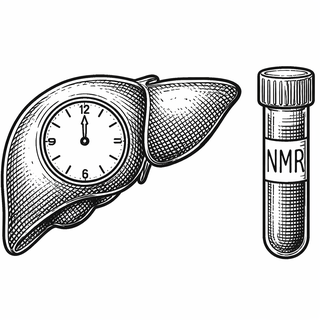
Let me tell you about your liver. Actually, specifically about an enzyme in your liver called CYP2A6. This enzyme is responsible for breaking down nicotine - turning it into cotinine, which is then converted to 3'-hydroxycotinine.
Here's where it gets interesting: not everyone's CYP2A6 works at the same speed. Some people are "fast metabolizers" - they chew through nicotine quickly, which means the effects wear off faster, which means they need to smoke more to maintain their nicotine levels. Other people are "slow metabolizers" - nicotine sticks around longer, they get more effect per cigarette, and they often smoke less.
You can actually measure this. The ratio of 3'-hydroxycotinine to cotinine in blood or urine - called the Nicotine Metabolite Ratio (NMR) - tells you how fast someone metabolizes nicotine. It's like a speedometer for your nicotine-processing engine.
And here's the punchline: your NMR predicts how well you'll respond to different smoking cessation medications.
Fast Metabolizers vs. Slow Metabolizers: A Tale of Two Treatments
The research on this is genuinely compelling. A landmark study on pharmacogenetic optimization of smoking cessation treatment published in Pharmacogenomics found strikingly different results based on metabolism rate.
For fast metabolizers:
- Nicotine patch vs. placebo: Number Needed to Treat (NNT) = 26
- Varenicline vs. placebo: NNT = 5
For slow metabolizers:
- Nicotine patch vs. placebo: NNT = 10
- Varenicline vs. placebo: NNT = 8
If you're not familiar with NNT, lower is better - it's how many patients you need to treat for one person to benefit. An NNT of 5 is excellent; an NNT of 26 means you're treating 26 people to help one quit.
Translation: fast metabolizers do way better on varenicline (Chantix) than on the nicotine patch. Slow metabolizers? The patch works nearly as well as varenicline, with fewer side effects.
This makes biological sense. Fast metabolizers blow through nicotine replacement quickly, so patches don't maintain adequate blood levels. Varenicline works differently - it blocks nicotine receptors and provides some stimulation regardless of how fast you metabolize nicotine.
The HIV Wrinkle
Now here's where it gets complicated. People living with HIV often have altered nicotine metabolism compared to HIV-negative individuals. Research published in AIDS (DOI: 10.1097/QAD.0000000000002820) found that the NMR actually increases in HIV-positive smokers on antiretroviral therapy (ART), especially those on efavirenz-based regimens.
Higher NMR = faster metabolism = harder time quitting with nicotine replacement therapy.
This might explain, at least partially, why standard cessation programs don't work as well for this population. We've been treating everyone the same when the underlying biology is different.
The Trial Design: Two Questions, One Study
The NCT04176172 trial is using what's called a 2x2 factorial design. This means they're testing two interventions at once, in all possible combinations:
Factor 1: Medication Selection
- Control: Everyone gets varenicline (the current standard)
- Experimental: NMR-tailored medication (varenicline for fast metabolizers, nicotine patch for slow metabolizers)
Factor 2: Adherence Counseling
- Control: Standard counseling
- Experimental: MAPS (Managed Problem Solving) - intensive counseling specifically targeting medication adherence
This gives you four groups:
1. Varenicline + Standard Counseling
2. Varenicline + MAPS Counseling
3. NMR-Tailored Medication + Standard Counseling
4. NMR-Tailored Medication + MAPS Counseling
With 488 participants across Penn and Northwestern, this is a properly powered study that can detect meaningful differences between approaches.
The Adherence Problem
Let's talk about MAPS for a second, because medication adherence is the elephant in the room for smoking cessation.
Here's a dirty secret of pharmaceutical research: medications work a lot better in clinical trials than in the real world. Why? Because in trials, participants are monitored, reminded, and motivated. In real life, people forget doses, experience side effects and stop taking the medication, or just give up.
Varenicline is supposed to be taken twice daily for 12 weeks. That's 168 doses. Miss a few here and there and the efficacy drops. Stop taking it after a few weeks because you're feeling nauseated? Efficacy drops a lot.
MAPS is a counseling approach specifically designed to help people identify and solve the problems that get in the way of taking their medication. It's not just "remember to take your pills" - it's working through the specific barriers each person faces. Maybe it's side effects. Maybe it's scheduling. Maybe it's running out and not refilling. Whatever the issue, MAPS tries to address it.
Why This Matters Beyond HIV
Although this trial focuses on people living with HIV, the implications extend to everyone trying to quit smoking.
If pharmacogenetic tailoring works - if matching medication to metabolism actually improves quit rates - that's a paradigm shift. Instead of trial-and-error ("let's try the patch first, and if that doesn't work, we'll switch to varenicline"), you'd start with a simple urine test and get the right medication from day one.
Think about how much suffering that prevents. Every failed quit attempt isn't just a waste of money - it's a psychological blow. People start believing they can't quit. They stop trying. A more personalized approach that increases first-attempt success could change that trajectory.
The Testing Process
The NMR testing itself is remarkably straightforward. Participants provide a urine sample during their initial visit. The sample goes to Quest Diagnostics (a CLIA-approved lab), and results come back in 7-10 days.
Based on the NMR value, patients are categorized as slow or fast metabolizers, and medication is assigned accordingly. No genetic sequencing required. No weeks of waiting. Just a ratio calculated from metabolites already in your urine.
Recent Findings: A Mixed Picture
A 2025 study published in MDPI's International Journal of Environmental Research and Public Health examined NMR and smoking cessation outcomes among people living with HIV in South Africa. The results were... complicated.
Researchers found no significant association between NMR and abstinence in their sample. They suggested that minimal variability in NMR in their population might explain the null finding - essentially, if everyone has similar metabolism, you can't detect differences based on metabolism.
This doesn't invalidate the pharmacogenetic approach, but it does suggest that population characteristics matter. The Penn/Northwestern trial, with its more diverse US population, may show different patterns.
The Bigger Picture: Precision Medicine Meets Addiction
This trial represents something larger: the application of precision medicine principles to addiction treatment.
For too long, addiction treatment has been one-size-fits-all. Everyone gets the same advice, the same medications, the same 12 steps. But addiction is biological. It involves neurotransmitters, receptors, enzymes, and genetics. Treating everyone identically ignores the very real biological differences that affect treatment response.
Pharmacogenetic approaches like NMR-tailored cessation treatment are early steps toward a more personalized model. If your genes (or the enzymes they encode) influence how you respond to treatment, shouldn't we be taking that into account?
What This Means for You
If you're trying to quit smoking, here's the practical takeaway: ask your doctor about the nicotine metabolite ratio. The test exists, it's relatively inexpensive, and it might help guide medication selection.
If you're a healthcare provider working with patients trying to quit, consider that one-size-fits-all may not be optimal. A patient who failed nicotine replacement therapy might succeed on varenicline - not because they're more motivated this time, but because the medication actually matches their biology.
And if you're living with HIV and smoking, know that researchers are working specifically on finding better cessation approaches for you. The IT MATTERS of smoking cessation trials, if you will.
Quitting smoking is hard. There's no getting around that. But the more we understand about the biology of addiction and medication response, the better our tools become. And that gives everyone a better shot at success.
Disclaimer: This blog post is for informational purposes only and does not constitute medical advice. Smoking cessation treatment decisions should be made in consultation with qualified healthcare providers who can evaluate individual circumstances. Clinical trials have specific eligibility criteria. Varenicline (Chantix) carries a boxed warning regarding neuropsychiatric effects, and patients should discuss risks and benefits with their physician. Images and graphics are for illustrative purposes only and do not depict actual medical devices, procedures, mechanisms, or research findings from the referenced studies.