
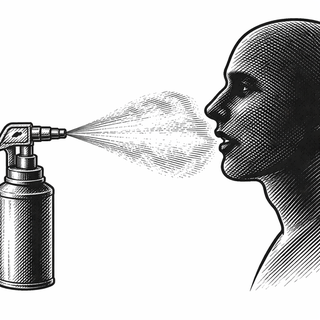
Some medicines arrive the old-fashioned way, with a pill, a needle, or a delivery method that feels about as elegant as moving a piano through a bathroom window. Newer approaches try to be more precise, more tolerable, and frankly less dramatic. That is what makes NCT07540494, an open-label Phase 1 trial of GH001 delivered through a proprietary aerosol device, so interesting. It is not trying to prove a grand cure on day one. It is doing the unglamorous but absolutely necessary work of asking: when this drug is delivered as a measured aerosol, where does it go in the body, how does the body respond, and is it safe?
That may sound technical, but this kind of question matters a great deal for health equity. If a therapy can be delivered in a way that is easier to tolerate, simpler to administer, and more consistent from person to person, it has a better chance of reaching communities that are too often asked to overcome extra hurdles just to get decent care.
What this trial is actually studying
According to the ClinicalTrials.gov record, the study is titled “An Open-label Phase 1 Trial to Determine the Pharmacokinetics, Pharmacodynamics and Safety of GH001 Administered Via a GH001 Aerosol Delivery System in Healthy Subjects.” In plain English, researchers are giving a single dose of GH001 to healthy volunteers using a specialized aerosol device and then measuring three big things:
- Pharmacokinetics, or PK: how the drug moves through the body over time
- Pharmacodynamics, or PD: how the body responds to the drug
- Safety and tolerability: whether people can take it without unacceptable side effects
This is early-stage research, and that matters. A Phase 1 study is not about proving that a treatment works for patients in real-world care. It is about building the foundation. Before clinicians can responsibly talk about benefits, they need to know whether delivery is reliable and whether the safety profile looks acceptable. Science is many things, but it is rarely a “just trust me” operation.
Why an aerosol delivery system is worth attention
Drug delivery is one of the least flashy and most important parts of medicine. A promising compound can stumble if the delivery method is clunky, inconsistent, invasive, or hard to scale. A well-designed aerosol system, by contrast, might offer a more controlled and potentially more user-friendly path.
That matters for reasons beyond convenience. In public health, convenience is not a luxury feature. It is often the dividing line between who gets access and who gets left behind. People with limited transportation, unstable work schedules, low trust in medical settings, or reduced access to specialty care do not need one more obstacle dressed up as innovation.
If an aerosol system can eventually support more predictable dosing and simpler administration, that could help reduce some real barriers. Not all of them, of course. No device solves structural inequity by itself. But a therapy that is easier to deliver has a better chance of fitting into actual human lives, which are messy, overscheduled, and rarely arranged around the preferences of a research protocol.
Why healthy-volunteer studies still matter to patients
I hear this concern a lot: if the study is in healthy subjects, how is it relevant to people who are sick? Fair question.
Healthy-volunteer studies are often the first safe step. They help researchers separate basic drug and device behavior from the many other factors that come with illness, coexisting conditions, or multiple medications. That cleaner starting point can make it easier to spot safety issues, understand dose exposure, and decide whether later patient trials are justified.
In other words, this is the map-making stage. Nobody wants to launch a larger clinical program with a delivery system that behaves like a weather forecast in April: technically informative, but not always dependable.
What makes this trial intriguing
What stands out here is the combination of drug, device, and measurement. The study is not only about GH001 as a substance. It is also about whether the proprietary aerosol system can deliver it in a way that is consistent enough to be clinically useful.
That is a bigger deal than it may first appear. In modern medicine, the success of a treatment is often tied to the success of its delivery platform. A therapy can be potent on paper and still fail patients if the route of administration is too difficult, too variable, or too resource-heavy. This trial is asking whether that weak link can be strengthened early.
There is also something refreshingly honest about a study designed to answer core PK, PD, and safety questions before making louder claims. In a research climate that sometimes treats every early result like a movie trailer for the future, disciplined groundwork deserves more respect than it gets.
The real-world stakes for underserved communities
If this line of research succeeds, the upside is not just scientific neatness. It could point toward treatment models that are more practical, more scalable, and potentially more acceptable to a broader range of people.
That is where health equity comes in. Historically underserved populations often face overlapping barriers: fewer specialists nearby, less flexible time off, higher rates of delayed care, and greater exposure to systems that have not exactly earned gold stars for accessibility. A treatment approach that is less burdensome to administer could eventually support more inclusive care pathways.
Now, realism check. An easier delivery method does not automatically mean affordable, available, or equitably distributed. We have all seen “breakthroughs” that arrive with the accessibility of a private yacht. But from a public health perspective, delivery innovation is still part of the equity conversation because it shapes who can realistically receive care, where, and under what conditions.
What challenges this research is trying to solve
At its core, this trial addresses a familiar medical problem: a therapy is only as useful as its ability to be delivered safely and predictably.
Researchers need to know:
- Can the aerosol device produce a reliable exposure profile?
- Does the body respond in a measurable and interpretable way?
- Is the single-dose experience tolerable enough to justify further study?
Those questions may sound modest, but they are decisive. If the answers are weak, the program may need redesign. If the answers are strong, later trials can move forward on firmer ground.
And that is how better treatments are usually built. Not with a cinematic leap, but with careful, slightly nerdy steps that add up. Public health people love a moonshot too, but we also know most progress arrives wearing sensible shoes.
Why this one deserves a place on the radar
NCT07540494 is not a late-stage victory lap. It is a Phase 1 study in healthy subjects, focused on PK, PD, safety, and tolerability after a single dose of GH001 delivered by aerosol. Still, that early focus is exactly why it matters. Before we can talk about broad patient impact, we need confidence that the treatment can be delivered in a controlled and acceptable way.
For anyone who cares about equitable innovation, this is the kind of trial to watch closely. Delivery science may not always get the headlines, but it often decides whether a promising therapy remains a laboratory idea or becomes something people can actually use.
Disclaimer: This post is for educational purposes only and is not medical advice. It is based on the publicly provided ClinicalTrials.gov summary for this early-stage study and should not be used to make personal treatment decisions.
Citation: ClinicalTrials.gov. NCT07540494: An Open-label Phase 1 Trial to Determine the Pharmacokinetics, Pharmacodynamics and Safety of GH001 Administered Via a GH001 Aerosol Delivery System in Healthy Subjects. https://clinicaltrials.gov/study/NCT07540494
Table view: https://clinicaltrials.gov/study/NCT07540494?tab=table