
A stubborn problem has been lurking in biological imaging for years: how do you look at tiny, squishy, messy living structures in exquisite detail without tagging them, frying them, or spending half your week begging a finicky instrument to behave? The answer, according to this review, is not one miracle microscope. It is a microscope plus an algorithmic co-pilot. Researchers describe how artificial intelligence is being paired with atomic force microscopy, or AFM, to make nanoscale imaging faster, more reproducible, and a little less dependent on whether the operator had enough coffee.
What AFM actually does
AFM is one of those technologies that sounds made up until you learn it is real. It uses an ultra-sharp probe that scans a surface and "feels" its shape and mechanical properties at the nanoscale. Think of a record player needle, except vastly smaller, much smarter, and less interested in vinyl.
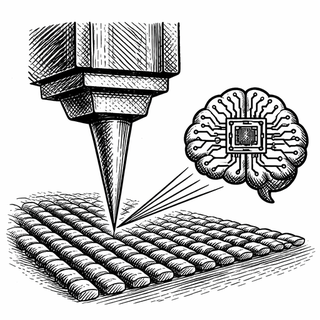
That matters in biology because AFM can examine samples without fluorescent labels. It can map not just structure, but also physical traits like stiffness and adhesion. For cells, membranes, extracellular vesicles, and protein aggregates, that is a big deal. Biology is not just chemistry in a wet trench coat. Mechanics matter too.
The catch is that AFM has a reputation. It can be slow. It can be operator-dependent. And interpreting the resulting data can get murky fast, especially when the samples are soft, heterogeneous, and annoyingly alive.
Enter AI, wearing a lab badge
This paper is a review, not a new clinical trial or a single experiment. That is worth stating up front because reviews are mapmakers, not treasure chests. They synthesize where the field is going rather than proving one dramatic breakthrough on their own.
The core claim is straightforward: AI can help at nearly every step of the AFM workflow.
According to the review, machine learning methods are being used for:
- super-resolution imaging
- tip deconvolution
- image segmentation
- force-curve analysis
- denoising soft matter maps
- automated recognition of heterogeneous structures
- 3D reconstruction of biomolecular assemblies
- probe optimization and adaptive control
- multimodal data integration
That is a long list, which is both exciting and a cue to slow down a bit. When a technology promises to improve everything, the responsible response is not applause alone. It is also, "Fine, show me where it works reliably."
Why this is more than a gadget upgrade
The most interesting part of the review is not just prettier images. It is the idea that AI could turn AFM from a specialist craft into a more scalable platform.
Traditionally, AFM can feel like a beautiful but temperamental instrument. Skilled users coax excellent data out of it, but expertise does a lot of the heavy lifting. AI offers a way to standardize some of that process. If algorithms can optimize scanning, clean up noise, identify structures consistently, and help interpret force measurements, then AFM becomes less artisanal and more deployable.
That matters for biomedical research. The review points to applications involving amyloid fibrils, extracellular vesicles, membranes, and living cells. These are not niche curiosities. They sit right in the middle of disease biology, mechanobiology, and therapeutic development.
If this approach matures, you can imagine practical benefits in:
- disease modeling
- drug and therapeutic screening
- precision diagnostics
- more reproducible nanoscale phenotyping
In plain English, the microscope might stop being just a very clever camera and start acting more like an adaptive discovery system.
The good news in the methodology
One thing this review gets right is the end-to-end framing. It does not pretend AI is only a post-processing trick slapped on after data collection. Instead, it treats AI as something that can influence the full workflow, from probe behavior and scan control to interpretation and data fusion.
That is a stronger vision than "we ran an algorithm on some images and the pictures looked nicer." In imaging research, nicer pictures are often the scientific equivalent of suspiciously flattering lighting. Useful, maybe. Sufficient, no.
The emphasis on reproducibility and throughput is also well placed. Those are genuine bottlenecks in biological AFM. If AI helps reduce operator dependence and improves consistency, that is not cosmetic. That is structural.
Now for the part where we pump the brakes
This review is optimistic, and some of that optimism is justified. But optimism is not validation.
First, this is still a review of an emerging convergence. The paper surveys advances and sketches a future direction, but it does not mean AI-enabled AFM is ready to march straight into routine clinical practice wearing a stethoscope and perfect confidence.
Second, AI systems are only as sturdy as the data and validation behind them. Biological samples are noisy and variable. Different labs use different instruments, sample preparations, scan settings, and analysis pipelines. An algorithm that performs beautifully on one dataset can become dramatically less impressive when exposed to the real world, which is where elegant methods go to develop character.
Third, automation can hide errors as efficiently as it removes manual labor. If segmentation, denoising, or reconstruction tools are not carefully validated, they may smooth away biologically meaningful details or hallucinate patterns that look scientific enough to pass a quick glance. Tiny structures are already hard to interpret. Tiny structures plus overconfident software can become a very expensive misunderstanding.
And finally, "clinical utility" is a strong phrase. It may well be the destination, but the road from compelling lab workflow to robust diagnostic tool is long, regulated, and full of potholes.
Why this still matters
Even with those caveats, this review highlights a genuinely promising direction. Biology at the nanoscale is complicated, and AFM offers a rare combination of structural and mechanical insight without relying on labels. If AI can make that process faster, smarter, and more reproducible, it could help unlock data that are currently too slow or too fiddly to gather at useful scale.
That does not mean the microscope is becoming autonomous in the sci-fi sense. No one needs to panic about rebellious cantilevers. It means the field is trying to build systems that adapt during scanning, interpret data more consistently, and integrate multiple signal types in ways humans alone struggle to do efficiently.
That is the real intrigue here. Not magic. Not hype. A serious instrument meeting serious computation, with enough early progress to deserve attention and enough uncertainty to deserve skepticism.
And frankly, that is where science is often most interesting: not when the case is closed, but when the evidence starts lining up and the argument gets harder to ignore.
This blog post discusses research findings and should not be taken as medical advice. If you have concerns about diagnostic technologies, biomedical imaging results, or disease-related testing, please consult a healthcare provider. Research discussed here represents ongoing scientific investigation and clinical validation is still in progress.
All images used in this post are decorative illustrations only and do not represent or reflect the accuracy, reality, or correctness of the referenced research.
Primary Source: AI in Atomic Force Microscopy: Advancing Biological Nanoscale Imaging and Autonomous Discovery. PubMed. https://pubmed.ncbi.nlm.nih.gov/42024823/