
Fun fact: the average person produces between 0.5 and 1.5 liters of saliva per day. That is roughly the volume of a large Nalgene bottle, sloshing around in your mouth 24/7, washing away everything that tries to stick around. For dentists and drug delivery engineers, that fact is approximately as welcome as a spoiler for your favorite show. Saliva is the ultimate antagonist of oral drug therapy - relentless, constant, and completely indifferent to your best-laid medical plans.
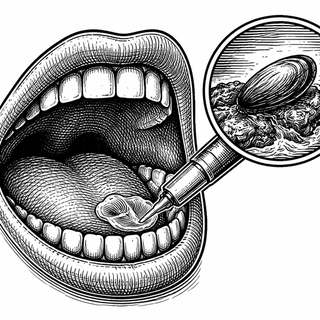
Which is exactly why a new study just published on PubMed made me sit up straight in my chair. Researchers have engineered a mucoadhesive hydrogel that laughs in the face of saliva and delivers a photodynamic therapy drug directly to precancerous oral lesions with remarkable staying power. Think of it as the Velcro of drug delivery systems - except instead of attaching fuzzy sweaters to couch cushions, it's latching onto your oral mucosa and blasting abnormal cells with light-activated reactive oxygen species.
What Is Oral Leukoplakia, and Why Should You Care?
Oral leukoplakia (OLK) sounds like the name of a lesser-known Star Trek species, but it is actually a white or gray patch that develops on the mucous membranes inside the mouth. It is classified as a potentially malignant disorder - which is medical shorthand for "this isn't cancer yet, but we really need to keep an eye on it." Depending on the clinical presentation, OLK can carry a malignant transformation rate of up to 17%, meaning a non-trivial number of these lesions will eventually become oral squamous cell carcinoma if left untreated.
Standard management runs the gamut from watchful waiting to surgical excision, but recurrence rates are frustratingly high. Photodynamic therapy (PDT) has emerged as a promising alternative - it is less invasive, spares surrounding tissue, and works by activating a photosensitizing drug with specific wavelengths of light to generate reactive oxygen species (ROS) that kill aberrant cells. If surgery is the sledgehammer, PDT is the laser-guided scalpel. Literally.
The catch? Getting a photosensitizer like 5-aminolevulinic acid (ALA) to actually stay on the oral lesion long enough to matter is like trying to keep a Post-it note on a car hood in the rain. That's where this new hydrogel comes in.
Engineering the World's Most Persistent Oral Adhesive
The research team built their ALA-loaded hydrogel (ALA-Gel) from three key ingredients: acrylic acid (AA), chitosan (CHI), and polydopamine. If that last one rings a bell, it's because polydopamine is inspired by the adhesive proteins found in mussel feet - yes, the same mechanism that lets mussels cling to wet rocks in the ocean. Scientists have basically stolen a trick from shellfish to solve a human medical problem, which is exactly the kind of lateral thinking that makes bioengineering so genuinely fun.
Chitosan brings antimicrobial properties and mucoadhesive character to the party. Acrylic acid provides the structural polymer backbone. Polydopamine, synthesized via oxidative polymerization of dopamine, coats the network and dramatically boosts adhesion to wet biological surfaces. The whole thing is cross-linked chemically into a stable gel matrix that traps ALA and releases it in a controlled, sustained manner.
In mechanical testing, ALA-Gel demonstrated wet adhesion strong enough to resist salivary flow - essentially passing the "standing in a rainstorm with a billboard" test. The sustained release profile means therapeutic ALA concentrations are maintained at the lesion site rather than getting swept down the esophagus after 10 minutes. That is a genuinely meaningful engineering achievement.
Light It Up: The PDT Mechanism in Action
Here is where it gets satisfying from a mechanistic standpoint. ALA is a prodrug - it is not itself the photosensitizer. Once cells absorb ALA, they convert it through the heme biosynthesis pathway into protoporphyrin IX (PpIX), which accumulates preferentially in rapidly proliferating or metabolically active cells (exactly the kind of cells you want to target in OLK). When you then hit the tissue with a 632 nm red laser at 100 mW/cm², the PpIX absorbs photons, transfers energy to molecular oxygen, and generates singlet oxygen and other ROS that induce cell death.
In vitro, the ALA-Gel-mediated PDT results were striking: significantly enhanced ROS generation compared to free ALA, and potent cytotoxicity against leukoplakia cells. The really reassuring part - and this matters a lot clinically - is that normal human keratinocytes showed high biocompatibility with the hydrogel. The system is targeting the abnormal cells preferentially, not carpet-bombing healthy tissue. It is the difference between a heat-seeking missile and a hand grenade.
From Rats to Reality: The In Vivo Results
The team validated their system in a rat oral leukoplakia model, which is where things get encouraging from a translational standpoint. The hydrogel achieved prolonged intraoral retention - meaning it actually stuck around in the wet, dynamic oral environment of a living animal. Post-laser irradiation at 632 nm, the treated lesions showed clear therapeutic effects, with histological analysis confirming reduced malignant transformation markers compared to controls.
This kind of animal-model validation is the critical bridge between "cool bench science" and "something that might one day help patients." We are not there yet - the gap between a rat model and a human clinical trial involves years of additional work, regulatory hurdles, and dose optimization studies that would make a lesser scientist weep into their pipette. But the proof-of-concept is solid.
Why This Approach Is Worth Watching
The beauty of the ALA-Gel system is that it tackles multiple failure modes of oral PDT simultaneously. It solves the drug retention problem (wet adhesion). It solves the concentration maintenance problem (sustained release). It maintains selectivity (biocompatible with normal cells). And it uses a well-characterized photosensitizer prodrug with an existing clinical safety profile, which lowers the bar for eventual translation.
Mucoadhesive hydrogel platforms like this one are part of a broader wave of localized drug delivery strategies that recognize a fundamental truth: getting the drug to stay where you put it is half the battle. Whether it is the oral cavity, the bladder, the nasal mucosa, or any other washout-prone environment, engineered adhesion is becoming an increasingly powerful tool in the therapeutic arsenal.
From a materials science standpoint, the polydopamine-chitosan-acrylic acid combination is elegant precisely because each component earns its spot in the formulation. Nothing is decorative. If this system moves through preclinical development and eventually reaches clinical trials, it could represent a genuinely practical, minimally invasive option for managing OLK and potentially reducing the rate of malignant transformation in a patient population that currently has limited options beyond surgery and surveillance.
Sometimes the most exciting biomedical advances are not the flashiest ones. They are the patient, methodical solutions to problems that seem almost mundane - like "the mouth is too wet for drugs to stick." Today, a mussel-inspired hydrogel and a red laser. Tomorrow, maybe fewer cases of oral cancer. That is a story worth following.
This blog post discusses research findings and should not be taken as medical advice. If you have concerns about oral lesions or oral leukoplakia, please consult a dental professional or oral medicine specialist. Research discussed here represents ongoing scientific investigation and clinical validation is still in progress.
All images used in this post are decorative illustrations only and do not represent or reflect the accuracy, reality, or correctness of the referenced research.
Primary Source: Adhesive hydrogel delivering ALA prevents the malignant transformation of oral leukoplakia. PubMed. 2026. PMID: 41867500