
Quick - name the last time you thought about invasive weeds. Exactly. Most of us notice them only when a field starts looking like it lost a turf war. But this new PubMed-indexed study asks a surprisingly modern question: what if an herbicide could be delivered less like a splash-and-pray spray bottle and more like a carefully packed parcel with a very specific address?
That is the basic intrigue behind this research on a nanocarrier-enabled version of topramezone, a herbicide used against invasive weeds. The target here is Cyclachaena xanthiifolia, an invasive plant that can spread aggressively and compete with crops for light, water, and nutrients. The researchers built a nanoscale delivery system using an amphiphilic hydrophilic-lipophilic diblock polymer, or HLDP, to carry topramezone more effectively. The result was not just a chemistry trick for chemistry's sake. In laboratory and field testing, the nanoformulation appeared to hit the weed harder while also showing better biosafety toward non-target organisms.
Why this matters beyond the lab bench
When people hear "herbicide innovation," eyes can glaze over a bit. Fair enough. But the public-health and environmental stakes are real. Invasive weeds can reduce agricultural productivity, increase farming costs, and push growers toward repeated applications of chemicals that do not always land where they are supposed to. Conventional herbicides often suffer from a frustrating combination of underperformance and over-dispersion. Too little reaches the target plant, while too much drifts, washes away, or lingers in the wrong place. Not exactly elegant.
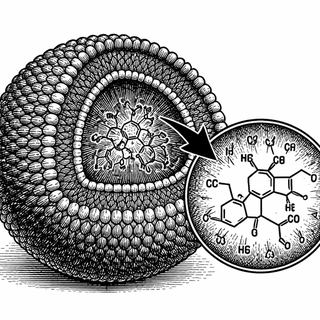
That is why delivery matters. In medicine, we spend a lot of time thinking about how to get the right drug to the right tissue at the right dose. Agriculture is wrestling with a similar problem. If a formulation can improve how much active ingredient sticks to a leaf, enters the plant, and stays stable long enough to work, then in theory you can get more effect with less collateral mess. Sometimes the exciting part is not a new weapon - it is better aim.
What the researchers actually built
The team designed HLDP, a diblock polymer with both water-friendly and fat-friendly features. That mixed personality is useful. It helps the material self-assemble into nanoparticles that can hold topramezone inside. According to the study, the loading content reached 46.22%, which is quite substantial for a carrier system. The assembly was driven by hydrophobic association and hydrogen bonding, and the researchers used several analytical methods to show that this was not hand-waving with fancy punctuation.
Once encapsulated, the herbicide formed stable spherical particles around 102 nanometers in size, with a zeta potential of 30.13 mV. Those numbers matter because they suggest a formulation that is small, reasonably stable, and physically distinct from free herbicide. The nanostructure also improved thermal stability, which is another practical point. Farm chemicals do not live pampered lives. They face heat, storage issues, transport stress, and outdoor conditions that would make most lab reagents file a complaint.
Why the nanoformulation worked better
This is where the paper gets especially interesting. Compared with free topramezone, the nanoparticle formulation improved several "foliar behavior" measures - essentially, how the spray behaves on the leaf.
The contact angle was reduced by about 1.4-fold, meaning the droplets spread better rather than beading up and rolling off like rain on a waxed car. Spray retention increased by 2.3-fold, so more material stayed where it was needed. Systemic uptake doubled, which suggests more herbicide entered the weed and moved through it. The soil transport behavior also changed, which may matter for both efficacy and environmental handling.
Those details may sound technical, but together they tell a very practical story: the herbicide did not just exist in a smaller package, it interacted with the plant differently. It clung better, entered better, and performed better. That is the sort of formulation science that often decides whether a product is merely clever or genuinely useful.
What happened inside the weed
The biological findings add another layer. The nano-enabled topramezone did more than stunt visible growth. Transcriptomic and metabolomic analyses suggested that the carrier system amplified stress responses inside the invasive weed.
The study reports suppressed photosynthetic electron transport, impaired NADPH generation, redirected carbon allocation, and enhanced jasmonic acid biosynthesis. In plain language, the weed's energy-making machinery took a hit, its metabolic balance shifted, and its internal stress signaling ramped up. Chlorophyll and nitrogen contents also dropped, which fits with a plant that is losing the ability to maintain healthy growth.
I like studies that connect the dots from field performance to molecular mechanism. Otherwise, you can end up with a result that basically says, "Trust us, it worked." Here, the authors make a stronger case: the nanoformulation seems to intensify multiple stress pathways at once. For the weed, that is less a bad day and more a full inbox, dead battery, and broken coffee machine all before 9 a.m.
The biosafety question everyone should ask
Whenever nanotechnology enters the conversation, so should caution. "More powerful" is not automatically good if it also means more harmful to the broader environment. To the authors' credit, biosafety was part of the study rather than an afterthought tucked behind a hopeful smile.
Their assessments indicated superior biocompatibility of the nanoformulation toward non-target organisms, while also reducing ecological risk compared with conventional approaches. That does not mean the case is closed. It does mean the research is trying to solve two problems at once: improve weed control and lower unintended harm. That is exactly the right standard. No one needs a miracle fix that creates a sequel.
What could this mean in the real world?
If follow-up development holds up, this kind of formulation could help farmers manage invasive weeds more effectively with better precision and potentially less environmental dispersion. That matters economically, agronomically, and ecologically. Better retention on leaves and stronger uptake could translate into more reliable control. Improved stability could help with storage and field performance. Lower off-target exposure could reduce some of the long-standing tradeoffs that make pesticide use such a difficult balancing act.
Still, promising is not the same as finished. Real-world deployment would require larger-scale validation, regulatory review, manufacturing feasibility, cost analysis, and longer-term environmental testing across varied field conditions. Nanocarrier systems can look beautiful in a controlled study and then run into the usual grown-up problems of scale, consistency, and affordability. Science is brave, but supply chains are undefeated.
The bigger takeaway
What stayed with me in this paper is not just that the herbicide worked better. It is that the improvement came from rethinking delivery. The active ingredient was familiar. The packaging changed the outcome.
That lesson travels well across disciplines. Whether we are talking about cancer drugs, inhaled therapies, or weed management, the route and formulation can matter almost as much as the molecule itself. Small particles can create large differences in where something goes, how long it lasts, and what it does once it arrives.
And perhaps that is the quiet elegance of this study. It treats invasive weeds not as a problem to bludgeon harder, but as a problem to approach more intelligently. Sometimes innovation is not louder. Sometimes it is smaller, sharper, and less wasteful.
This blog post discusses research findings and should not be taken as agricultural, environmental, or health advice. If you have concerns about weed control practices, pesticide exposure, or environmental safety, please consult a qualified agronomy, environmental, or public health professional. Research discussed here represents ongoing scientific investigation, and real-world application will require further validation.
All images used in this post are decorative illustrations only and do not represent or reflect the accuracy, reality, or correctness of the referenced research.
Primary Source: Multilevel synergistic mechanisms of a nanocarrier-enabled topramezone herbicide against invasive weeds. PubMed Record 42021348. https://pubmed.ncbi.nlm.nih.gov/42021348/