
Somewhere right now, a perfectly healthy adult volunteer is sitting in a research lab, breathing air with progressively less oxygen in it while researchers carefully dilute their blood - and they signed up for this on purpose. Not because they lost a bet. Not because of some elaborate fraternity hazing ritual. Because the data their body generates under these controlled, uncomfortable conditions could eventually save thousands of lives in operating rooms, ICUs, and emergency departments around the world.
That's the kind of thing that makes you want to stand up and slow-clap for the entire field of translational physiology.
So What Exactly Is Going On Here?
A clinical trial registered as NCT07503171 is collecting physiological measurements from healthy adult volunteers under two simultaneous stressors: controlled hypoxia (reduced oxygen levels) and hemodilution (thinning of the blood by reducing red blood cell concentration). Think of it as stress-testing the human body's backup generators to see exactly when the lights start flickering.
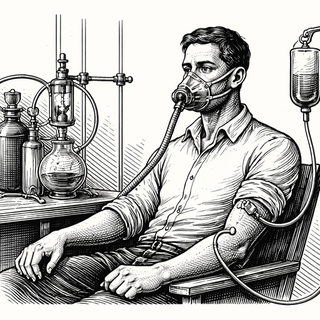
Hypoxia means your tissues aren't getting as much oxygen as they'd like. Hemodilution means you have fewer red blood cells to carry whatever oxygen IS available. Put them together and you've got a double whammy that mirrors what actually happens to patients during major surgery, trauma, or critical illness. By studying how healthy volunteers respond to these conditions in a meticulously controlled environment, researchers can map out the body's compensatory mechanisms with a precision you simply can't achieve during an actual medical emergency when everyone is, understandably, a bit busy.
You can explore the full trial details in table format here.
Why Should You Care About Someone Else's Low Oxygen Levels?
Here's where it gets really interesting. This kind of research sits at the intersection of several problems that have been bugging clinicians for years.
Problem one: pulse oximeters aren't as reliable as you think. That little clip-on device on your finger during a hospital visit? It estimates blood oxygen saturation using light absorption through your skin. The FDA requires manufacturers to validate these devices using controlled desaturation studies in healthy volunteers - essentially, studies a lot like this one. And we've learned some uncomfortable truths recently. A landmark 2020 study in the New England Journal of Medicine found that pulse oximeters were nearly three times more likely to miss low oxygen levels in Black patients compared to white patients (Sjoding et al., N Engl J Med, 2020; DOI: 10.1056/NEJMc2029240). That's not a minor calibration issue - that's a patient safety crisis that became painfully visible during the COVID-19 pandemic.
Problem two: we still argue about when to transfuse blood. Hemodilution happens constantly in medicine. A patient loses blood during surgery, and clinicians replace volume with saline or other fluids. The blood gets thinner. At some point, oxygen delivery drops below what the body can compensate for. But where exactly IS that point? It varies wildly between patients, and getting it wrong in either direction has consequences. Transfuse too early and you waste a scarce resource while exposing the patient to transfusion risks. Transfuse too late and organs start suffering. Research published in JAMA has explored the cardiovascular and metabolic responses to severe isovolemic anemia, showing that healthy humans can tolerate remarkably low hemoglobin levels - but the compensatory mechanisms have limits (Weiskopf et al., JAMA, 1998; DOI: 10.1001/jama.279.3.217). More recent work has continued refining our understanding of those limits.
Problem three: monitoring technology needs to get smarter. As wearable health devices proliferate and remote patient monitoring becomes the norm, there is an urgent need for sensors that remain accurate across the full range of human physiology - different skin tones, different hemoglobin levels, different degrees of peripheral perfusion. You can't build better algorithms without better training data, and you can't get better training data without studies like this one. A 2022 study in JAMA Internal Medicine showed that racial and ethnic differences in pulse oximetry accuracy led to measurable disparities in supplemental oxygen administration in ICU patients (Gottlieb et al., JAMA Intern Med, 2022; DOI: 10.1001/jamainternmed.2022.0906).
The Beautiful Weirdness of Controlled Danger
There is something genuinely fascinating about the physiology at play here. Your body is spectacularly good at adapting to mild oxygen deprivation. Heart rate increases. Cardiac output goes up. Blood flow redistributes to prioritize the brain and heart. Ventilation ramps up. Your body essentially says, "Oh, you want to play games? Fine. Watch THIS." And for a while, tissue oxygenation holds steady.
But when you combine hypoxia with hemodilution, those compensatory mechanisms get stretched thin. It's like trying to deliver more packages with fewer trucks on roads that are also partially closed. At some point, the math just doesn't work. The question is: at what point? And can our monitoring devices actually detect when that threshold is approaching?
This is why controlled studies in healthy volunteers are so valuable. In a clinical setting, patients arrive with comorbidities, medications, varying levels of fitness, and the general chaos of acute illness. Healthy volunteer studies let researchers isolate variables. They can titrate the hypoxia precisely, control the hemodilution incrementally, and measure everything from cardiac output to cerebral oxygenation in real time.
What Could This Mean for Real Patients?
If this research delivers what it promises, the downstream effects could be substantial. Better-validated pulse oximeters that work equitably across all skin tones. Smarter transfusion algorithms that are individualized rather than based on arbitrary hemoglobin thresholds. Next-generation monitoring devices for operating rooms that can warn clinicians before oxygen delivery becomes critically insufficient - not after.
A systematic review by Serraino and Murphy (2017) estimated that perioperative anemia affects up to 40% of surgical patients, and even moderate anemia is independently associated with worse outcomes (DOI: 10.1111/tme.12413). Every improvement in our ability to detect and respond to the combination of low oxygen and thin blood is an improvement that touches millions of surgical patients per year.
And beyond the OR, think about high-altitude medicine, aerospace physiology, neonatal care, and the rapidly growing field of home-based pulse oximetry. The data generated by studies like NCT07503171 ripples outward in ways that are hard to overstate.
The Takeaway
Sometimes the most impactful medical research doesn't involve a blockbuster drug or a sci-fi surgical robot. Sometimes it's a healthy volunteer sitting quietly in a lab, breathing carefully controlled gas mixtures while researchers collect data that will make monitoring technology work better for everyone. It's not glamorous. It probably won't make the evening news. But the next time a pulse oximeter catches a desaturation event that would have been missed a decade ago, or a surgeon makes a perfectly timed transfusion decision based on better physiological models - a study like this one is part of the reason why.
And honestly? The fact that people volunteer for this stuff gives me a lot of faith in humanity.
Disclaimer: This blog post is for educational and informational purposes only and does not constitute medical advice. Clinical trials involve rigorous oversight and participant safety protocols. Always consult qualified healthcare professionals for medical decisions.
Citation: ClinicalTrials.gov Identifier: NCT07503171 - "Hypoxia and Hemodilution Testing in Healthy Adult Volunteers." U.S. National Library of Medicine. Accessed April 2026.