
Like bloodhounds trained to track a single scent through a rain-soaked forest, certain bacteria can be engineered to detect specific molecules in a sea of chemical noise - and a new study has built what might be the best molecular bloodhound yet for sniffing out one of medicine's most important drug families.
We are, of course, talking about β-lactams - the sprawling dynasty of antibiotics that includes penicillins, cephalosporins, and carbapenems. These drugs have been saving lives since Alexander Fleming's famously messy petri dish, and they remain the backbone of our antimicrobial arsenal. But here's the thing: making them better, faster, and cheaper requires finding the biological factories (fungi and enzymes) that produce the best raw materials. And finding those needles in a haystack? That demands serious screening power.
The Cephalosporin Supply Chain Problem
To appreciate what this research accomplishes, you need to understand a slightly unglamorous corner of pharmaceutical manufacturing. Cephalosporin C (CPC) is a compound produced by filamentous fungi - think of it as the crude oil of the cephalosporin world. Refineries (in this case, enzymatic processes) convert CPC into 7-aminocephalosporanic acid, or 7-ACA, which is the universal building block for semisynthetic cephalosporins. These are the drugs your doctor prescribes for everything from strep throat to surgical prophylaxis.
The bottleneck? Finding fungal strains that pump out CPC like tiny pharmaceutical overachievers, and engineering enzymes that process β-lactam compounds with maximum efficiency. Traditional screening methods are slow - painfully, agonizingly slow. We're talking about testing one strain at a time, like trying to find the best singer in a city by auditioning people individually in your living room. What we really need is American Idol for microbes. Millions of contestants, rapid judging, next.
Enter the Biosensor: E. coli Gets a New Job
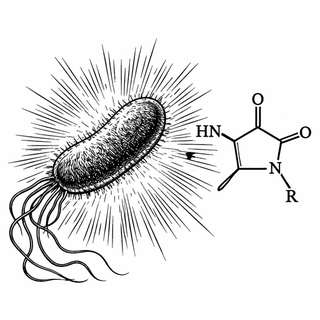
This is where the research team's ingenuity shines. They took Escherichia coli - the lab workhorse that has probably contributed more to science than any tenure-track professor - and turned it into a living detector for β-lactam compounds. The secret ingredient? A transcriptional regulator called AmpR.
AmpR is a protein that naturally responds to β-lactam-related molecules. When it encounters them, it flips a genetic switch. The researchers harnessed this switch to control a fluorescent reporter, meaning that when the engineered E. coli encounters β-lactam compounds, it literally lights up. More compound, more glow. It's like a biological mood ring, except instead of responding to your body temperature and telling you you're "passionate," it responds to antibiotic precursors and tells you something actually useful.
But here's where the "stepwise engineering" in the title earns its keep. The native AmpR system wasn't sensitive enough, wasn't specific enough, and wasn't compatible with the fancy screening technology the team wanted to use. So they didn't just plug it in and call it a day - they systematically rebuilt it, piece by piece.
The Art of Biosensor Tuning
How do you make a biological sensor better? The same way you'd tune a radio to pick up a weak station - adjust everything until the signal-to-noise ratio is right.
The researchers optimized multiple components of their biosensor: the AmpR protein itself, the promoter sequences that control gene expression, and the overall genetic circuit architecture. Through iterative rounds of mutagenesis and selection, they developed a superior AmpR variant with enhanced sensitivity and broader detection range. This wasn't a single eureka moment - it was methodical, disciplined engineering. Think of it as the difference between stumbling upon a good recipe and systematically testing 500 variations of the same cake until you find the one that makes people weep with joy.
The result? A biosensor that can detect a broad spectrum of β-lactam compounds, not just one narrow class. This versatility matters enormously because different β-lactam intermediates and products need to be monitored at various stages of the production pipeline.
Why Droplets Change Everything
Perhaps the most exciting aspect of this work is the compatibility with droplet-based microfluidics. If that term sounds like something from a science fiction novel, let me break it down: imagine shrinking each screening experiment into a tiny water droplet, smaller than a grain of sand, suspended in oil. Each droplet contains a single fungal cell (or enzyme variant) and a biosensor E. coli cell. Millions of these droplets flow through microscopic channels on a chip, and a laser reads the fluorescence of each one in real time.
This is high-throughput screening on a scale that would make traditional microbiologists dizzy. Instead of testing hundreds of strains per week, you can screen millions per day. And because each droplet is a self-contained experiment, the cost per test drops to almost nothing. It's the difference between mailing individual letters and sending a mass email - except each "email" still gets personalized attention.
What This Means for Medicine
Why should any of us who aren't microbiologists care? Because β-lactam antibiotics are under pressure from two directions simultaneously.
On one side, antimicrobial resistance is eroding the effectiveness of existing drugs, driving an urgent need for new and modified cephalosporins. On the other, the economics of antibiotic manufacturing demand more efficient production methods - better fungal strains, better enzymes, lower costs. Every percentage point improvement in CPC yield from an engineered fungus translates into real savings that can keep these essential medicines accessible.
This biosensor platform could accelerate both fronts. By enabling rapid screening of massive mutant libraries, it compresses years of strain improvement into months. By working across the β-lactam family, it supports the optimization of entire biosynthetic pathways rather than just single steps.
Could this be the tool that helps us stay one step ahead in the antibiotic resistance arms race? It's too early to make grand promises, but the engineering is sound, the platform is scalable, and the need is undeniable.
The Bigger Picture
What strikes me most about this work is the elegant recursion of it all - using one microbe (E. coli) to improve the products of another (filamentous fungi) so that we can better treat infections caused by yet other microbes. Biology, it turns out, is its own best toolkit. We just have to be clever enough to rewire the parts.
The stepwise approach the researchers took also offers a blueprint for biosensor development more broadly. The same principles - systematic optimization of sensor proteins, genetic circuits, and screening-platform compatibility - could be applied to build detectors for other valuable metabolites, from anticancer compounds to biofuels.
For now, though, let's appreciate the fact that somewhere in a lab, tiny E. coli cells are glowing green every time they encounter a β-lactam molecule, cheerfully doing their part to keep antibiotic manufacturing moving forward. If that isn't a reason to feel optimistic about synthetic biology, I don't know what is.
This blog post discusses research findings and should not be taken as medical advice. If you have concerns about antibiotic treatments or antimicrobial resistance, please consult a healthcare provider. Research discussed here represents ongoing scientific investigation and clinical validation is still in progress.
All images used in this post are decorative illustrations only and do not represent or reflect the accuracy, reality, or correctness of the referenced research.
Primary Source: Stepwise engineering of AmpR-based whole-cell biosensors for broad-spectrum detection and high-throughput screening of β-lactam compounds. PubMed. 2026. PMID: 41962432