
NEO-Match® would like you to know it is highly sensitive, deeply analytical, and very into long walks across biopsy samples. It works in nanomechanics, prefers serious relationships with pancreatic tissue, and claims it might help doctors figure out which tumors are malignant and how a patient may respond to treatment before surgery. Basically, it is the kind of date profile that sounds either wildly promising or like a robot wrote it after three espressos. In this case, though, the idea is genuinely interesting.
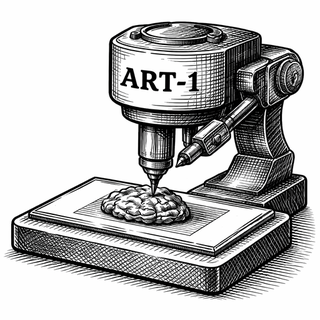
As a parent, this is the filter I keep coming back to with medical research: does this help an actual family sitting in an exam room trying not to panic? The clinical trial NCT07542041 is worth watching because it is not testing a new drug or asking patients to swap standard care for something experimental. Instead, it is studying whether a test called NEO-Match®, using ARTIDIS nanomechanical profiling technology and the ART-1 device, can squeeze more useful information out of pancreatic biopsy samples.
What this study is trying to do
This trial focuses on people with suspected pancreatic cancer who are already undergoing a biopsy or surgery as part of usual care. Researchers take an additional biopsy sample for research and analyze it with the ARTIDIS system. Then they compare those results with the things doctors already use to make decisions: pathology, imaging, treatment response, and outcomes over time.
The two big questions are refreshingly practical.
First, can this test help predict how someone will respond to neoadjuvant therapy, which is treatment given before surgery?
Second, can it help tell whether a pancreatic lesion is malignant, and how does it stack up against standard pathology?
That is not abstract, ivory-tower stuff. Those are exactly the questions families care about when the diagnosis is serious and the clock feels loud.
Why pancreatic cancer is such a hard problem
Pancreatic cancer is notorious for being difficult to catch early and difficult to treat well. By the time it causes symptoms, it may already be advanced. Even when a suspicious lesion is found, the path from biopsy to treatment plan is not always neat and tidy. Doctors have imaging, pathology, lab work, and clinical judgment, but medicine is still medicine, not a vending machine where you push B4 and get certainty.
And when treatment before surgery is on the table, one of the hardest questions is whether the tumor is likely to respond. If a test could give clinicians a better read on that up front, it could help with planning and expectations. For patients, that matters. For parents, spouses, siblings, and the designated family member who keeps a notebook full of appointments and terrible coffee receipts, that really matters.
What is “nanomechanical profiling,” in normal-person language?
Here is the basic idea: tissues are not just collections of cells with chemical markers. They also have physical properties. They can be stiffer, softer, more organized, less organized. Cancer changes tissue architecture, and those changes can show up not only under a microscope but also in how the tissue behaves mechanically.
The ARTIDIS technology is built around that concept. It looks at the nanomechanical signature of a specimen, meaning the tiny physical characteristics of tissue measured at a very small scale. If that signature consistently matches patterns linked to malignancy or treatment response, then the test might become a useful extra tool for clinicians.
Think of it like knocking on a wall to figure out whether there is a stud behind it, except with far more science and far fewer home improvement injuries.
What patients in the study actually experience
This is a prospective, single-arm study. That means researchers are following participants forward in time, but there is no randomization into different treatment groups. Everyone continues with standard treatment and care. The study does not direct therapy. It observes, measures, and compares.
Participants:
- undergo standard-of-care biopsy or surgery
- provide an extra biopsy sample for research analysis
- continue regular clinical treatment
- have imaging, pathology, and outcome data collected
- are followed every 3 months for up to 2 years
That setup matters. When I read about cancer trials, one of my first questions is whether a patient is being asked to take on additional treatment risk. Here, based on the study summary provided, the main added research component is the extra sample and follow-up data collection. That makes this feel less like a gamble and more like a careful attempt to improve the map while people are already driving the road.
Why this is intriguing
A test like this could be useful in two different ways, and both are a big deal.
One is diagnosis. If nanomechanical profiling helps distinguish malignant pancreatic lesions from non-malignant ones, it could give doctors another layer of confidence when the picture is murky.
The other is prediction. If it can forecast response to neoadjuvant treatment, that could help with planning surgery, sequencing care, and setting expectations. In a disease where time and precision matter, even a modest improvement in decision-making could have ripple effects.
And this is where my parental brain kicks in hard. Families do not just want treatment. They want treatment with fewer blind corners. They want to know whether the current plan makes sense, whether waiting is risky, whether a tough stretch of therapy is likely to pay off. A test that sharpens those answers would not make pancreatic cancer easy, but it might make it less like trying to assemble furniture with three missing screws and instructions translated through a fax machine.
The catch, because there is always a catch
This study is promising, but it is still a study. It is designed to evaluate predictive and diagnostic performance, not to prove that using the test improves survival or changes outcomes by itself. That distinction matters.
A biomarker or profiling tool can be technically impressive and still fall short in the real world if it is not accurate enough, consistent enough, or useful enough to change care decisions. Doctors already have pathology and imaging. Any new test has to earn its place, not just show up wearing a lab coat and demanding attention.
There is also the usual issue of generalizability. A single study can be encouraging, but medicine needs replication, broader validation, and a clear understanding of where the tool helps most. Best case, this becomes a valuable add-on in difficult pancreatic cases. Worst case, it turns out to be less informative than hoped. Research is rude that way.
What success could look like
If this trial goes well, the real-world win is not some flashy science-fiction moment. It is quieter and better.
It could mean more confidence in whether a suspicious lesion is cancerous.
It could mean better guesses, backed by data, about whether pre-surgical therapy is likely to work.
It could mean fewer families stuck in that awful limbo where every answer seems to begin with, “We need more information.”
And sometimes that is exactly how progress looks. Not a miracle. Not a movie speech. Just better information at the moment it is most needed.
Why I’d keep an eye on this one
I pay attention to studies like this because they are trying to improve judgment, not just add complexity. Pancreatic cancer care is already hard enough without piling on gadgets that do not help anybody. But if a tool can make diagnosis cleaner and treatment planning smarter, that is the kind of upgrade families feel in real life.
For now, this trial listing describes a study asking a smart question in a careful way. That does not guarantee a breakthrough. It does mean someone is trying to give clinicians a better flashlight in a very dark room, and frankly, I will take all the decent flashlights we can get.
Disclaimer: This post is for educational purposes only and is not medical advice. This study evaluates a diagnostic and predictive test and does not replace standard medical care. Patients should discuss any questions about pancreatic cancer, biopsy findings, or treatment planning with their own care team.
Citation: ClinicalTrials.gov. “Artidis Nanomechanical Signature Profiling of Pancreatic Cancer Specimens (ANoPs).” Record ID: NCT07542041. Available at: https://clinicaltrials.gov/study/NCT07542041 and https://clinicaltrials.gov/study/NCT07542041?tab=table