
Here's a fun fact to ruin your day: up to five million American teenagers are walking around with major depressive disorder right now. That's roughly the population of Ireland, except instead of rolling green hills and charming accents, we're talking about crushing hopelessness, inability to get out of bed, and a healthcare system that's been throwing the same medications at the problem since the Backstreet Boys were relevant.
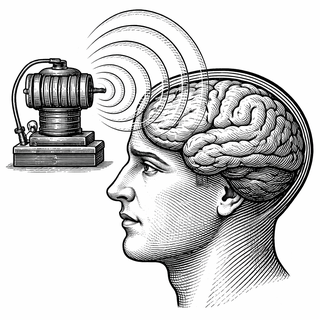
But wait - there's a twist in this story that doesn't involve another antidepressant with side effects longer than a CVS receipt. Researchers are now exploring personalized accelerated transcranial magnetic stimulation (TMS) specifically designed for high-risk adolescents with depression. Think of it as giving your brain a very precise electromagnetic pep talk, but instead of your coach screaming "you can do it," it's targeted magnetic pulses nudging your neural circuits back toward something resembling normal function.
What Exactly Is This Magnetic Brain Thing?
TMS works by placing a magnetic coil near your scalp - not inside your head, thankfully - which delivers painless pulses to activate the underperforming regions of your brain associated with depression. Your prefrontal cortex has basically been asleep at the wheel, and TMS is the neurological equivalent of honking the horn to wake it up.
Traditional TMS has been around for a while, and it works. But here's the catch: standard protocols require patients to come in five days a week for several weeks. For a teenager already struggling to get through a school day, adding dozens of medical appointments is like asking someone drowning to also please fill out this paperwork.
Enter accelerated TMS - specifically, protocols like Stanford's SAINT (Stanford Accelerated Intelligent Neuromodulation Therapy). Instead of spreading treatment over six weeks, SAINT delivers stronger, more frequent pulses over just five days. It's essentially the espresso shot version of brain stimulation, concentrated and fast-acting.
Why Personalization Matters (Your Brain Is Not Like Other Brains)
Here's where it gets interesting. Traditional TMS uses a one-size-fits-all approach to targeting the brain - basically finding a spot on your scalp using measurements, kind of like a really expensive game of Pin the Tail on the Prefrontal Cortex. But everyone's brain is as unique as their Netflix recommendations, and just as weird.
The personalized approach uses MRI brain scans to map exactly where to aim the magnetic pulses for each individual patient. Researchers have found that targets selected using these advanced neuroimaging techniques result in greater electric field strength in the dorsolateral prefrontal cortex - the brain region we're trying to wake up - compared to the traditional scalp measurement approach. One study noted that the median electric field magnitudes actually correlated with symptom improvement (DOI: 10.1038/s41386-025-02225-w).
In other words, instead of aiming in the general direction of "depression central," doctors can now GPS their way to the exact neurons that need the electromagnetic wake-up call.
The Teen Mental Health Crisis Is Real, and Medications Aren't Cutting It
Let me paint you a picture of why this matters. Between 30% and 50% of adolescents with major depression don't respond well to traditional treatments. That's not a small failure rate - that's basically saying your medication works about as reliably as your WiFi during an important video call.
And it gets worse. Teen medication non-compliance rates hit up to 60%. Anyone who's ever tried to get a teenager to do literally anything consistently will find this statistic deeply unsurprising. "Take your pills daily" faces the same success rate as "clean your room" and "get off your phone."
The FDA, apparently sensing that throwing more pills at the problem wasn't working, cleared TMS for adolescent depression in March 2024, specifically for patients aged 15 to 21. This wasn't a minor decision - it was supported by real-world evidence from over 1,100 adolescents and young adults, with a 66.1% response rate (Neuronetics FDA clearance data, 2024).
The Speed Factor: Why Faster Matters When You're Suffering
Depression isn't a patient condition. It doesn't politely wait while you attend six weeks of treatment sessions. For adolescents experiencing severe symptoms - especially those at high risk - speed isn't just convenience, it's potentially life-saving.
Early studies of accelerated protocols showed that 19 of 21 participants who completed all sessions achieved remission of their depression symptoms (DOI: 10.1038/s41386-023-01599-z). That's a remission rate of roughly 90%. For context, that's better odds than getting through a family dinner without someone bringing up politics.
The accelerated approach also makes practical sense. Traditional TMS requires 30-36 sessions over 6-9 weeks. For a high school student, that's potentially missing significant school time, navigating transportation, and maintaining treatment adherence through all the distractions of teenage life. Compressing treatment into one intense week is like Netflix binging your way to mental health - which, ironically, is the opposite of what they were probably doing during their depression.
What Makes a Teen "High-Risk"?
Not all adolescent depression is created equal. High-risk typically refers to teens who have:
- Failed to respond to multiple medications
- Severe symptom severity
- Presence of suicidal ideation or behaviors
- Functional impairment (can't attend school, maintain relationships, or do basic activities)
For these patients, the standard "let's try another medication and check back in six weeks" approach isn't just ineffective - it's agonizing. Every week of failed treatment is another week of suffering through chemistry class (literal and metaphorical).
The Brain-Gut... Wait, No, This Is Just Brain
Unlike treatments that flood your entire body with chemicals and hope some of it reaches the right neurons, TMS is targeted therapy. The magnetic pulses go where they're aimed and pretty much nowhere else. This means fewer systemic side effects - no weight gain, no sexual dysfunction, no feeling like you're watching your life through a foggy window.
The most common side effects of TMS are headache and scalp discomfort at the treatment site, which is basically what happens when you wear a too-tight hat. Compared to the side effect profiles of most antidepressants, this is practically a spa day.
The Future Is Personalized, Accelerated, and Magnetically Charged
What excites researchers about these new trials is the combination of personalization and speed. By using individual brain imaging to find the optimal target, then delivering concentrated treatment over a short period, we might finally have a treatment approach that matches the urgency of adolescent depression while respecting the fact that every brain is different.
Studies using functional connectivity MRI to identify patient-specific targets have shown promising results, with some researchers reporting remission rates approaching 80% in open-label trials. While we need more randomized controlled data - science remains appropriately skeptical - the early signals are encouraging enough to make even jaded psychiatrists raise an eyebrow.
The Bottom Line
Adolescent depression is a crisis that's been met with inadequate solutions for too long. Medications help some kids, but far too many fall through the cracks of a system that moves too slowly and treats brains like interchangeable parts. Personalized accelerated TMS represents a potential paradigm shift - treatment that respects individual brain differences, delivers results quickly, and doesn't come with a pharmacy's worth of side effects.
Is it a magic bullet? No. Medicine doesn't really do magic bullets. But it might be a significantly better tool for the estimated millions of teenagers currently suffering through a mental health system that hasn't kept pace with their needs.
And honestly, after years of watching the teen mental health crisis worsen, I'll take electromagnetic hope over pharmaceutical despair any day.
Disclaimer: This blog post is for educational and informational purposes only and does not constitute medical advice. Clinical trials are research studies, and their outcomes are not guaranteed. Always consult with qualified healthcare professionals before making any medical decisions. The trial discussed (NCT07025720) is investigating experimental protocols that may not be widely available. Images and graphics are for illustrative purposes only and do not depict actual medical devices, procedures, mechanisms, or research findings from the referenced studies.