
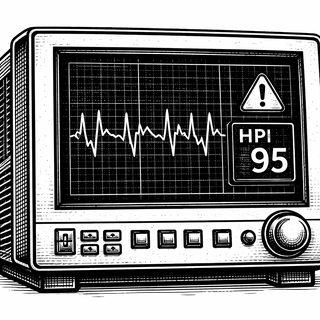
If you've ever been in a hospital, you know the symphony of sounds: beeps, boops, alarms, chimes, and the occasional overhead page that sounds like it was recorded in 1987. Now imagine being an anesthesiologist trying to keep a patient alive during surgery while being bombarded by dozens of these alerts every hour. Most of them are false alarms. But which ones? Clinical trial NCT06631482 is pitting machine learning against traditional monitoring to answer a question that's been plaguing operating rooms for decades: can we make alarms smarter so clinicians don't start ignoring them entirely?
Because here's the thing - when everything beeps, nothing beeps. And that's a problem when someone's life is on the line.
The Alarm Fatigue Problem: It's Real, and It's Serious
Hospital alarms were designed with good intentions: alert clinicians when something goes wrong so they can intervene. The problem is that modern monitoring technology is so sensitive that it triggers alerts for every minor fluctuation, creating what researchers call "alarm fatigue."
Studies have shown that up to 99% of physiological alarms in some settings are false or clinically irrelevant. That's not a typo. When 99 out of 100 alarms don't require action, the natural human response is to start tuning them out. Unfortunately, that one alarm in a hundred that actually matters gets lost in the noise.
The consequences can be fatal. The Joint Commission, which accredits healthcare organizations, has identified alarm fatigue as a contributing factor in patient deaths. Between 2009 and 2012, they documented over 80 alarm-related deaths and 13 serious injuries.
So yeah, this isn't just about annoying beeps. This is about life and death.
Enter HPI: The Crystal Ball of Blood Pressure
The Hypotension Prediction Index, or HPI, is Edwards Lifesciences' answer to this problem - at least for one specific type of alarm. Instead of waiting for blood pressure to drop and then sounding the alarm (reactive), HPI tries to predict when blood pressure is going to drop before it happens (proactive).
The technology is built on machine learning analysis of arterial waveforms. According to research published in Frontiers in Anesthesiology, HPI analyzes the arterial pressure waveform and predicts the occurrence of hypotension - defined as mean arterial pressure below 65 mmHg for at least one minute.
The HPI algorithm was trained on a dataset from over 1,300 patients, including perioperative and ICU settings, encompassing more than 25,461 hypotensive episodes. The result is a unitless number from 1 to 100, where higher values indicate greater likelihood of impending hypotension.
And the accuracy is impressive: studies have shown sensitivity of 88% and specificity of 87% at 15 minutes before a hypotensive event, improving to 92% and 92% at 5 minutes before. That's the kind of advance warning that could allow clinicians to intervene before there's a problem, rather than after.
Why Low Blood Pressure During Surgery Is Bad
You might be wondering: why all this fuss about blood pressure during surgery? The answer is that intraoperative hypotension is linked to some pretty nasty outcomes.
Research has established a linear association between the duration of mean arterial pressure below 65 mmHg and mortality in non-cardiac surgical populations (DOI: 10.1186/s12871-023-02069-1). Even relatively brief periods of low blood pressure during surgery have been associated with increased risks of:
- Myocardial injury and heart attacks
- Acute kidney injury
- Stroke
- Overall mortality
The challenge is that blood pressure naturally fluctuates during surgery due to anesthetic medications, fluid shifts, blood loss, and patient positioning. Some fluctuation is expected and manageable. The key is catching and treating significant drops before they cause organ damage.
The Clinical Trial: HPI vs. Traditional Alarms
Clinical trial NCT06631482 is comparing HPI-guided hemodynamic management against elevated threshold monitor alarms - essentially testing whether predictive AI beats traditional reactive monitoring.
The traditional approach uses fixed thresholds: when mean arterial pressure drops below a certain level (often 65 mmHg), an alarm sounds. The anesthesiologist then tries to bring the pressure back up using fluids, vasopressors, or other interventions.
The HPI approach uses the predictive algorithm to alert clinicians when hypotension is likely - potentially 5-15 minutes before it actually occurs. This gives them time to prepare interventions, identify the likely cause (is it low blood volume? Poor heart function? Vasodilation?), and act before the patient's organs start suffering from reduced blood flow.
Previous research has shown promising results. A trial of 99 patients undergoing moderate to high-risk non-cardiac surgery found roughly a three-fold decrease in time-weighted average of intraoperative hypotension with HPI-guided management. Patients in the HPI group had significantly lower "area under the threshold" - a measure of both the depth and duration of hypotensive episodes.
The Secondary Screen: Not Just About Hypotension
What makes the HPI system particularly clever is that it doesn't just tell you hypotension is coming - it tells you why. The HemoSphere platform provides what's called a "secondary screen" showing the most likely cause of the predicted hypotension based on advanced hemodynamic parameters.
Is cardiac output low? Is the patient's blood volume depleted? Are the blood vessels too dilated? Each of these causes requires a different intervention, and treating the wrong cause can make things worse. Having this diagnostic guidance alongside the prediction could make interventions more targeted and effective.
Research on HPI Smart Alerts combined with goal-directed hemodynamic therapy has demonstrated potential for improving compliance with treatment protocols and reducing the burden of intraoperative hypotension (DOI: 10.1186/s12871-025-03336-z). Larger randomized studies are ongoing to confirm these benefits.
The Skeptics' Corner: Does Prediction Translate to Better Outcomes?
Not everyone is fully convinced that HPI is the solution to all hemodynamic woes. A systematic review and meta-analysis published in 2024 examined whether HPI's high sensitivity and specificity actually translates to improved patient outcomes.
The findings were mixed. While HPI clearly reduces hypotension duration compared to standard monitoring, the clinical advantage over simple MAP-based monitoring remains uncertain in some contexts. One review noted that while HPI reduces hypotension duration, this may not necessarily improve cardiovascular or renal outcomes.
There's also the issue of context: subgroup analysis has revealed variability in HPI performance between cardiac and non-cardiac surgeries, with lower diagnostic odds ratios in cardiac settings. The algorithm was primarily trained on non-cardiac surgical data, so its performance in cardiac surgery - where hemodynamic physiology is often dramatically altered - may be different.
This is exactly why trials like NCT06631482 are valuable. Real-world, randomized comparisons help clarify where these tools work well and where they might fall short.
The Alarm of the Future
Beyond HPI specifically, this trial represents a broader trend in healthcare: the shift from reactive to predictive monitoring. Instead of alarms that tell you something has already gone wrong, we're moving toward systems that warn you before problems develop.
Adaptive threshold-based alarm strategies are being developed for continuous vital signs monitoring across many parameters, not just blood pressure. The goal is to create alarms that are clinically meaningful and actionable, rather than the constant background noise that currently plagues hospital units.
Machine learning is central to this effort because it can identify patterns in physiological data that humans would never notice. The subtle changes in an arterial waveform that precede hypotension aren't visible to the naked eye, but they're clear as day to an algorithm trained on thousands of cases.
The Bottom Line
The OR monitor alarm that cried wolf is getting a 21st-century upgrade. HPI and similar predictive technologies promise to reduce alarm fatigue while actually improving patient safety - no small feat.
Clinical trial NCT06631482 will help determine whether HPI-guided management produces better outcomes than traditional elevated threshold alarms in real-world surgical settings. If it does, we might be witnessing a fundamental shift in how operating room monitoring works.
And for the anesthesiologists who've spent their careers filtering signal from noise in a symphony of beeps? They might finally get some peace and quiet - or at least, fewer meaningless alarms drowning out the ones that matter.
The machines are learning. It's about time the alarms did too.
Disclaimer: This blog post is for educational and entertainment purposes only and does not constitute medical advice. Always consult qualified healthcare professionals regarding medical conditions or treatments. Clinical trial information based on publicly available data from ClinicalTrials.gov (NCT06631482). Images and graphics are for illustrative purposes only and do not depict actual medical devices, procedures, mechanisms, or research findings from the referenced studies.