
If you've never heard of corneal endothelial cells, congratulations - your eyes are probably working fine. These microscopic hexagonal cells form a single layer on the back surface of your cornea, and they have exactly one job: keep your cornea clear and transparent so you can see. They do this by constantly pumping fluid out of the cornea, preventing it from swelling up and turning cloudy.
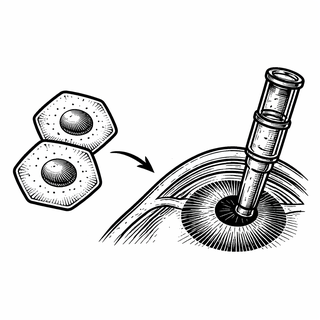
Here's the catch: you're born with about 4,000 of these cells per square millimeter, and you never make any more. Ever. When they die - from age, trauma, disease, or surgery - they're gone forever. The remaining cells stretch out to cover the gaps, which is a temporary solution that becomes increasingly unsustainable as the cell count drops. Fall below about 500-800 cells per square millimeter, and your cornea starts to fail.
So when a new eye implant comes along - something that will live inside your eye for years - researchers reasonably want to know: is this thing going to kill off corneal endothelial cells? That's exactly what clinical trial NCT04853251 is investigating, and the implant in question is genuinely fascinating.
The Port Delivery System: Your Eye's Own Drug Dispenser
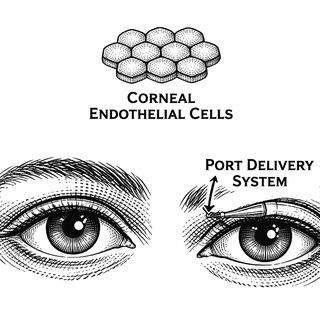
The trial is studying something called the Port Delivery System with Ranibizumab, branded as Susvimo. It's the first permanent, refillable ocular implant approved by the FDA for treating wet age-related macular degeneration (AMD) - a condition that causes progressive vision loss and affects millions of people worldwide.
Here's the traditional treatment for wet AMD: you get an injection directly into your eyeball. Every month. Forever. Or at least every 4-6 weeks, depending on the specific drug and your response to treatment. These injections deliver anti-VEGF medications (ranibizumab, bevacizumab, aflibercept) that block the abnormal blood vessel growth that causes wet AMD. They work well, but they require regular office visits for the rest of your life.
The Port Delivery System takes a radically different approach. Instead of repeated injections, a surgeon implants a tiny reservoir device into your eye. This reservoir continuously releases ranibizumab into the vitreous (the gel-like substance that fills your eye) over about six months. When the reservoir runs low, a physician refills it through a small port - a procedure that's faster and less complicated than a full injection.
Approximately 95% of patients using the PDS didn't need supplemental treatment between refills for more than two years. And when asked, 92% of patients who had previously received monthly injections said they preferred the implant. Shockingly, people prefer not getting needles stuck in their eyes every month. Who knew?
Why Corneal Endothelial Cells Matter Here
So if the implant is working well and patients prefer it, why is anyone worried about corneal endothelial cells?
The answer lies in the anatomy of the eye. The Port Delivery System is implanted in the pars plana, a part of the eye behind the iris but not directly near the cornea. However, any surgery involving the eye carries some risk of collateral damage. The implant sits inside the eye for years, constantly releasing medication. And during refill procedures, instruments have to access the eye through that port.
All of this creates opportunities for endothelial cell loss. Mechanical trauma during surgery or refills, inflammatory responses to the implant or medication, changes in intraocular pressure - any of these could potentially affect the delicate single layer of cells on the back of the cornea.
Previous clinical trials of the Port Delivery System focused on efficacy and safety outcomes like vision preservation and device complications. The BELVEDERE study (NCT04853251) is drilling down on a more specific question: over the long term, does having this implant inside your eye cause significant corneal endothelial cell loss?
The Study Design
This is a Phase IV, multicenter, open-label study - meaning it's happening after FDA approval, at multiple sites, and everyone knows what treatment participants are receiving (no placebo group here). The study is assessing corneal endothelial cell density in patients with wet AMD who are treated with the Port Delivery System and receive refills every 24 weeks.
The inclusion criteria are specific about corneal health at baseline. Participants must have a difference of less than 10% in endothelial cell density between their two eyes at screening - this ensures the eyes are reasonably comparable at the start. They must have already demonstrated response to at least two anti-VEGF injections, confirming that the medication works for them.
Importantly, people with corneal endothelial cell density of 1,500 cells/mm2 or lower are excluded. This makes sense - if someone already has marginal corneal reserve, you don't want to risk pushing them into corneal failure. For reference, 1,500 cells/mm2 is already getting into "concerning" territory, well below the 4,000 cells/mm2 most people start with.
The study will compare endothelial cell density in the implanted eye versus the non-implanted eye over time. By using each patient's own non-treated eye as a control, researchers can separate the effects of the implant from normal age-related cell loss.
What We're Really Asking
The fundamental question is one of risk-benefit analysis. The Port Delivery System offers clear advantages: fewer office visits, no monthly injections, and continuous medication delivery that may provide more stable disease control than peaks-and-valleys dosing. But if it causes accelerated endothelial cell loss, that's a serious trade-off.
Remember, these cells don't regenerate. If the implant causes even a modest increase in cell loss rate - say, 2-3% per year beyond normal aging - that could add up over a decade of treatment. And wet AMD patients often need treatment for decades.
On the other hand, repeated intravitreal injections also carry risks - including infection, inflammation, and yes, potential corneal damage. The question isn't whether the Port Delivery System is perfectly safe, but whether it's safer than the alternative over the long term.
The Broader Context
This study fits into a larger trend of post-market surveillance for novel medical devices. The FDA approval process focuses on short-term safety and efficacy, but some problems only emerge after years of use in large populations. Phase IV studies like this one help fill in those long-term knowledge gaps.
Research on corneal endothelial dysfunction has been advancing rapidly. Cell therapy approaches are in development that might someday allow transplantation of laboratory-grown endothelial cells, potentially rescuing corneas that would otherwise fail. But for now, preservation of existing cells remains the primary strategy.
For patients and physicians, the BELVEDERE study will provide valuable data for informed decision-making. If the Port Delivery System shows minimal endothelial impact, that's reassuring - it means the benefits can be enjoyed without a hidden long-term cost. If there is meaningful cell loss, clinicians will need to factor that into treatment discussions, especially for younger patients or those with already-compromised corneas.
Looking Ahead
The study is expected to run through 2027, which reflects the need for long-term follow-up. Endothelial cell loss is a slow process, and detecting meaningful differences requires patience. This is not the kind of research that generates headlines - it's the careful, methodical work that eventually makes medical care safer.
For patients currently using or considering the Port Delivery System, the existence of this study is actually good news. It means the scientific community is taking long-term safety seriously and actively investigating potential concerns. Whatever the results show, we'll be better informed than we were before.
And for the rest of us - those lucky enough to have functioning corneas that we rarely think about - it's a reminder of how much sophisticated biology underlies the simple act of seeing clearly. Those 4,000 cells per square millimeter, arranged in their neat hexagonal pattern, pumping fluid tirelessly for decades... they're doing a lot of work we never notice until something goes wrong.
So here's to corneal endothelial cells: the unsung heroes of vision, now getting the research attention they deserve.
References:
- ClinicalTrials.gov Identifier: NCT04853251
- UCSF Clinical Trials. Assessing Corneal Endothelial Cells in Participants With Neovascular Age-related Macular Degeneration Treated With the Port Delivery System With Ranibizumab (PDS).
- The Port Delivery System with ranibizumab: a new paradigm for long-acting retinal drug delivery. PMC9067954. 2022. DOI: 10.2147/OPTH.S310888
- Campochiaro PA et al. The Port Delivery System with Ranibizumab for Neovascular Age-Related Macular Degeneration. Ophthalmology. 2019. DOI: 10.1016/j.ophtha.2018.11.portal
- Ranibizumab Port Delivery System in Neovascular Age-Related Macular Degeneration: Where Do We Stand? PMC10974226. 2024.
Disclaimer: This blog post is for informational purposes only and should not be considered medical advice. Clinical trials are research studies, and participation involves risks and benefits that should be discussed with qualified healthcare providers. The views expressed here do not represent the opinions of any institution or research organization. Always consult with healthcare professionals before making decisions about your health or treatment options. Images and graphics are for illustrative purposes only and do not depict actual medical devices, procedures, mechanisms, or research findings from the referenced studies.