
Seriously, think about it. Your immune system is basically the Avengers assembled inside your body 24/7. It fights off bacteria, viruses, and rogue cells with the efficiency of a caffeinated superhero team. And yet, when it comes to cancer, sometimes it just... stands there. Like that one security guard in every heist movie who's conveniently looking the other way.
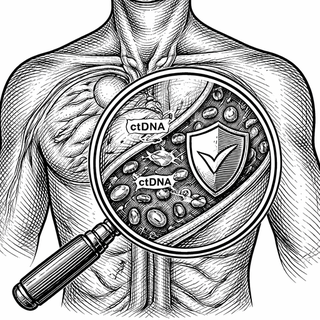
The answer involves something called immune checkpoints - basically the "stand down" signals that cancer cells have learned to exploit. But here's where it gets exciting: researchers are now testing a clinical trial that doesn't just fight back against melanoma, it uses the tumor's own DNA breadcrumbs to decide exactly how hard to hit it.
Welcome to the future of personalized cancer treatment, and honestly, it's pretty rad.
The Trial That's Making Waves
A new multi-center clinical trial (NCT07504796) is investigating something genuinely clever: using circulating tumor DNA - or ctDNA - to guide treatment decisions for patients with advanced melanoma. The study is evaluating whether adding a third immunotherapy drug called ipilimumab to patients already receiving nivolumab and relatlimab can improve outcomes.
But here's the twist that makes this trial special: they're not just throwing drugs at the problem and hoping for the best. They're using ctDNA measurements - essentially tiny fragments of tumor DNA floating around in the bloodstream - to make real-time decisions about who needs the extra therapeutic firepower.
Think of it like having a GPS for cancer treatment instead of just a general map that says "tumor somewhere in this direction, good luck."
What Even Is ctDNA, and Why Should You Care?
Okay, quick science detour. When tumor cells die (which happens constantly, even in growing cancers), they release fragments of their DNA into the bloodstream. This circulating tumor DNA is like a molecular crime scene - it tells you what the tumor is doing without needing to physically poke at it with a biopsy needle.
It's basically the biological equivalent of tracking a villain through their discarded coffee cups and burner phones. You don't need to find their secret lair; you just follow the trail they're leaving behind.
In this trial, researchers are measuring ctDNA levels to determine which patients might benefit from adding ipilimumab to their treatment regimen. If your ctDNA levels suggest the cancer isn't responding well to the initial two-drug combo, boom - you get upgraded to the triple-threat therapy. If things look good, you stay the course without unnecessary additional drugs (and their potential side effects).
The Immunotherapy Dream Team
Let's talk about the actual drugs involved, because they're doing some seriously impressive biological judo.
Nivolumab and relatlimab are both checkpoint inhibitors. Remember those "stand down" signals I mentioned? Cancer cells produce proteins that essentially hold up a badge saying "don't shoot, I'm one of the good guys" to your immune cells. These drugs block those fake badges, letting your immune system recognize cancer cells for the imposters they are.
Nivolumab blocks a checkpoint called PD-1, while relatlimab targets LAG-3. It's like having two different keys to unlock your immune system's full potential.
Ipilimumab works a bit differently - it blocks CTLA-4, another checkpoint that normally keeps immune responses in check. Adding it to the mix is like removing the governor from an engine. More power, but also more potential for things to get a little... overzealous.
This is why the ctDNA-guided approach is so smart. Ipilimumab can cause more immune-related side effects, so you only want to use it when the potential benefit clearly outweighs the risks. Instead of a one-size-fits-all approach, this trial is essentially asking: "Does this specific patient, right now, need the extra help?"
Why Melanoma? Why Now?
Melanoma has become something of a poster child for immunotherapy success stories. Before checkpoint inhibitors came along, advanced melanoma had a pretty grim prognosis. Now, some patients are achieving long-term remissions that would have seemed like science fiction twenty years ago.
But - and this is a significant but - not everyone responds equally well. Some patients have dramatic, durable responses. Others see their disease progress despite treatment. And currently, we're not great at predicting who falls into which category until after we've already started treatment.
This is the problem ctDNA monitoring might solve. Instead of waiting weeks or months for imaging scans to show whether a tumor is shrinking or growing, ctDNA can potentially provide earlier and more sensitive feedback about treatment response. It's like having a real-time dashboard for your cancer therapy instead of quarterly reports.
The Potential Impact
If this trial succeeds, the implications extend way beyond melanoma. The concept of using liquid biopsies (blood tests that detect tumor DNA) to guide treatment decisions in real-time could revolutionize oncology across multiple cancer types.
Imagine a future where your treatment plan isn't set in stone from day one, but instead adapts dynamically based on how your specific tumor is responding. Too much treatment comes with unnecessary side effects. Too little means the cancer wins. But just the right amount, guided by molecular feedback? That's the Goldilocks zone of cancer therapy.
The primary endpoint of this trial is progression-free survival - essentially, how long patients go without their cancer getting worse. Secondary endpoints include objective response rate (how many tumors actually shrink) and the incidence of immune-related adverse events (because even miracle drugs have downsides).
The Bigger Picture
We're living through a genuinely transformative era in cancer treatment. The combination of immunotherapy advances and molecular monitoring technologies is creating possibilities that seemed like far-off dreams just a decade ago.
This trial represents a philosophical shift as much as a medical one. It's moving us away from protocol-driven medicine ("everyone with this diagnosis gets this treatment") toward truly personalized therapy ("your specific biology tells us what you specifically need").
Is it a guaranteed slam dunk? Of course not. Clinical trials exist precisely because we don't know what will work until we rigorously test it. But the scientific logic is sound, the preliminary data supporting ctDNA monitoring is encouraging, and the potential to help patients avoid both under-treatment and over-treatment is genuinely exciting.
For patients with advanced melanoma, this trial offers access to cutting-edge treatment guided by cutting-edge diagnostics. For the rest of us, it's a glimpse of where precision oncology is headed.
And honestly? That future looks pretty promising.
Disclaimer: This blog post is for educational purposes only and does not constitute medical advice. Clinical trials have specific eligibility criteria, and treatment decisions should always be made in consultation with qualified healthcare providers. The information presented here is based on publicly available trial information and may not reflect the most current study status.
Clinical Trial Reference: NCT07504796 - A Multi-center Trial Evaluating the ctDNA-guided Addition of Ipilimumab to Patients Receiving Nivolumab and Relatlimab for Advanced Melanoma. Available at: https://clinicaltrials.gov/study/NCT07504796