
Your knee is basically running a very complicated machine shop 24/7. Cartilage cushioning every step, synovial fluid lubricating the works, ligaments holding everything together like the world's most stressed-out project manager. And when things start to go wrong - when that cartilage starts wearing down and your knee sounds like a bag of microwave popcorn every time you stand up - you've got osteoarthritis. Welcome to the club nobody wanted to join.
For decades, the treatment options have been pretty straightforward: lose weight, do physical therapy, pop anti-inflammatories, and eventually get a knee replacement when things get bad enough. But what if there was something in between "take some ibuprofen" and "here's your new titanium knee"? That's where the dynamic duo of platelet-rich plasma and hyaluronic acid enters the chat.
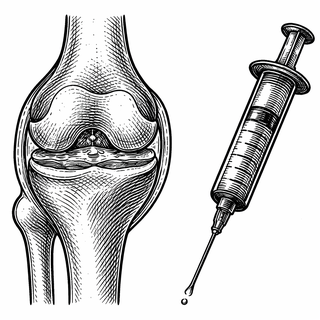
The clinical trial NCT06685120 is investigating whether combining these two injectable treatments works better than using either one alone. It's basically asking: what happens when you put the band together?
The Problem: Your Cartilage Is Not Coming Back
Let's get one thing straight about osteoarthritis - it's not just "old person knee pain." It's a progressive disease where the cartilage that cushions your joints gradually breaks down and never comes back. That's right, never. Your body is capable of some amazing regeneration, but replacing worn-out cartilage is not in its skill set.
Osteoarthritis affects around 250 million people worldwide, making it the most common form of arthritis. In the United States alone, over 27 million people are dealing with it. And here's the kicker - while osteoarthritis is closely correlated with aging, it's not simply a consequence of getting old. The enzymes responsible for cartilage degradation are expressed in abnormally high amounts in OA, whereas they stay at normal levels in regular aging cartilage. Your knee isn't just wearing out - it's actively being dismantled.
When cartilage wears down, bones start rubbing together. This causes inflammation, pain, swelling, and the formation of bone spurs (osteophytes) - which are your body's misguided attempt to stabilize the joint by growing extra bone in places it really shouldn't. It's like trying to fix a squeaky door by hammering more nails into the frame.
Enter Hyaluronic Acid: The Original Joint Lube
Hyaluronic acid (HA) has been around as a treatment for knee OA since the 1970s. It's actually identical to a substance your own synoviocytes - the cells lining your joint - produce naturally. HA is a glycosaminoglycan that acts as both lubricant and shock absorber in your joints. Think of it as the premium motor oil for your knee engine.
In osteoarthritis, your natural HA production decreases and its quality degrades. The remaining HA molecules get shorter and less effective at their job. Injecting supplemental HA into the joint is called viscosupplementation, which is a fancy way of saying "adding more lubricant to the works."
HA injections typically show peak effectiveness around six weeks after treatment. They work by providing immediate lubrication and may also help stimulate your joint to produce more of its own HA. It's like jumpstarting a dead battery - sometimes the boost helps the system start working on its own again.
Now Add Platelets: Tiny Packets of Healing Factors
Platelet-rich plasma sounds like something a vampire would order at a juice bar, but it's actually a concentration of your own blood platelets. Here's how it works: your doctor draws some blood, spins it in a centrifuge to separate the components, and isolates the layer rich in platelets and growth factors. Then they inject this concentrated mixture back into your knee.
Why platelets? Because these little blood cell fragments are basically biological first responders packed with healing compounds. When they degranulate (release their contents), they dump out a cocktail of growth factors including PDGF (platelet-derived growth factor), VEGF (vascular endothelial growth factor), EGF (epidermal growth factor), and TGF-beta (transforming growth factor). It's like emptying an entire medicine cabinet of regenerative compounds directly into your joint.
PRP works differently than HA. Instead of just lubricating, it's trying to actually modify the disease process. PRP stimulates stem cell migration, promotes chondrocyte (cartilage cell) proliferation, and increases your joint's own production of hyaluronic acid. It also has anti-inflammatory effects that help calm down the angry joint environment.
The catch? PRP takes longer to work. Peak effectiveness typically shows up around three months post-injection, as the growth factors gradually do their thing. This is the slow burn approach to joint therapy.
The Combination Theory: Better Together?
Here's where it gets interesting. Researchers noticed that HA works fast but doesn't last, while PRP works slowly but has more regenerative potential. What if you combined them?
The theory goes like this: HA provides immediate relief and creates a better environment for the PRP to work in, while PRP's growth factors help stimulate more durable healing. They might have synergistic effects - the combined therapeutic result exceeds what either could achieve alone.
A systematic review by Baria and colleagues in 2022 examined this exact question. Their analysis found that combining HA and PRP resulted in significant decreases in pain and functional limitation compared to HA alone at one year post-treatment. The combination therapy showed better outcomes than HA alone for up to a year, and better outcomes than PRP alone for up to three months (DOI: 10.1177/0363546521998010).
Another multicenter study enrolled 174 patients randomized to receive three intra-articular injections of either HA, PRP, or the combination, given at two-week intervals. All three groups showed improvement - these aren't placebos, after all - but the combination demonstrated advantages in early functional outcomes during the first 30 days (Zhang et al., 2024; DOI: 10.3389/fmed.2024.1346178).
The Evidence: What Do We Actually Know?
Let's be honest about the state of the science here. PRP and HA combination therapy is promising, but we're not at "case closed" yet.
A meta-analysis in BMC Musculoskeletal Disorders found that the addition of HA to PRP could effectively promote chondrocyte proliferation and improve cartilage repair. Studies by Zhao and colleagues demonstrated that combined therapy showed reduced pain and greater function at 12 months compared to PRP alone (DOI: 10.1186/s12891-020-03262-w).
However, not all studies agree. Some research shows PRP alone provides similar outcomes to the combination. Interestingly though, the combined therapy consistently showed fewer adverse events, suggesting it might have a better safety profile even if the efficacy gains are modest.
A 2023 randomized controlled trial using MRI analysis (yes, they actually looked inside the knees) found that the HA + PRP group showed improvements in cartilage structure that the single-therapy groups didn't. That's pretty compelling evidence that something real is happening at the tissue level (DOI: 10.3390/jcm14103553).
What About That Clinical Trial?
The trial NCT06685120 is adding to this body of evidence by investigating the combined use of PRP and hyaluronic acid for infiltrative treatment. "Infiltrative treatment" is basically a fancy term for injecting stuff into joints or tissues.
This kind of research matters because despite the promising early results, we still don't have a definitive answer on optimal protocols. How many injections? What ratio of PRP to HA? What concentration of platelets? How do you prepare the PRP? These details matter enormously and vary widely between studies, making it hard to compare results.
The ongoing research is working to establish standardized protocols and identify which patients are most likely to benefit. Because here's the reality - not everyone responds the same way. Factors like age, disease severity, body weight, and underlying health conditions all influence outcomes.
The Bottom Line
For the roughly 250 million people worldwide dealing with knee osteoarthritis, the combination of PRP and HA represents a potentially significant step forward. It's not a cure - that cartilage still isn't growing back - but it might offer a way to manage symptoms, slow progression, and delay or avoid more invasive interventions like surgery.
Think of it as a tag team for your joints. HA comes in hot with immediate lubrication and symptom relief. PRP follows up with the slow regenerative work. Together, they might just be able to keep your knees in the game longer than either could manage alone.
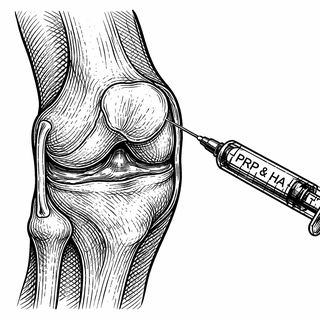
And really, that's what most people with OA want - not miracles, just more good years of walking, climbing stairs, and maybe even the occasional light jog before those knees get traded in for metal ones.
Medical Disclaimer: This blog post is for educational and informational purposes only. It is not intended to be a substitute for professional medical advice, diagnosis, or treatment. Always seek the advice of your physician or other qualified healthcare provider with any questions you may have regarding a medical condition or treatment. Images and graphics are for illustrative purposes only and do not depict actual medical devices, procedures, mechanisms, or research findings from the referenced studies.