
If this paper had a Hollywood cousin, it would be The Lego Movie with a lab budget. The central idea is that small peptide building blocks, which usually behave more like overcooked noodles than precision hardware, are being coaxed into forming stable, tailorable nanoparticles that can crosslink hydrogels and help wounds heal better. In biomaterials, that is the difference between a sauce that breaks on the stove and one that finally emulsifies.
Why this caught my eye
People in medical devices and biomaterials have been hearing versions of the same promise for years: biocompatible materials that are easy to tune, stable enough to survive the real world, and versatile enough to carry extra functions without collapsing into a scientific soufflé. It sounds straightforward until you try to build one.
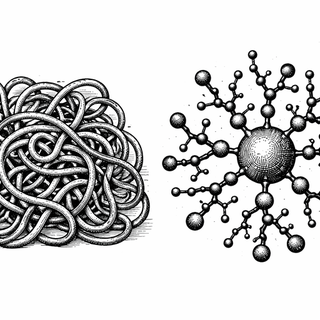
Peptides have always been attractive ingredients. They are biologically familiar, modular, and generally easier to sell to the body than some fully synthetic alternatives. The problem is that traditional peptide assemblies often depend on weak non-covalent interactions. That works fine right up until you need durability, manufacturing consistency, or a material that keeps its act together outside a carefully staged lab setup. In other words, it is excellent for a figure panel and less excellent for a product roadmap.
This study takes aim at that exact bottleneck. According to the summary, the researchers designed peptide monomers that undergo covalent dendritic polymerization, borrowing a page from dendrimer design. The result is stable and tailorable nanoparticles that can serve as crosslinkers for multifunctional hydrogels, with improved wound-healing performance.
That is a mouthful, but the commercial logic is refreshingly clear.
What the researchers appear to be doing
At the center of the work is a simple but useful engineering shift. Instead of letting peptides self-assemble through relatively fragile forces, the team appears to push them into covalently linked dendritic structures. Think less “guests loosely mingling at a cocktail party” and more “modular shelving bolted to the wall.”
Those dendritic peptide nanoparticles then act as crosslinkers inside hydrogels. Hydrogels, of course, are already familiar territory in wound care because they can hold water, create a moist healing environment, and potentially deliver bioactive functions. But hydrogel performance often comes down to network architecture. If the crosslinking is weak, uneven, or hard to control, the final material may have the elegance of supermarket gelatin left in a hot car.
A better crosslinker can change that. Stable nanoparticles with adjustable features may offer tighter control over gel structure, mechanics, and biological behavior. That matters because wound dressings are not judged on elegance of synthesis. They are judged on whether they stay intact, behave consistently, and improve healing without introducing new headaches in safety or manufacturing.
Why wound healing still needs better materials
Wound care is one of those markets that looks deceptively mature until you spend five minutes with chronic wounds, infected wounds, or hard-to-heal tissue. Then the optimism drains out of the room.
An ideal wound material has to do several jobs at once. It should protect the wound, manage moisture, avoid toxicity, support tissue repair, and sometimes carry extra functions such as antimicrobial action or bioactive signaling. It also has to be manufacturable at scale, sterilizable, shelf-stable, and priced such that someone in procurement does not start twitching.
That is why “multifunctional hydrogel” remains such an appealing phrase. A good hydrogel can be a platform, not just a dressing. If these peptide-derived nanoparticles really provide both structural stability and precise modifiability, that creates a more realistic path toward hydrogels that do more than just sit there looking scientifically wholesome.
The interesting part is not just the chemistry
The paper’s title highlights three traits that matter well beyond the bench: stable, tailorable, and biocompatible. Those are not academic ornaments. They are the three legs of the stool.
Stability matters because weakly assembled nanomaterials often fall apart under practical stress. Tailorability matters because wound environments vary, and one-size-fits-all biomaterials usually fit nobody especially well. Biocompatibility matters because if the body dislikes your elegant material, the rest of the pitch deck is just decorative.
From a product development perspective, covalent dendritic polymerization is interesting because it suggests more deterministic control over the final structure. When teams can tune architecture with fewer surprises, they have a better shot at reproducibility. Reproducibility is not glamorous, but it pays the rent. Regulators, manufacturing engineers, and quality teams all prefer systems that do the same thing on Tuesday as they did on Monday.
There is also a broader platform angle here. If these nanoparticles can be modified with different functions, they may support hydrogels tailored for various wound types or therapeutic goals. That could mean adjusting mechanical properties, loading bioactive factors, or changing how the material interacts with cells and tissue. The paper summary does not provide the full menu, so no need to plate imaginary garnish, but the platform potential is obvious.
Where the skepticism belongs
Promising wound-healing materials are produced in academic labs with the regularity of sourdough starters. Fewer make the jump to useful products.
The usual traps still apply here. Better healing efficacy in a research setting does not automatically survive scale-up, sterilization, storage, clinical variability, or reimbursement reality. Nanoparticle-based systems can also invite additional scrutiny around characterization, batch consistency, degradation behavior, and long-term biological effects. Every elegant new material eventually has to sit across the table from process development and explain itself.
Another question is how much complexity the added functionality brings. Multifunctionality is great until it becomes a device-development version of a tasting menu with fourteen components and no way to manufacture half of them reliably. The sweet spot is a material sophisticated enough to solve a real problem but simple enough to make, validate, and ship.
Still, this work seems to be addressing a real weakness in peptide biomaterials rather than adding complexity for sport. That alone gives it better odds than many shiny platform stories.
Why this research is worth watching
What makes this paper interesting is not that it claims peptides are useful. We knew that. It is that it tries to fix one of the reasons peptide-based nanomaterials can be frustrating in practice: they often lack the structural backbone needed for robust applications.
By turning peptide monomers into covalently polymerized dendritic nanoparticles and using them as hydrogel crosslinkers, the researchers appear to be moving from “biologically appealing idea” toward “engineerable material system.” That is where translational value usually starts to appear.
If follow-up work confirms strong safety, scalable fabrication, and consistent performance, this kind of approach could become a serious ingredient in advanced wound dressings and regenerative materials. Not magic. Not overnight. Just a better toolkit built with more respect for how products actually fail.
And frankly, that is often how progress happens in this field. Not with fireworks. With better bolts.
This blog post discusses research findings and should not be taken as medical advice. If you have concerns about wound healing or wound care, please consult a healthcare provider. Research discussed here represents ongoing scientific investigation and clinical validation is still in progress.
All images used in this post are decorative illustrations only and do not represent or reflect the accuracy, reality, or correctness of the referenced research.
Primary Source: Peptide dendritic polymerization-enabled stable and tailorable nanoparticles as crosslinkers for fabricating multifunctional hydrogels with enhanced wound healing efficacy. PubMed record 42012063. https://pubmed.ncbi.nlm.nih.gov/42012063/