
When inflammation is running the show, it does not feel like a fascinating molecular puzzle. It feels like heat, swelling, stiffness, pain, and the general sense that your body has decided to become a terrible roommate. From the patient side, this is the part that matters: you want the fire turned down without the treatment causing a whole second set of problems. That is why this review on metal and metal oxide nanoparticles caught my eye. It asks a very practical question hiding inside some very tiny chemistry: can these particles help calm inflammation, or are we just trading one mess for a smaller, shinier mess?
Why anyone is even looking at nanoparticles
Nanoparticles are exactly what they sound like - extremely small particles, often measured in billionths of a meter. In medicine, researchers like them because tiny things can do some pretty useful jobs. They can carry drugs, interact with cells in specific ways, and be engineered to behave differently depending on size, shape, and surface chemistry.
That sounds slick, and sometimes it is. But as anyone who has ever watched a rookie athlete look amazing in drills and then immediately pull a hamstring in the first real game knows, promise is not performance. Metallic nanoparticles have a lot of scientific upside, but they also come with baggage.
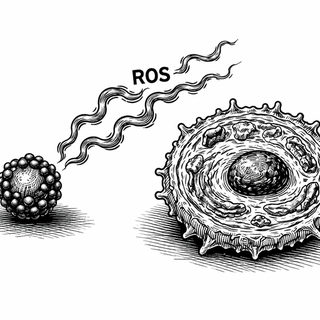
According to this PubMed-indexed review, metal and metal oxide nanoparticles have attracted attention for drug delivery and therapy because of their unique physical and chemical properties. The problem is that their metallic nature can also make them toxic. One of the big issues is their ability to generate reactive oxygen species, or ROS.
ROS: useful biology until it turns into a kitchen fire
ROS are highly reactive molecules. In small amounts, the body can use them for normal signaling. In excess, they are trouble. They can damage cells and kick off inflammatory signaling pathways. In plain English, that means a treatment meant to help could also irritate the immune system, stir up inflammation, and make things worse.
As a former paramedic, I tend to sort medical problems into one simple field test: is this helping the patient in front of me, or is it creating a new reason to call 911 later? Excess ROS lands squarely in that second category. It is one thing to build a clever delivery system. It is another to build one that acts like a smoke detector, a toaster fire, and a leaf blower all at once.
This is the central tension of the review. Metal nanoparticles may have anti-inflammatory potential, but they also have built-in risks that researchers cannot just wave away with a nice diagram and a few bar graphs.
Why not just stick with regular anti-inflammatory drugs?
Because the usual options are not perfect either. The review points out that conventional anti-inflammatory drugs, including NSAIDs, can cause significant adverse effects. Most people know these medicines as the familiar over-the-counter standbys for pain and swelling. They are useful. They are also not harmless, especially with long-term use or in higher-risk patients.
That matters because inflammation sits at the center of a lot of chronic disease. If researchers can build safer anti-inflammatory tools, that would be a real step forward. Not a flashy conference-slide step forward. A real one. The kind that matters when someone is trying to get through a workday with painful joints, recover from tissue injury, or manage an inflammatory condition without collecting side effects like trading cards.
The interesting twist: greener nanoparticles
One of the more intriguing parts of this review is the discussion of "green synthesis." Instead of producing nanoparticles through more conventional chemical methods, researchers are exploring ways to make them using plant extracts and other biological materials.
That may sound like marketing copy for a fancy juice bar, but the idea is serious. Green synthesis is getting attention because it may produce nanoparticles with better biocompatibility and lower toxicity. In other words, the manufacturing method might influence how well the particles play with human biology.
If that holds up, it is a big deal. A treatment's safety is not just about what it is. It is also about how it is made, what residues remain, how it behaves in tissue, and whether the immune system treats it like a helpful guest or a guy kicking down the door at 2 a.m.
So how could these particles reduce inflammation?
The review describes an immunomodulatory role for certain metal and metal oxide nanoparticles. That means they may be able to influence immune responses rather than simply bulldozing symptoms. Examples mentioned in the summary include silver nanoparticles, zinc oxide nanoparticles, copper oxide nanoparticles, and titanium-based particles.
The basic hope is that, with the right design, these particles could reduce harmful inflammatory signaling, improve drug delivery, and potentially support healing while limiting collateral damage. That is the sweet spot in anti-inflammatory therapy: enough control to quiet the overreaction, but not so much that you create new injury.
This is where nanomedicine gets genuinely interesting. The appeal is not just "smaller medicine." It is smarter targeting. If researchers can tune particle size, surface properties, and synthesis method to reduce toxicity while preserving benefit, they may be able to build therapies that are more precise than older one-size-fits-all drugs.
The catch is the whole point
Still, this review is not a victory lap. It is more like a very smart caution sign.
Metal-based nanoparticles have a dual role. They may help control inflammation, but they may also trigger oxidative stress and immune activation. That duality is the whole ballgame. The particles are promising precisely because they are so biologically active. They are risky for the exact same reason.
And this is where hype usually gets ahead of reality. Tiny particles make for big headlines, but biology is annoyingly resistant to simple stories. A nanoparticle that behaves beautifully in one lab setup may act very differently in a living system packed with immune cells, proteins, and organ-specific chemistry. The body is not a clean benchtop. It is more like rush-hour traffic with hormones.
Why this research matters outside the lab
What makes this review worth reading is not that it promises a miracle. It does the more useful job of mapping the problem honestly. Researchers are trying to solve a real clinical dilemma: how to get anti-inflammatory benefits without piling on toxicity.
If green synthesis and better nanoparticle design can reduce the risks, there may be room for new therapies that are both effective and safer than some existing options. That could matter in chronic inflammatory diseases, targeted drug delivery, and other settings where the therapeutic window is narrow and side effects are a constant headache.
For patients, the real-world dream is pretty simple: less inflammation, fewer tradeoffs, and treatments that do not make your body feel like it has entered an argument with itself.
For now, though, the science is still in the sorting phase. Which particles help? Which hurt? Which manufacturing methods reduce toxicity? Which immune pathways can be nudged without being provoked? Those are not small questions, even if the particles are.
This blog post discusses research findings and should not be taken as medical advice. If you have concerns about inflammation or inflammatory conditions, please consult a healthcare provider. Research discussed here represents ongoing scientific investigation and clinical validation is still in progress.
All images used in this post are decorative illustrations only and do not represent or reflect the accuracy, reality, or correctness of the referenced research.
Primary Source: Anti-inflammatory role of metal and metal oxide nanoparticles: a review of toxicity, green synthesis, and immunomodulatory mechanisms. PubMed Record ID 42020890. Source link