
Single, scientifically ambitious, and apparently very good under pressure, this new dental treatment would write its dating profile like this: “I’m a multifunctional nanozyme who enjoys long walks through plaque biofilms, generating bacteria-busting chemistry, and warming things up just enough to get the job done.” Ridiculous? A little. But also memorable, which is fair, because the whole point of this research is to tackle oral infections that keep hanging around like the last cracker crumbs in a car seat.
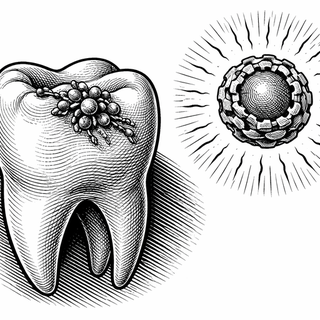
The study, listed on PubMed as record 42045161, looks at an “integrated peroxidase-like nanozyme” designed for photothermally enhanced antibacterial treatment in multiple oral diseases. In plain English, the researchers are testing a tiny engineered material that behaves a bit like an enzyme, helps trigger bacteria-killing reactions, and works even better when light-generated heat is added to the mix.
As a parent, my first question is not “How elegant is the nanomaterial platform?” My first question is: will this help my kid avoid repeat dental procedures, more pain, and one more appointment where everyone says “this will only take a minute” with a straight face?
Why oral infections are such a headache
The paper focuses on three big troublemakers: dental caries, endodontic infections, and periodontitis.
That means cavities, infections involving the inside of the tooth such as root canal spaces, and gum disease. Different problems, same general misery. Bacteria settle in, form stubborn communities, damage oral tissues, and can be hard to fully eliminate. The abstract also notes something parents do not love hearing: these conditions can contribute to broader health problems beyond the mouth.
Traditional disinfectants and staged dental treatment can help, of course. Dentists are not out there waving mint-flavored hope around. But the study points out a real problem: standard approaches do not always wipe out infection completely. That can mean repeat treatment, lingering inflammation, and recurrence. In family terms, it is the microbial version of cleaning a playroom by shoving everything under the bed. It looks better for a minute, then chaos leaks back out.
What this nanozyme is trying to do
The treatment described here is a hybrid nanozyme. “Nanozyme” means a nanoscale material that imitates the activity of an enzyme. In this case, it has peroxidase-like activity.
Peroxidase is an enzyme that helps convert certain chemicals into reactive molecules that can damage bacteria. So if a material has peroxidase-like behavior, the idea is that it can help create a hostile environment for germs right where the infection is. The “photothermal” part means light is used to generate localized heat, which appears to boost the antibacterial effect.
So the strategy is not just “spray disinfectant and hope for the best.” It is more like sending in a tiny cleanup crew with chemical tools and a portable heater.
That matters because oral bacteria are not always floating around politely waiting to be removed. They often build biofilms, hide in hard-to-reach spaces, and generally behave like tenants who know the eviction process better than the landlord.
Why this is interesting for real families
What caught my attention is not just the technology being clever. It is the problem it is trying to solve.
Anyone who has dealt with repeated dental infections, recurring cavities, or a child who needs multiple visits for the same issue knows the practical burden. More treatment means more cost, more missed school, more parent logistics, and more opportunities for kids to become suspicious of every building with a waiting room.
If a therapy like this eventually proves safe and effective in real patients, it could potentially improve how dentists manage infections that are difficult to fully clear with current methods. That might mean fewer repeat interventions and a lower chance of recurrence. That is the kind of sentence parents perk up for.
It could also be especially valuable in places where bacteria are tucked deep into dental structures, such as root canal systems or inflamed periodontal pockets. Those are not easy environments to disinfect thoroughly, which is why the concept of a targeted, boosted antibacterial system is appealing.
The part where I pump the brakes a little
This is also the point where the parent brain says: fine, but how close is this to helping anyone in an actual dental chair?
From the summary provided, this looks like an early-stage research report focused on a novel antimicrobial platform. That is promising, but promising and ready are not the same thing. My slow cooker is promising at 2 p.m. Dinner still is not on the table.
There are several questions that matter before anything like this becomes routine care:
Safety comes first
Anything used in the mouth has to be shown to work without damaging healthy tissues. Bacteria are fair game. Gums, dentin, surrounding cells, and the rest of the neighborhood are not.
A treatment that uses catalytic reactions plus heat has obvious appeal, but it also needs careful control. How much heat? How localized? What happens near delicate tissue? Does it affect healing? These are not side questions. They are the main questions.
Lab success is not the same as clinic success
Antibacterial performance in controlled experiments can look great. Real mouths are messier. Saliva, complex biofilms, food residue, variable anatomy, existing inflammation, and patient behavior all love to complicate clean scientific ideas.
Something can work beautifully in a model system and then run into practical challenges in everyday dentistry.
Kids are not just small adults with fruit snacks
If this kind of technology ever moves toward broader use, pediatric relevance matters. Children have developing teeth, different cooperation levels, different patterns of disease, and a lower tolerance for treatments that sound futuristic and involve lasers or heat, even if the actual process is gentle. The science may be small-scale, but the pediatric questions are very large.
So, will this help my kid?
Maybe one day, and that is a real maybe, not a brush-off.
What this research offers right now is a smart idea aimed at a frustrating problem: oral infections that do not reliably go away with standard disinfection and staged treatment. The combination of enzyme-like catalytic activity and light-enhanced heating could, if follow-up development goes well, become part of a more effective way to reduce harmful bacteria in cavities, root-related infections, and gum disease.
That said, this is not something parents should expect at the next dental visit. It is still research. The value today is not immediate treatment access. The value is seeing scientists take seriously the fact that current approaches can leave too much infection behind.
And honestly, that is worth watching. Dentistry does not need more flashy gadgets that look impressive in brochures. It needs tools that lower recurrence, spare tissue, and make repeat treatment less common. Parents do not need “innovative platforms” as a marketing phrase. We need fewer callbacks.
If future studies show this nanozyme is safe, targeted, and effective in living patients, then this could become one of those rare advances that sounds fancy in the journal and practical in real life. That is the sweet spot.
This blog post discusses research findings and should not be taken as medical advice. If you have concerns about dental infections, tooth decay, or gum disease, please consult a healthcare provider. Research discussed here represents ongoing scientific investigation and clinical validation is still in progress.
All images used in this post are decorative illustrations only and do not represent or reflect the accuracy, reality, or correctness of the referenced research.
Primary Source: An Integrated Peroxidase-like Nanozyme for Photothermally Enhanced Catalytic Antibacterial Treatment in Multiple Oral Diseases. PubMed Record 42045161. Available at: https://pubmed.ncbi.nlm.nih.gov/42045161/